
Gold & Precious Metals

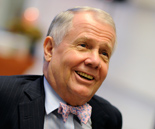 ETF.com: You’re famous for looking at and investing in places that other people aren’t talking about. Where is that right now? What part of the world are people ignoring?
Rogers: I would start with Russia, given that it’s one of the most hated markets in the world. Russia is very, very cheap, and it’s a very neglected stock market with enormous natural resources. I first went to Russia in 1966 and came away negative, and I stayed negative for the next 46 years, so it’s been a long-term bear for me. But in recent months I’ve started changing my views and have started buying shares in Russia.
Another one might be Japan. I don’t know if Japan is ignored or not, but it’s down 60-70 percent from its all-time highs, so it’s still neglected to some extent. Sure, it’s doubled in the last year, but its all-time high is 24 years ago!
Prime Minister Abe is spending and printing enormous amounts of money, which in my view will ruin Japan eventually. In 20 years, we’ll look back at Japan, and its death knell will be what Mr. Abe did in 2012-2014. But in the meantime, there are staggering amounts of money and spending, and printing has to go somewhere, and I suspect a lot of it’s going to find its way into the stock market.
ETF.com: Where will it show up?
Rogers: You look at things like NTT, which has done nothing for 13 years. It goes sideways. Mr. Abe, two weeks ago, changed the situation in Japan by giving people tax-free incentives to invest in the stock market. I’ve seen this in many countries over the past few decades, and if you tell people they can invest in something tax free, you know what? They do it!
People aren’t crazy. The combination of what he’s doing and this new tax incentive means, in my view, Japan is a place where you might make some money.
Look at some of the blue chips in particular. They’ve done nothing. Normally, when people start investing in these tax-free kinds of accounts, they invest in blue chips, because that’s what they know.
To receive the full sample issue of the ETF.com Alpha Think Tank Newsletter’s interview with Jim Rogers, including ETF.com’s top ETF picks to implement his recommendations, please email alpha@etf.com.


1. Bartender
While your local bartender may fumble when you ask him for a Sex on the Beach or a Tight Twister, the Monsieur robot bartender, who knows 300 cocktails and can make them in seconds, will not. And should you not know what you want, you can pick a theme like “bachelorette party” or “Irish pub,” and the robot will offer up some 20 to 25 drink selections for you to pick from. The manufacturer is selling the product to both businesses and consumers — the first robots (which retail for $5,000) will ship in April or May of this year; just don’t expect it to fully replace your local bartender anytime soon — the patrons need someone to cry to.
….for 9 more go HERE
The dollar fell to a two-week low against the euro and lost more than half a percent against other major currencies, the latest sign of its failure to launch this year which has disappointed many investors.
The Australian dollar, looking in better shape this month after a 10 percent slide since October, dived almost 1 percent after an unexpectedly weak domestic jobs report. Sweden’s crown also fell on the back of similarly soft data.
A strong dollar against its major currency peers was a central bet for many banks at the start of this year, convinced that a steady reduction in Federal Reserve bond-buying would drive up dollar interest rates and draw in capital.
The failure of 10-year Treasury yields to get closer to 3 percent, however, has left many disappointed and the major currency markets generally somewhat bereft of direction.
…read more HERE

 No. Metals are basic necessities of modern life and the per capita use of metals rises with income levels. In the past decade several of the world’s most populous countries underwent accelerated growth. While countries like China, India and Brazil are currently being impacted by recessionary forces, the changes that spurred their stronger growth are not cyclical. These secular changes occur as per capita income reaches levels that require increased infrastructure spending by government and allow for discretionary spending on things like housing. All advanced economies have gone through these high growth secular periods in the past. The difference is that never in history have so many people in the world been entering the “lower middle class” at the same time. The impact on resource use from this massive change is just beginning to be felt. Remember too that there are several other high population countries like Malaysia, Turkey, Indonesia and Pakistan that are just entering this growth phase now. Collectively, these countries have a population roughly equal to China.
Historically, these sorts of Quality of Life cycles last a full generation or more. We are a bit over 10 years into this one. There will be cyclical slowdowns within the secular trend and individual metals will underperform or outperform depending on their particular supply/demand balance. The mining sector, which we have decades of experience in, will have to struggle just to keep up many times during this trend. Economies turn much faster than metals production. In short, there are more bull runs ahead for various metals and they will start much sooner than most people think. Metals producers and explorers will go from pariahs to market darlings and the change will happen fast when it comes. It has many times before. Buying low and selling high means seeking out the right companies before the market does. HRA can help you do just that.
To Investigate Eric Coffin’s HRA click HERE


-
I know Mike is a very solid investor and respect his opinions very much. So if he says pay attention to this or that - I will.
~ Dale G.
-
I've started managing my own investments so view Michael's site as a one-stop shop from which to get information and perspectives.
~ Dave E.
-
Michael offers easy reading, honest, common sense information that anyone can use in a practical manner.
~ der_al.
-
A sane voice in a scrambled investment world.
~ Ed R.
Inside Edge Pro Contributors

Greg Weldon

Josef Schachter

Tyler Bollhorn

Ryan Irvine

Paul Beattie

Martin Straith

Patrick Ceresna

Mark Leibovit

James Thorne

Victor Adair