
Timing & trends
Consumer debt in the U.S. rose last quarter by the most in more than six years as Americans borrowed to buy homes and cars and to pay for education, according to a report by theFederal Reserve Bank of New York.
Household debt increased 2.1 percent, or $241 billion, to $11.52 trillion, the biggest gain since the third quarter of 2007, the report showed. The level of debt last quarter was $180 billion higher than a year earlier.
“After a long period of deleveraging, households are borrowing again,” Wilbert van der Klaauw, senior vice president and economist at the New York Fed, said in a statement.
Total indebtedness remains 9.1 percent below the peak of $12.68 trillion in the third quarter of 2008, the survey showed. Consumers have been cleaning up their balance sheets in the aftermath of the worst recession since the Great Depression.


“Emerging markets will benefit from their already compelling valuations. As you can see from the chart above, emerging markets have been trading sideways for the last three years while their economies have expanded much faster than developed countries.”
Emerging markets are rich in natural resources. Brazil is a global leader in chicken, beef, soybeans and oil. And Chile is the world’s largest copper producer. South Africa is a leader in gold and minerals.

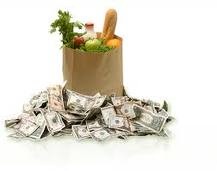
Jim Rogers: “Be Very Worried’ And Buy Agriculture”
“There’s going to be a huge shift in American society, American culture, in the places where one is going to get rich. The stock brokers are going to be driving taxis. The smart ones will learn to drive tractors so they can work for the smart farmers. The farmers are going to be driving Lamborghinis.”
Did you know that the U.S. state that produces the most vegetables is going through the worst drought it has ever experienced and that the size of the total U.S. cattle herd is now the smallest that it has been since 1951? Just the other day, a CBS News article boldly declared that “food prices soar as incomes stand still“, but the truth is that this is only just the beginning. If the drought that has been devastating farmers and ranchers out west continues, we are going to see prices for meat,fruits and vegetables soar into the stratosphere. Already, the federal government has declared portions of 11 states to be “disaster areas”, and California farmers are going to leave half a million acres sitting idle this year because of the extremely dry conditions. Sadly, experts are telling us that things are probably going to get worse before they get better (if they ever do). As you will read about below, one expert recently told National Geographic that throughout history it has been quite common for that region of North America to experience severe droughts that last for decades. In fact, one drought actually lasted for about 200 years. So there is the possibility that the drought that has begun in the state of California may not end during your entire lifetime.
This drought has gotten so bad that it is starting to get national attention. Barack Obama visited the Fresno region on Friday, and he declared that “this is going to be a very challenging situation this year, and frankly, the trend lines are such where it’s going to be a challenging situation for some time to come.”
According to NBC News, businesses across the region are shutting down, large numbers of workers are leaving to search for other work, and things are already so bad that it “calls to mind the Dust Bowl of the 1930s“…
“In the state’s Central Valley — where nearly 40 percent of all jobs are tied to agriculture production and related processing — the pain has already trickled down. Businesses across a wide swath of the region have shuttered, casting countless workers adrift in a downturn that calls to mind the Dust Bowl of the 1930s.”
If you will recall, there have been warnings that Dust Bowl conditions were going to return to the western half of the country for quite some time.
Now the mainstream media is finally starting to catch up.
And of course these extremely dry conditions are going to severely affect food prices. The following are 15 reasons why your food bill is going to start soaring…
#1 2013 was the driest year on record for the state of California, and 2014 has been exceptionally dry so far as well.
#2 According to the U.S. Drought Monitor, 91.6 percent of the entire state of California is experiencing “severe to exceptional drought” even as you read this article.
#3 According to CNBC, it is being projected that California farmers are going to let half a million acres of farmland sit idle this year because of the crippling drought.
#4 Celeste Cantu, the general manager for the Santa Ana Watershed Project Authority, says that this drought could have a “cataclysmic” impact on food prices…
Given that California is one of the largest agricultural regions in the world, the effects of any drought, never mind one that could last for centuries, are huge. About 80 percent of California’s freshwater supply is used for agriculture. The cost of fruits and vegetablescould soar, says Cantu. “There will be cataclysmic impacts.”
#5 Mike Wade, the executive director of the California Farm Water Coalition, recently explained which crops he believes will be hit the hardest…
Hardest hit would be such annual row crops as tomatoes, broccoli, lettuce, cantaloupes, garlic, peppers and corn. Wade said consumers can also expect higher prices and reduced selection at grocery stores, particularly for products such as almonds, raisins, walnuts and olives.
#6 As I discussed in a previous article, the rest of the nation is extremely dependent on the fruits and vegetables grown in California. Just consider the following statistics regarding what percentage of our produce is grown in the state…
–99 percent of the artichokes
–44 percent of asparagus
–two-thirds of carrots
–half of bell peppers
–89 percent of cauliflower
–94 percent of broccoli
–95 percent of celery
–90 percent of the leaf lettuce
–83 percent of Romaine lettuce
–83 percent of fresh spinach
–a third of the fresh tomatoes
–86 percent of lemons
–90 percent of avocados
–84 percent of peaches
–88 percent of fresh strawberries
–97 percent of fresh plums
#7 Of course it isn’t just agriculture which will be affected by this drought. Just consider this chilling statement by Tim Quinn, the executive director of the Association of California Water Agencies…
“There are places in California that if we don’t do something about it, tens of thousands of people could turn on their water faucets and nothing would come out.”
#8 The Sierra Nevada snowpack is only about 15 percent of what it normally is. As the New York Times recently explained, this is going to be absolutely devastating for Californians when the warmer months arrive…
“There are places in California that if we don’t do something about it, tens of thousands of people could turn on their water faucets and nothing would come out.”
#8 The Sierra Nevada snowpack is only about 15 percent of what it normally is. As the New York Times recently explained, this is going to be absolutely devastating for Californians when the warmer months arrive…
….read page 2 HERE

Watch for a Taper Time-Out
 Good luck to new Fed Chair Janet Yellen and her expectation that the Fed can continue to taper back its QE stimulus at the current pace until it is completely gone by summer.
The economic reports say it is not going to happen.
In her optimism regarding the economy, expressed in her testimony before Congress this week, Yellen pointed to GDP growth hitting an average annual rate of 3.5% in the last half of last year, compared to only 1.7% in the first half.
Regarding the negative consequences tapering seems to be having on emerging markets she said in effect that the Fed is only worried about the U.S.
She shrugged off the recent dismal jobs reports, saying weather may have played a factor, only agreeing that employment is still far from satisfactory conditions.
[Hear More: Dr. Peter Warburton: Disinflationary Trend Continuing – But Fed’s QE Policy Ultimately Leads to Higher Inflation]
However, the problems are not showing up only in the jobs picture.
As I noted in previous columns, it has been the unexpected widening of the U.S. trade gap, as exports decline and imports rise. It has been in the huge plunge of the ISM Mfg Index, and in Durable Goods Orders, factory orders, home and auto sales.
This week is was the negative surprise of retail sales being down 0.4% in January, and previously reported sales for December revised down from a gain of 0.2% to a decline of 0.1%. It was also not encouraging that within the report, online sales, which should be boosted by bad weather that keeps shoppers away from the malls, also fell in January, down 0.6%.
The Federal Reserve reported Friday that U.S. industrial production fell 0.3% in January, versus the consensus forecast for a rise of 0.2%. The production report would have been even worse except for a 4.1% surge in utilities output due to increased heating demand.
The initial estimate from the U.S. Bureau of Economic Analysis (BEA) was that the economy (GDP) grew at an annual pace of 3.2% in the 4th quarter, a number also noted by Fed Chair Yellen. However, the BEA subsequently revises the number monthly for several months as new information regarding the quarter comes in.
While Janet Yellen remains sanguine about the future, major Wall Street firms have slashed their economic estimates quite dramatically again this week, particularly after the disappointing retail sales report for January. They are continuing to cut their expectations not only for this quarter, but also for the fourth quarter of last year.
Barclay’s bank says the downward revision this week of previous reported retail sales in December subtracted another 0.4% from the firm’s already declining estimate for the fourth quarter, which now suggests a probable downward revision by the BEA to 2.2% “a full percentage point below the first official estimate of 3.2%”.
Michelle Girard, chief economist at RBS, says, “Our running tally of probable revisions for fourth-quarter GDP point to a downward revision to 2.3%”.
Jan Hatzius at Goldman Sachs cut his 4th quarter estimate of GDP growth to 2.4%, and his estimate for the current quarter to 1.9% (it was at 3.0% just three weeks ago).
This week Credit Suisse economists reduced their estimates for the current quarter in 2014 from their previous estimate of 2.6% to just 1.6%.
It may not be good news for the economy. However, the stock market loves it.
After declining for five straight weeks in January and into early February on concerns about the negative effect the Fed’s tapering was having on economic reports, the stock market has rallied for eight of the last ten days, now celebrating each additional negative report.
What happened to its concerns?
The deteriorating economic outlook has now reached the stage where each additional negative report becomes difficult for the Fed to shrug off, or blame on weather, and adds pressure for it to at least pause the tapering back of its QE stimulus.
In her testimony before Congress this week, Fed Chair Yellen did say the Fed is “staying the course unless the data turns decidedly negative.”
It is doing so, and the stock market probably has it right that Fed stimulus will remain on the table for longer than expected. Whether that would be enough to reverse the U.S. economic slowdown, and global economic problems, particularly if the Fed waits until their next FOMC meeting in mid-March to make the decision, may be a question markets have to face later.

STOCKS: So why did the market finally move lower after 8 days of positive breadth in a row? Some cited the unrest in Ukraine and Thailand. Others discussed a new terrorist threat for airplanes coming in from abroad.
We know the market likes to screw up as many investors as possible. A friend and fellow analyst, David Nichols of the Fractal Market Report suggested that the market destroyed the longs in January and then destroyed the shorts in February. We can see that in the chart.
CHART: The S&P 500 curled down from an overbought condition. Tops are not as easy to pinpoint as bottoms, but this is normally a negative for the next several days or weeks. Stay tuned.
SHORT TERM TREND Bearish
INTERMEDIATE TERM TREND Bearish

RANKED # 1 BY TIMER DIGEST
Timer Digest of Greenwich, CT monitors and ranks over 100 of the nation’s best known stock market advisory services.
Once per year in January, Timer Digest publishes the rankings of all services monitored for multiple time frames.
For the years 2003, 2004 and 2005, The Todd Market Forecast was rated # 1 for the preceding ten years. For the year 2006, we slipped to # 3 and in 2007, we were ranked # 5.
Our bond timing was rated # 1 for the years 1997, 2007 and 2008.
Gold timing was rated # 1 for 1997 and # 2 for 2006. Late word! We were rated # 1 for 2011.
We were # 1 in long term stock market timing for the years 1998 and 2004 and # 4 in 2010.
To subscribe go to Contact Us.

-
I know Mike is a very solid investor and respect his opinions very much. So if he says pay attention to this or that - I will.
~ Dale G.
-
I've started managing my own investments so view Michael's site as a one-stop shop from which to get information and perspectives.
~ Dave E.
-
Michael offers easy reading, honest, common sense information that anyone can use in a practical manner.
~ der_al.
-
A sane voice in a scrambled investment world.
~ Ed R.
Inside Edge Pro Contributors

Greg Weldon

Josef Schachter

Tyler Bollhorn

Ryan Irvine

Paul Beattie

Martin Straith

Patrick Ceresna

Mark Leibovit

James Thorne

Victor Adair