Gold & Precious Metals

Gold: 14 Years & Three Patterns

Gold peaked in August of 2011 and fell erratically into December 2013.

Was that the end of the collapse, or is there more downside coming in gold prices?

Bearish Scenario: Listen to the banks who are forecasting weak prices in 2014 and thereafter.“Nothing to see here folks, the dollar has weakened drastically since 1971, gold sells for 30 times its 1971 price, but it’s all good. Just move on and pretend… Gold will drop below $1000 before you can say 2016 elections…”

I’m not a fan of:


  • The bearish gold scenario when decades of Federal Reserve “printing” and US government budget deficits have all but guaranteed continued destruction of the purchasing power of the dollar.
  • Belief that even though dollar debasement practices have accelerated since the 2008 crash, gold prices will fall because bankers say so.
  • Propaganda that gold is useless and that unbacked debt based fiat currencies are solid and stable.
  • Large High Frequency Trading companies that short the gold market, loudly proclaim that gold prices will fall, dump a huge number of paper contracts on the Comex, quietly cover their shorts after the gold price crash, book huge profits, and then reverse the process as they push prices up. These traders are in the business of making profits so none of this is surprising.

Instead of listening to self-serving banker opinions, let’s examine the data. The following chart shows monthly prices for gold since 2000. Note that highs and lows as listed in the monthly data are slightly different from actual hourly highs and lows. For this analysis over 14 years, the differences are immaterial.

….to see a larger image and to read more including conclusion go HERE

Screen Shot 2014-03-12 at 6.31.05 AM


Stocks in a Hot BioTech Sector

imagesHow the Oncology Drug Development Machine Builds Biotech Wealth
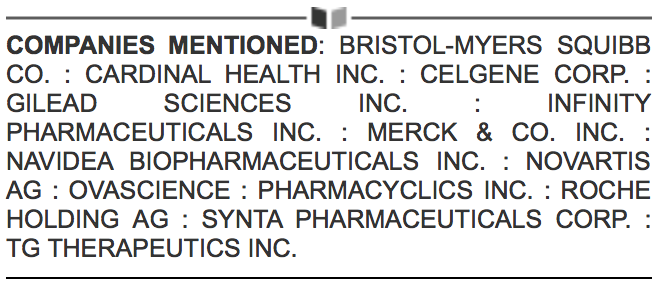
Veteran biotechnology analyst Michael King of JMP Securities has seen drug development evolve from hit-or-miss to the sophisticated, high-throughput discovery techniques in place today. He understands the sector, the entrepreneurs and the valuations as well as anyone on Wall Street. In this interview with The Life Sciences Report, King zeros in on the oncology space, his focus for nearly two decades. Never single-minded, King’s stable of thoroughbred names includes a bonus pick he likes very much in the field of fertility.

Screen Shot 2014-03-14 at 11.55.07 AMThe Life Sciences Report: Mike, are you seeing a lot of new interest in biotech? Do you see generalists coming into biotech conferences to try to catch the wave?

Michael King: Yes, for sure. I would say generalists have been in the sector for the last 12–15 months, if for no other reason than job preservation, because there has been so much alpha generated in the space. Interest has ebbed and flowed, but it’s certainly at its highest level in more than a decade. If you’re a growth manager, then you have to pay attention to the biotech space.

TLSR: Traditionally, we think of the last guys in as foretellers of doom. Is this activity in biotech starting to feel a bit like a bubble to you?

MK: A little bit, but I think we should enjoy it for a while. It’s not out of control. The valuations on some companies are obviously quite high, but I wouldn’t say they’ve reached levels that are impossible to justify. When you see something like Facebook making a bid for WhatsApp for $19 billion ($19B)—that, to me, is when you get to a bubble phase. But I don’t see that happening in biotech. I think investors are much more rational in this space.

TLSR: You have written that in the second week of February, $1.1B was raised in equity and convertibles. That was just one week, right?

MK: Yes. One week.

TLSR: Does this look exuberant to you?

MK: Exuberant, yes. Irrational, no. The middle of the biotech market was hollowed out over the last decade by a lot of mergers and acquisitions (M&A), and at the same time companies were being formed. The mid-cap guys with products were getting gobbled up, and venture capitalists were creating companies for the purpose of being acquired. That was the vogue. You really weren’t getting a repopulation of the $250 million ($250M)–$2B sweet space, where molecules go into the clinic and a lot of value is created.

Today, a lot of the money is going into the sweet spot, because the mega caps are self-funding. Celgene Corp. (CELG:NASDAQ) doesn’t need to raise money, although it did. Gilead Sciences Inc. (GILD:NASDAQ) certainly doesn’t. Amgen Inc. (AMGN:NASDAQ) certainly doesn’t. The money today is going into names like—and I’ll just name some that we’ve been involved in—Karyopharm Therapeutics Inc. (KPTI:NASDAQ)Acceleron Pharma Inc. (XLRN:NASDAQ)Epizyme Inc. (EPZM:NASDAQ),Ultragenyx Pharmaceutical Inc. (RARE:NASDAQ) and Dicerna Pharmaceuticals (NASDAQ:DRNA). These are the kinds of names that filled out the biotech ecosystem after it was depleted by M&A and a lack of funding from the venture community. We are not seeing irrational exuberance—I think we have a ways to go.

TLSR: Is there a theme you’re thinking about and working on for investors for the rest of 2014?

MK: There are a couple. First, we’ll continue to focus on oncology. A recent survey by the Biotechnology Industry Organization (BIO), just before its BIO CEO Conference in New York in February, asked respondents for their favorite investment topics in the biotech space. By a wide margin, oncology came out on top. Companies are advancing clinical candidates to value inflection points, whether that’s a phase 2 or phase 3 study. Other companies have novel approaches. We’ve seen very good reception to companies in what I’d call the molecular oncology space. That is why an Epizyme or a Karyopharm, in my coverage universe, has been received so well; they have a differentiated approach to the treatment of cancer.

Another huge theme is cancer immunotherapy, but right now that is the province of large pharmas: Bristol-Myers Squibb Co. (BMY:NYSE), with its programmed death 1 (PD-1) blocking antibody nivolumab in non-small cell lung cancer (NSCLC); Merck & Co. Inc. (MRK:NYSE), with its anti-PD-1 drug MK-3475, also in NSCLC; Roche Holding AG (RHHBY:OTCQX), with its anti-programmed death ligand (PD-L1) antibody MPDL3280A. In mid-February Novartis AG (NVS:NYSE) acquired a private company, CoStim Pharmaceuticals, to gain access to an anti-PD-1 agent. AstraZeneca Plc (AZN:NYSE) is also in the game.

But a lot of people are looking at small-cap ways to play the craze for cancer immunotherapy. The problem is that there aren’t a lot of great ways to do that because of the big pharmas.

TLSR: You mentioned the BIO CEO Conference; I wanted to ask you about the panel you hosted and moderated there. Was there a lot of interest?

MK: My panel was very well attended. We addressed questions about T-cell immunotherapies at the end. Some attendees wanted to talk about TCARS—T-cell antigen receptors, where you transplant CD19 receptors into T cells and then infuse the T cells back to the patient. The outcomes have been quite remarkable—very high response rates, and some complete responses. Companies have been formed to exploit this technology. Novartis has invested a lot of money in technology being developed out of the University of Pennsylvania School of Medicine by a physician named Carl June. A company out of Seattle called Juno Therapeutics Inc. (private) raised $145M to access technology coming out of Fred Hutchinson Cancer Research Center and Memorial Sloan Kettering Cancer Center.

While TCARS are very interesting from a scientific and intellectual standpoint, you have to think about how you commercialize this technology when it’s patient-specific, is done at the site and is not something that you can put in a vial or make a pill out of. While I think TCARS will be important, my guess is that it’s going to be for patients whose cancers have gone past all conventional therapies.

TLSR: It would have to be very high in efficacy to justify that kind of expense per patient, wouldn’t it?

MK: It’s not just the expense. Think about it: If you can sit home and take your Imbruvica (ibrutinib;Pharmacyclics Inc. [PCYC:NASDAQ]) for five years and feel good, control your chronic lymphocytic leukemia (CLL), not go to the hospital and not have to undergo a procedure that’s going to make you feel like death for a few days, you probably want to do that. But when the disease starts to gain an advantage over your immune system and you don’t have a lot of bullets left in the medicine cabinet, then you want to go down to Penn or over to Memorial Sloan Kettering and have your T-cells armed.

TLSR: Are you following any companies currently involved in the TCAR technology platform area?

MK: There’s really nobody out there per se. It’s either Novartis or the private companies. I do monitor the technology because from time to time it comes up as a potential competitor to Imbruvica, to Gilead’s idelalisib or to Infinity Pharmaceuticals Inc. (INFI:NASDAQ) IPI-145.

TLSR: Let’s talk about some companies. You’re following a very interesting non-oncology company,OvaScience (OVAS:NASDAQ). It’s in the fertility market. Could you address it?

MK: Yes. We wrote on OvaScience on Feb. 24, and reiterated our Market Outperform rating. I think this is going to be a good year for the company. When it went public in 2013, it had two technologies—Augment (autologous germline mitochondrial energy transfer), which is the company’s lead program, and OvaTure. It now has two more programs: OvaXon, a joint venture with synthetic biology company Intrexon Corp. (XON:NYSE), and OvaPrime, its newest proposed fertility therapy, through which a clinician will be able to isolate a patient’s EggPCs (egg precursor cells) and then deliver them back into her ovaries before a normal in vitro fertilization (IVF) procedure.

Management has done a great job building up the core product offerings of the company, and has added some very important people to its advisory board and board of directors. It has added David Stern as executive vice president of global commercial operations; he joined the company in February. He has tremendous bona fides for taking OvaScience’s product offerings ex-U.S., where the market opportunity is larger. I was astonished to see that Japan has almost twice as many IVF procedures as the U.S. does—and it only has about one-third to one-half the U.S. population. The use of IVF procedures is much larger in Japan per capita. The opportunity in the European Union (EU) is quite large as well. The opportunity to commercialize ex-U.S. is enormous.

TLSR: The U.S. market is nothing to sneeze at, but there are some regulatory questions with its lead program, Augment, aren’t there?

MK: In the U.S., Augment is stuck in a bit of regulatory limbo, but I think that will resolve itself fairly soon. Though Augment will launch in four global regions before the end of this year, some investors have worried that the U.S. Food and Drug Administration (FDA) will not approve Augment in the U.S. There was a FDA panel meeting on Feb. 25; the panel was more about mixing DNA from different donors in a single egg cell, which I don’t think would ever fly in the U.S. And that is not what Augment is all about.

Once that confusion lifts, I think the stock will take off nicely. The market cap is about $175M. The company is very well funded, with almost $45M in cash.

TLSR: Mike, you’ve talked about the opportunity in Japan and the EU, but when Augment is ready in the U.S., do you see it as a large market? The overhang is that this is a cash business, and group insurance policies may not cover this.

MK: Augment has an enormous market opportunity ahead of it because of the demographics. Many women have decided to delay pregnancies, but still want children. Women just don’t have kids at 19 and 21 years old anymore—they’re having children when they are 30, 35. I have seen the clinics here in New York, and I can tell you they are absolutely mobbed—weekdays and weekends. There is tremendous demand.

A statistic from one of the professional societies states that in 2012, the percentage of IVF procedures as a percent of all live births in the U.S. hit a record high. I don’t think there’s any slowing down from here. I think OvaScience is a great way to play this burgeoning demographic trend.

TLSR: What would be the next catalysts for OvaScience?

MK: It would be the commercial launch of Augment ex-U.S. David Stern is ready to go, so we’ll see how that proceeds. If we get some regulatory clarity in the U.S., that would be a positive catalyst too.

TLSR: Which company did you want to discuss next?

MK: Synta Pharmaceuticals Corp. (SNTA:NASDAQ) is one of the names we like for 2014. The company has a market cap of about $369M. Synta has a heat shock 90 protein (Hsp90) inhibitor called ganetespib that could be useful for a variety of oncology applications.

The company has created a lot of controversy around itself, which I wouldn’t say is undeserved. One school of thought holds that ganetespib is basically a dressed-up placebo, but I would submit it is far from that: I think ganetespib will have a positive result in the ongoing GALAXY-2 trial (NCT01798485). GALAXY-1 (NCT01348126) was a phase 2 study meant to select a patient population in which to perform the phase 3. This has caused confusion because a lot of investors have tried to apply phase 3 thinking to the phase 2 trial.

A phase 2 trial is a signal- and dose-seeking trial. The point is to figure out the appropriate patient population, the one in which a drug will create the greatest benefit, and then take that knowledge to a larger study in phase 3. I would say, in Synta’s case, the company probably thought it had an agent that would produce greater effects in the lung cancer patient population that was being studied, but it has turned out to be a fair bit less effective. That doesn’t mean the drug is ineffective at all. The statistics that ganetespib has shown so far strongly suggest the drug has a benefit in overall survival and progression-free survival.

In the phase 3 GALAXY-2 study, Synta is intelligently looking at overall survival as its key outcome metric, its primary endpoint. When the GALAXY-2 results are out, which will be late 2014 at best, or more likely early 2015, I think this stock will float up to a valuation that’s more reflective of a peer group valuation, which is several hundred-million dollars higher than where the stock is today. What’s important for investors to understand is that a subset of a subset of a subset in lung cancer is still a very large market opportunity. Adenocarcinoma of the lung in patients who have had an inadequate response in first-line therapy is still a very attractive commercial market.

In addition, at least two other studies are being conducted with ganetespib at no cost to Synta and its shareholders, other than drug supply. These are studies in triple-negative breast cancer and acute myeloid leukemia, which are being funded by governmental sources.

I see multiple opportunities to drive value from the clinical data with ganetespib, and there is some evidence that the tumor-targeting approach Synta is taking with synthetic Hsp90 inhibitors could work. At some point—and, hopefully, that is in 2014—Synta will find itself a corporate partner for its tumor-targeting technology and, thus, build credibility to its story. I’m not building a partnering agreement into my expectations because I think that is a fool’s errand, but this tumor-targeting approach has garnered a lot of interest of late.

TLSR: Mike, the GALAXY-2 phase 3 study is in 500 patients, twice the enrollment of GALAXY-1, and randomized. Is this powered well enough?

MK: The company recently said it’s going to increase the size, so it will more likely enroll 700 patients. If trial size had remained 500 patients, the data would almost assuredly have been out in 2014. Adding that extra 200 patients pushes read-out to later in 2014 and, potentially, even into 2015.

TLSR: The GALAXY-2 trial is open-label, not blind. Does that mean that a pivotal trial must be run after GALAXY-2?

MK: No. Many cancer trials are open-label because their trial designs prohibit blinding of studies. Being an open-label study shouldn’t matter because overall survival is the primary endpoint.

TLSR: You’re saying, then, that a placebo effect won’t lengthen life?

MK: That’s right. Overall survival is an endpoint that you can’t fake.

TLSR: Another name?

MK: We’ve been a bit cool on Infinity Pharmaceuticals. We rate it Market Perform. We’re cool on the company for two reasons. One is because we’re concerned that Infinity is getting sandwiched between two 800-pound gorillas—Pharmacyclics on the one side and Gilead on the other. Pharmacyclics now has approval for Imbruvica in CLL, although it is trying to expand the CLL patient population that’s eligible for therapy with the drug. The point is, Imbruvica is on the market.

The other potential competitor is idelalisib, the Gilead drug, which has a September Prescription Drug User Fee Act IV (PDUFA) date. Infinity’s IPI-145 is in the same category as idelalisib: It inhibits phosphoinositide-3-kinase (PI3K)-delta, and the data suggest that IPI-145 might be a more potent drug than idelalisib. But IPI-145’s development becomes problematic when there are two drugs already approved and on the market. If I’m a CLL patient, why would I want to go on an experimental drug if I know I can get an approved drug that will be reimbursed?

Another point is that Infinity is burning a lot of money. It has guided to spending $170–180M this year, versus a cash balance at the end of 2013 that was in the $214M range. Infinity is going to have to raise money at some point this year, or find a partner. Partnering would be a preferable route in one respect, because the company wouldn’t have to dilute the shareholder with more shares. However, Infinity would be diluting its interest in IPI-145. Partnering would also be a credibility-building step for Infinity; I think its star is a little tarnished because of the halting way in which the company has brought IPI-145 forward so far.

TLSR: You mentioned that IPI-145 may be more efficacious than idelalisib. What is the evidence for that?

MK: The evidence is a very high complete response rate in indolent non-Hodgkin’s lymphoma patients. The numbers are small, but those data were reported in December 2013 at the American Society of Hematology (ASH) meeting. We have to wait and see if that exciting efficacy holds up. You can also look at some of the preclinical data. We know that IPI-145 binds its target more avidly than idelalisib does. That’s not the be-all and end-all, but when you connect the dots, there is at least some suggestion that IPI-145 could be a best-in-class PI3K-delta inhibitor.

TLSR: There is also a PI3K inhibitor being developed by TG Therapeutics Inc. (TGTX:NASDAQ). Do you know that product?

MK: It’s TGR-1202, also in hematologic cancers. It’s early stage. One advantage that TG has over Infinity is the benefit of a monoclonal antibody that it can study in combination. That’s TG’s competitive edge.

TLSR: You have a diagnostic platform company that you’re following with huge oncology exposure—Navidea Biopharmaceuticals Inc. (NAVB:NYSE). Could you address that?

MK: Navidea is struggling for respect. It has a great product that is living up to its hype. Many drugs and products on the market today have claimed to do one thing and not fulfilled expectations. In contrast, Navidea’s diagnostic agent Lymphoseek (technetium Tc 99m tilmanocept) does everything it’s supposed to do. However, there has been a history of awkward financings at the company, which has served as an overhang on the stock. That’s unfortunate because, again, I think this company has very sound products.

Lymphoseek is approved as an intraoperative diagnostic to detect cancerous lymph vessels and nodes draining primary tumors in breast cancer and melanoma. It guides the surgeon in dissecting and excising cancerous tissue and sparing healthy tissues. The company also has a pipeline of imaging agents, including NAV4694 (fluorine-18 labeled radioisotope) for imaging Alzheimer’s disease and the Huntington’s disease, which it picked up for next to nothing. This agent could add a lot of value to the stock. Investors just have this concern about whether Navidea is adequately financed or not. It is doing a very good job with the launch of Lymphoseek, but it will take time to get uptake.

TLSR: Are there competing agents to Lymphoseek? What are they? How do they compare?

MK: I think it’s game over as far as the competition is concerned. There are two competitors to Lymphoseek, both of which are more difficult to use. Just based on that, Lymphoseek should be a very easy sell.

Lymphoseek also fits routinely into the surgery center’s standard practice, so clinicians don’t have to alter their practices. Often, when new technologies come along, the physician community has to adapt its practice, rather than the new product fitting into the practice. Lymphoseek fits the practice. I think Navidea has done a great job with that.

I do think Lymphoseek will ultimately be successful. Navidea has partnered with Cardinal Health Inc. (CAH:NYSE), which is the largest distributor of imaging agents in the country. I think Navidea has all the elements in place. We just have to get some momentum behind the sales.

TLSR: Do you feel like Cardinal is doing a good job of showing this product to surgeons?

MK: Yes, it would appear that way. I wouldn’t say I have the world’s best visibility into the sales right now, but Cardinal has every incentive to do so. The sales people are properly incentivized to get the product out there. The Cardinal sales team has an established relationship with its customers.

TLSR: Lymphoseek was approved nearly a year ago. Navidea’s shares are down 40% since that time. It seems counterintuitive, especially when you look at the survival of patients and the tissue-sparing surgeons can do with a product like this. Is Navidea now a market-penetration and revenue story?

MK: Yes. To your comment about the stock performance being counterintuitive. . .it is somewhat counterintuitive, but at the same time, the short-to-launch approach is fairly common in the biotech space. Since Lymphoseek was never going have huge hockey-stick performance right out of the box, it was pretty easy for that short-to-launch crowd to win on that argument.

That doesn’t mean Lymphoseek won’t ultimately be successful, because I think the value of sentinel node scanning is clear. I don’t know if you saw the New England Journal of Medicine article published on Feb. 13, 2014, entitled “Final Trial Report of Sentinel-Node Biopsy versus Nodal Observation in Melanoma,” which showed that melanoma patients who undergo sentinel lymph node biopsy live longer than those who do not.

I don’t know what else you need to improve adoption of this technology. Of the different options that are there, Lymphoseek has the best sensitivity and specificity, its ease of use is superior and the price is right. Adoption will come. It will take time because old practices die hard.

TLSR: I’m wondering if you could think of this stock as a value play currently, since Navidea does have an actual marketed product?

MK: I guess you could say that. I haven’t looked at it that way. I’m familiar with value plays in biotech, although given the market that we’ve had lately, they are fewer and far between.

TLSR: There is also a PDUFA date in mid-June for Lymphoseek as an intraoperative diagnostic agent in squamous cell carcinoma of the head and neck. Could this be a catalyst? Will there be a huge uptake for surgeons in that setting?

MK: It’s clearly important. I think the likelihood of approval is very high, but I think melanoma is where you’re going to get the most significant economics.

But these head-and-neck procedures are just barbaric. If you can spare someone having their neck laid open along the carotid artery from the ear to the collarbone—I mean, no brainer. Absolutely, you’d use Lymphoseek to avoid that.

TLSR: Mike, thank you. It’s been a pleasure.

MK: Yes; good to talk to you.

Michael G. King Jr. is a managing director and senior biotechnology analyst at JMP Securities. King comes to JMP from Rodman & Renshaw LLC, where he was managing director and senior biotechnology analyst. He has more than 17 years of experience as a leading biotechnology equity research analyst, consistently ranking at the top of Institutional Investor magazine’s annual sellside research survey, in addition to being named that publication’s “Home Run Hitter” in 2000. King also served as senior vice president of corporate development and communication at ZIOPHARM Oncology (ZIOP:NASDAQ). Prior to joining ZIOPHARM, King was a managing director and senior biotechnology analyst at Wedbush Securities. He holds a bachelor’s degree in finance from Baruch College.

Want to read more Life Sciences Report interviews like this? Sign up for our free e-newsletter, and you’ll learn when new articles have been published. To see recent interviews with industry analysts and commentators, visit our Streetwise Interviews page.

Related Articles


DISCLOSURE: 
1) George S. Mack conducted this interview for The Life Sciences Report and provides services to The Life Sciences Report as an independent contractor. He or his family own shares of the following companies mentioned in this interview: None. 
2) The following companies mentioned in the interview are sponsors of The Life Sciences Report: None. Streetwise Reports does not accept stock in exchange for its services or as sponsorship payment. 
3) Mike King: I or my family own shares of the following companies mentioned in this interview: None. I personally am or my family is paid by the following companies mentioned in this interview: None. My company has a financial relationship with the following companies mentioned in this interview: Acceleron Pharma Inc., Epizyme Inc., Karyopharm Therapeutics Inc., Navidea Biopharmaceuticals Inc., OvaScience, Synta Pharmaceuticals Corp. I was not paid by Streetwise Reports for participating in this interview. Comments and opinions expressed are my own comments and opinions. I had the opportunity to review the interview for accuracy as of the date of the interview and am responsible for the content of the interview. 
4) Interviews are edited for clarity. Streetwise Reports does not make editorial comments or change experts’ statements without their consent. 
5) The interview does not constitute investment advice. Each reader is encouraged to consult with his or her individual financial professional and any action a reader takes as a result of information presented here is his or her own responsibility. By opening this page, each reader accepts and agrees to Streetwise Reports’ terms of use and full legal disclaimer
6) From time to time, Streetwise Reports LLC and its directors, officers, employees or members of their families, as well as persons interviewed for articles and interviews on the site, may have a long or short position in securities mentioned and may make purchases and/or sales of those securities in the open market or otherwise.



Investor-Friendly Mining Projects Around the World

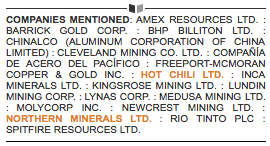
Rather than shoot for the stars, Paul Adams of DJ Carmichael argues that junior miners should focus on more modest projects best suited to maximizing shareholder value. This means projects with reasonable capex, good grades and short turnaround times. In this interview with The Mining Report, Adams suggests gold, copper, iron ore and rare earths projects that can weather the complete commodities cycle, as well as a fascinating gold-silver outlier in Peru.

Screen Shot 2014-03-11 at 5.46.42 PMThe Mining Report: After over two years of gloom, we’re seeing renewed optimism regarding mining equities in North America. Is there similar optimism in Australia?

Paul Adams: There is, but the change in sentiment is pretty much in its infancy down here. We recently undertook some analysis of the returns from the various subindices in the market. The small resources index here in Australia is at about +4.3% for 2014 compared to a -8% return for December. The recent surge in the gold price has certainly helped lift the mood.Newcrest Mining Ltd. (NM:TSX; NCM:ASX), our largest-cap gold stock, has risen about 63% since its recent lows in December.

The materials sector in Australia is tied closely to sentiment on Chinese growth, and headwinds there tend to have major repercussions. Both BHP Billiton Ltd. (BHP:NYSE; BHPLF:OTCPK) and Rio Tinto Plc (RIO:NYSE; RIO:ASX; RIO:LSE; RTPPF:OTCPK) have had really strong starts, but they’re pulling back a little now as the price of iron ore landed in China has dropped about $10. But those two companies have such a heavy weighting on the materials index that it’s really difficult to get a full picture of what’s going on.

TMR: With regard to China, how much growth do you foresee?

PA: Five years ago, China’s GDP growth was around 12%. Obviously, as the size of the Chinese economy increases, they can’t continue growing at that speed. We expect growth in the 6.5–7.5% range for the next year or two.

TMR: What’s your 2014 outlook for precious and industrial metals prices?

PA: We think the current gold price is about right, plus/minus $100 per oz ($100/oz). Wobbles in the emerging markets have prompted gold’s recent move up into the $1,300/oz range. We’re seeing gold coming back as an alternative investment, a bit of a safe haven.

We’re relatively bullish on platinum and palladium given conditions in Southern Africa.

TMR: What about silver?

PA: I don’t see a major diversion from the current gold/silver ratio.

TMR: How about industrial and critical metals?

PA: The consensus data for the industrial metals generally looks positive for 2014 and into 2015. Obviously, we want to see what effect the Indonesian ban on raw exports will have. That’s very important to nickel prices.

Zinc and lead should be reasonably well supported. There is very muted mine supply growth. As the global economy improves, there are going to be some increases in industrial demand for those particular metals. There’s softness in the copper market. With the consensus price probably falling below $7,000/ton, inventories are growing. These data are conflicting, however, and copper has a history of staying up longer than many had anticipated.

TMR: You’ve said that juniors should choose appropriately sized projects in order to have the best chance of generating shareholder wealth. Could you expand on that?

PA: In a post-global-financial-crisis and post-metals-boom world, we’re seeing a lot of companies with large projects that can’t get financed. Investors today want to see projects that can weather the complete commodities price cycle. Our view is that we would rather see a good management team take on a Tier 2 or Tier 3 project in a good jurisdiction with a reasonable capex and a reasonable timeframe, rather than a Tier 1 project they ultimately won’t be able to develop without joint ventures.

TMR: With regard to timeframe, how long is too long?

PA: A project that looks like it’s going to take much longer than four to five years to get into production is probably a little bit too far out.

TMR: What’s the danger zone for capex?

PA: It depends on the economics of the individual project, but I think a capex north of about $600–700 million ($600–700M) is pretty high. The sweet spot for small companies is somewhere up to $200–250M.

TMR: Is it difficult for mining companies to keep expectations modest? Isn’t there a natural tendency to shoot for the stars?

PA: With many mining companies, management has come from majors such as BHP, Rio Tinto orFreeport-McMoRan Copper & Gold Inc. (FCX:NYSE). They’re used to dealing with big projects and big budgets. There’s a degree of relearning when you’re in a small company; you have to be quick, nimble and you must count the pennies. There is a tendency to shoot for the stars, with the belief that maybe you’ll settle for the moon. But the statistics tell us this isn’t likely to happen.

We look for teams that have a measured approach to development because smaller projects are easier to develop without overly diluting shareholders in the process. Some management teams forget about that. They’re so intent on making a huge discovery that they forget about the shareholders along the way.

TMR: Which jurisdictions do you like best now?

PA: Certain parts of South America offer good opportunities. We particularly like Chile. The other emerging jurisdiction for Australian Stock Exchange (ASX)-listed companies is the United States. Nevada would certainly be front and center, then Arizona, then parts of Utah and Wyoming.

TMR: Chile is politically and socially stable, but concerns have been raised about infrastructure, in particular, deficiencies of water and electricity. What do you think of this?

PA: We’ve been to Chile three or four times over the past three years, and water and electricity are major issues. For instance, Barrick Gold Corp.’s (ABX:TSX; ABX:NYSE) Pascua Lama capex has blown up. To get water to the high Andes, it must be pumped from the coast. And if you’re not close to existing infrastructure, power costs are a major hurdle.

TMR: What companies do you like in Chile?

PA: We’ve followed Hot Chili Ltd. (HCH:ASX) for quite a long time now. We like the way management went about targeting its copper projects. Back in 2009, there really wasn’t much of a junior presence in Chile. Two or three companies dominated most of the belts, in particular, Corporación Nacional del Cobre (CODELCO). Hot Chili didn’t go into the country looking to see what was on offer. It went there with certain criteria in mind. It then sought areas that fulfilled that criteria and found, negotiated and acquired three projects very quietly.

Hot Chili chose projects in the iron-oxide-copper-gold (IOCG) belt. The advantage there over the high Andes projects is stark. They’re low altitude, close to the coast and close to infrastructure, so development hurdles will be lower.

TMR: Hot Chili did over 100,000 meters (100Km) of drilling at Productora last year. How productive was it?

PA: Productora has increased in size quite dramatically. If you have a footprint several kilometers long, that requires quite a bit of drilling to get it up to reserve status. The company wants to move its current resource, now mostly in the Inferred category, into the Measured and Indicated categories. And its delineation drilling at Productora has enabled it to do just that.

In addition, Hot Chili made several new discoveries through the application of some very clever geochemistry. That opened up a second front for exploration to keep expanding the resource base and that required further drilling over and above the delineation drilling.

TMR: When can we expect a reserve announcement from Productora?

PA: Very soon. Toward the end of Q1/14.

TMR: The estimates that I’ve seen for Productora’s capex are in the $600–650M range. How will Hot Chili raise that capital?

PA: That’s a good question, and I have to note that a capex of this size is pushing our envelope with respect to what we think is appropriate for a small company. But Hot Chili is in a favorable position. The relationship between the company and its major partner in the project, Compañía de Acero del Pacífico (CAP), Chile’s largest iron ore producer, is extremely important.

I think we shall see an infrastructure agreement between Hot Chili and Compañía de Acero del Pacífico, which will bring access to port and rail and access to an infrastructure corridor to bring seawater to Productora. An agreement would facilitate capex certainty and perhaps reduce the capex slightly. Of course, it is no secret that there are other majors interested in this project.

TMR: Lundin Mining Corp. (LUN:TSX) owns more than 8% of Hot Chili. How significant is that?

PA: Lundin has been very active in Chile and has a strategy to expand its presence there. Will it be part of Productora at the end of the day? We’ll have to wait and see, but we wouldn’t be surprised.

TMR: What do you make of Hot Chili’s second project, the Frontera copper-gold project?

PA: Like Productora, Frontera is surrounded by Compañía de Acero properties. It has quite a lot of potential to become a project that would feed into this infrastructure hub idea Hot Chili is trying to generate. It’s a porphyry deposit, larger than Productora but lower grade. But, again, its geographical location gives it certain advantages.

TMR: What’s your rating and target price for Hot Chili?

PA: We rate it a Buy with a target price of $0.99. We think that 2014 is going to be a critical year for the company. We expect that the ownership of Productora will become somewhat more certain.

TMR: Which ASX iron ore project do you like?

PA: Amex Resources Ltd. (AXZ:ASX). It has the Mba Delta Ironsand project in Fiji. Initial capex is about $125M, and in December it secured a $100M debt-financing facility. In January, it entered into a $100M construction and procurement agreement. The project has, in fact, started. We like this because operating costs are less than $30/ton for its product. Mine life stands currently at 20 years, and there is a lot of opportunity to push that out to 45 years.

The Fijian government wants the delta dredged because it will reduce the risk of flooding to the surrounding area. So it’s a win-win, really: increasing employment and government revenue, as well as improving the environment. Mba is a really good example of a long-life, cash-producing asset with 100% ownership. This is what we mean when we talk about an appropriately sized project.

TMR: From this side of the world, Fiji is not a name one normally associates with the mining industry.

PA: Recent political events in Fiji have raised concern, but don’t forget, Fiji has a very long mining history. Most famous is the Emperor gold mine, which operated for decades. Placer Dome, before it got taken over by Barrick, had a big copper exploration project called Namosi.

TMR: What’s your rating and target price for Amex?

PA: We rate it a Speculative Buy with a target price of $2.15.

TMR: Let’s talk about critical minerals projects.

PA: One manganese project we liked the look of a couple years ago was Spitfire Resources Ltd. (SPI:ASX) South Woodie Woodie project in the Pilbara district in Western Australia. The company was looking to follow up on its initial exploration success at Contact and Contact North. Numerous lookalike geophysical targets were generated through 2012 and 2013. These were drilled last year, and manganese was discovered.

Management decided subsequently that the exploration necessary to fully assess its numerous opportunities would result in an uncertain outcome, and potentially very dilutionary to shareholders. So the company elected to try and find a partner.

TMR: What’s your rating and target price for Spitfire?

PA: Because of pending negotiations on South Woodie Woodie, we rate it a Hold.

TMR: How about rare earth elements (REEs)?

PA: Considering the activities of Lynas Corp. (LYC:ASX) and Molycorp Inc. (MCP:NYSE), we believe pricing in the light rare earth elements (LREEs) is going to be soft going forward. So we decided that our interest is only in projects dominated by heavy rare earth elements (HREEs). There are only three or four of those on the ASX.

We’ve elected to look at Northern Minerals Ltd. (NTU:ASX), which has the Browns Range HREE project in Western Australia. Northern has recently announced a massive increase to its resource base, which is now close to 50,000 tons (50 Kt) contained total rare earth oxides (TREO). That’s from a resource of 6.5 million tons (6.5 Mt) at about 0.75%, of which the Wolverine project is the flagship. A Wolverine feasibility study is scheduled for completion in late 2014.

The key to all REE developments is definitely metallurgy. Northern Minerals is blessed with one of the simplest mineral assemblages, dominated by xenotime. So here we have a company with 100% ownership, a fraction of the capex common to its peers and a very reasonable potential timeframe to production.

TMR: I’ve been told that REE projects that require huge production to become profitable are dubious because of the scarcity of end users. How does Northern stack up in this respect?

PA: The important thing here is the distribution of metals. Molycorp, for instance, does have to move very large amounts of material because the pricing for the lights is relatively soft. They can’t produce a lot of HREEs without producing a lot more LREEs. That’s the catch-22. But if you have a small, high-grade project like Northern’s that is dominated by HREEs, then you get a pricing advantage, and overproduction is not a problem.

TMR: What’s your rating and price target for Northern Minerals?

PA: We rate it a Speculative Buy, but don’t currently have a price target. We are awaiting results from their pilot project. So far, however, TREO recoveries are looking extremely good.

TMR: Are there any ASX-listed gold producers that have caught your interest?

PA: We look to low-cost gold producers that, again, can withstand the commodity price cycle. In 2006, for example, we took an early position in Medusa Mining Ltd. (MLL:TSX.V; MML:ASX; MML:LSE). Medusa had a high-grade, vein-style system in the Philippines, and its valuation exceeded $1 billion ($1B). Some of the personnel who were involved in Medusa moved to Kingsrose Mining Ltd. (KRM:ASK), which is exploiting a similar, high-grade, narrow-vein deposit in Sumatra in Indonesia called Way Linggo. Its costs after silver credits are going to be somewhere in the region of $300–400/oz, similar to Medusa’s.

TMR: Kingsrose trades now at $0.35. That’s rather modest considering its outstanding production cost, no?

PA: You’re right. Kingsrose currently has a market cap of about $116M. It has made a number of alterations to its milling circuit. It also had a tough year in 2013 following the death of a miner. However, after going through the necessary administrative hurdles, the company now anticipates full approval to recommence its production. We believe that when production begins again, likely in March or April, it will ramp up to its 40 Koz target relatively quickly.

TMR: What’s your rating and target price for Kingsrose?

PA: We rate it a Speculative Buy with a target price of $0.60.

TMR: How about ASX-listed gold projects in Brazil?

PA: We had followed Cleveland Mining Co. Ltd. (CDG:ASX) and its Premier gold mine. We liked its team, but we’ve also seen that Brazil has been very hard for ASX-listed gold producers. I think most of the problems there are geological because the gold tends to be very nuggety and discontinuous in some of these high-grade veins. We want to see Cleveland get a little bit further down the track before we feel comfortable reinitiating coverage.

Orinoco Gold Ltd. (OGX:ASX) has the Cascavel project in Brazil. We’re waiting for some further confirmation on its continuity of mineralization. It’s very hard to get a grade determination in some of these projects because of the nuggety nature of the gold.

TMR: Any other ASX companies you’d like to mention?

PA: One that has caught our eye is Inca Minerals Ltd. (ICG:ASX). It has the Chanape project in Peru. Several midtier and major mining houses are now requesting site visits and signing confidentiality agreements. So that gives you an indication that there is something going on there. Initial exploration was centered on gold- and silver-rich breccia pipes that outcrop on surface. More than 90 have been identified.

Our view is that these breccia pipes coalesce at depth to some degree, but a hole drilled from surface came up with a 108m interval at 2 grams per tonne (2 g/t) gold and 41 g/t silver. The last three holes drilled have targeted the deeper porphyry parts of the system. Through some really good geochemistry and some geophysics, Inca has determined the vectoring on the central parts of the system. So the indications are that it is getting closer. Hole 11 intersected a 460m-long intersection of porphyry and hydrothermal breccias with the most amount of visible metal seen so far. That tells you they are on the right track. Technical comparisons have been made to the Toromocho project, located 30Km away.

TMR: Whose project is that?

PA: Chinalco (Aluminum Corporation of China Limited) (ACH:NYSE). That’s a 2.15 billion ton (2.15 Bt) project bought for $750M and currently in construction. Inca is not saying that it has another Toromocho. What it is saying is that it has geological characteristics that display a similar complexity and similar alteration to Toromocho: near-surface, epithermal breccia-style mineralization that overlie a porphyry system.

Inca is ticking boxes with respect to the technical aspects of the project, and that’s what has piqued the interest of the majors that now want to have a look. Chanape does not fit our thesis of small companies choosing small projects, but there are always exceptions to the rule. It’s early days yet, but this could be quite exciting.

TMR: You don’t cover Inca Minerals yet?

PA: Not yet. We’ve written a couple of short notes on it. We’re extremely interested to see where their latest hole comes in with respect to grade. If results are similar to the first, we’ll be looking at this company a lot more seriously.

TMR: Paul, thank you for your time and your insights.

Paul Adams is a geologist and head of research at DJ Carmichael. He has 16 years of experience in the mining industry, in Australia and elsewhere, and was previously chief geologist and evaluations manager at Placer Dome’s Granny Smith mine. He is a member of the Australian Institute of Mining and Metallurgy and has a Graduate Diploma in Applied Finance and Investment from the Financial Services Institute of Australasia.


Reefer Madness!

Screen Shot 2014-03-11 at 12.22.33 PMAn old friend contacted us last week with a business opportunity. More and more US states – not to mention Canada – are making it legal for people to smoke weed. 

“Look, we all know that the use of medical marijuana is not limited to terminal cancer patients. You just go to the doctor. You tell him you have a pain here… or there. He prescribes you weed. If not, you get a different doctor. 

“People don’t like to see young people smoking pot because they think it stunts their growth. I mean intellectually. And their careers. Marijuana seems to slow them down. 

“But it’s not young people who are driving this trend. It’s older people. They tried it when they were young. And now they’ve got plenty of aches and pains. And they know marijuana can help them. And it won’t do them any harm. This market is huge. And it’s growing… well… like a weed.” 

Yes, dear reader, another new high. The Bubble Era is boiling them up everywhere. Record stock prices. Record debt. Record junk-bond issuance. Record household wealth increases. 

Heck, records were meant to be broken. When one high is registered, there is bound to be a new high coming down the pike sooner or later.

A New High

We checked into our hotel in Aiken: 

“You’re aware of our smoking policy?” asked the desk clerk. 

“No,” we replied. “Is smoking prohibited or obligatory?” 

“Huh? Oh… you’re not allowed to smoke anywhere in the hotel.” 

“Does that apply to medical marijuana as well as to tobacco?” 

“Uh… you’re joking, right?” 

“Right.” 

But it was a good question. Dope is coming. Hotels are required to have ramps, elevators and wheelbarrows to haul their gimpy-legged guests. An ad in the newspaper told us that landlords, too, are required to cater to those who can’t get through the door on two pins. 

Soon, hotels may be required to accommodate potheads too. 

Why? 

It could be a medical condition… a federally-protected disability. Those with a doctor’s prescription will be able to puff on weed even in non-smoking places. Roach clips will be provided in the lobby! 

Forbes reports that marijuana stocks are hitting record highs… and minting their first billionaires: 

You have probably never heard of Bart Mackay, a 57-year-old Las Vegas lawyer who works on various ventures like Dot Vegas, which operates the Vegas top-level domain. But on paper, Mackay is the first pot-stock billionaire. 

Mackay’s holdings in CannaVest, which bills itself as the world’s leading hemp-based investment company, are valued at $1.8 billion. That figure might seem like a drug-induced hallucination, but it’s technically true. CannaVest is the top-performing stock in America in 2014 with a market capitalization greater than $1 billion. 

Its thinly-traded shares, which change hands on the Over-The-Counter Bulletin Board, or “pink sheets,” have soared by 680 percent in the last year. They are already up more than 300 percent in 2014. The average daily volume of about 10,900 shares has been light this year, but someone is buying the stock and the $117 it closed at on Friday makes Mackay the world’s first pot stock billionaire thanks to his 15.7 million shares in CannaVest.

Hostile Takeover

“Let’s not delude ourselves,” continued our entrepreneurial friend, “this is a hostile takeover of a multibillion-dollar industry. 

“It’s all about control and money, not freedom. It will be heavily licensed, regulated and taxed. There will be a lot of money in it… it’s like the liquor business when they got rid of prohibition. 

“If you legalized pot, prices would collapse. Nobody wants that. What they’re really doing is shifting the margins from the smugglers and dope dealers to the government. 

“You’ll be able to get pot… without worrying about going to jail or associating with shady characters. The quality is much higher than the stuff we smoked in college. And the people in the business – licensed producers, wholesalers and retailers – will make a lot of money. So will the government. Everybody will be happy. 

“We heard an example recently: Dad (67-years-old) was plagued all his life by depression. Practically ruined his life. Then a woman at his church – at church! – introduced him to marijuana. 

“Now, he smokes dope… and he’s fine.” 

Regards,


Bill


Market Insight:
Should You Invest 
in Pot Companies? 

From the desk of Chris Hunter, Editor-in-Chief, Bonner & Partners

It may sound crazy, but one day marijuana may be as legally available in the US as alcohol. 

That means for anyone with a long-term time horizon… and able to stomach plenty of volatility along the way… investing in marijuana stocks could see big returns. 

Already, 20 states and the District of Columbia allow the use of marijuana for medical purposes. And as the New York Times reports: 

A little over a year after Colorado and Washington legalized marijuana [for recreational use], more than half the states, including some in the conservative South, are considering decriminalizing the drug or legalizing it for medical or recreational use.

Proving this isn’t a partisan issue, the two states likeliest to legalize marijuana next are Democratic-controlled Oregon and Republican-controlled Alaska. 

Meanwhile, the Treasury Department and Justice Department have released guidelines that will make it easier for banks to do business with legitimate marijuana businesses without fear of criminal charges. 

There’s certainly a strong fiscal case for legalizing marijuana. According to Colorado Governor John Hickenlooper, taxes from legal marijuana sales will reach $134 million in the coming fiscal year – much higher than had been predicted when the measure was passed in 2012. 

None of this means the path to marijuana being as freely available as alcohol will be a smooth one. Pot is still illegal at the federal level. And there are plenty of vocal opponents of legalization. 

But today, 51% of Americans believe marijuana should be legal, according to a recent New York Times/CBS News poll. That’s up from 27% in 1979, when the New York Times and CBS first asked the question. 

Until marijuana is legalized under federal law, though, view any investment in marijuana-related stocks as a speculation. And like any speculation, you need to adhere to strict position-sizing rules. 

That means keeping any investment in marijuana stocks as a small portion of your overall portfolio. An unforeseen change in the law could wipe out your stake.

Playing a Bearish Iron Ore Market With Mining Options

If you are interested in taking a little risk in your portfolio, seasoned trader Andrew Wilkinson lays out a few opportunities in this bear market opportunity – Money Talks

iStock 000013137293XSmall-resize-380x300-1Playing a bearish iron ore market with mining options
According to The Steel Index, the sliding price of iron ore has delivered a bear market — technically speaking, with its price sliding 8.3% to commence the week. A decline of 20% from a recent peak is good enough to match the criteria for a bear market and the poor weekend trade report from China has given rise to growing concerns that the economy is grinding to a halt. Lower iron ore prices have the potential to translate badly for related company earnings. And as US stocks slip on Monday, option traders are populating several related companies. 

Shares in AK Steel Holding Corp. (Ticker: AKS) have suffered least and are down by 1.4% to $6.23. Options implied volatility is higher by 9% to 62.9%. However, this name has the highest put-to-call ratio on the day with almost 16 bearish puts in action for every bullish call. Almost half of the entire day’s 23,400 options contracts were earlier traded across put options expiring in June at the $6.00 strike. The 10,300 contracts traded at the strike compares to open interest of only 1,180 contracts.

The largest price decline amongst this group belongs to Walter Energy Inc. (Ticker: WLT) whose shares slid by 8.7% to $9.53. Options implied volatility jumped 11% to 86.9% while options trading ran-up to 34,000 contracts. There are only 347,000 open contracts on the entire stock.

The name with the largest volume of open interest is Vale SA (Ticker: VALE) where volatility jumped 7.3% to 36.9%. Its shares slid by 3.4% to $12.62 as option trading registered an early afternoon tally of 30,200. The put-to-call ratio of 0.86 indicates close symmetry in the overall pattern of trading. This week’s call options expiring Friday at the 13.5 strike were sold down to 3-cents, while on the bear side the March 28 expiration $12.5 puts were most actively traded. Also popular amongst traders Monday are the $17.0 strike calls for June expiration where 5,000 contracts have traded at around 7-cents per contract.

Both Freeport McMoRan (Ticker: FCX), whose share price is down 3.3% to $31.14, and United States Steel Corp. (Ticker: X), where shares are lower by 2.4% to $24.24 have experienced a double-digit increase in options implied volatility as well as strong trading interest. Freeport volume of 43,000 compares to established positions totaling 755,000 while US Steel has comparable metrics with 22,000 options in action where the open interest tally is 466,000 contracts.

image001

ABOUT THE AUTHOR Andrew Wilkinson

Andrew is a seasoned trader and commentator of global financial markets. He worked for several London-based banks trading cash and derivatives before moving to the U.S. to attend graduate school. Andrew re-joins Interactive Brokers following a two-year stretch at a major Wall Street broker-dealer as their Chief Economic Strategist. His coverage of stocks, options, futures, forex and bonds regularly surfaces in global media, and over the last several years Andrew has made many TV appearances on Bloomberg, BBC, CNBC and BNN and Yahoo Finance.

test-php-789