
Bonds & Interest Rates
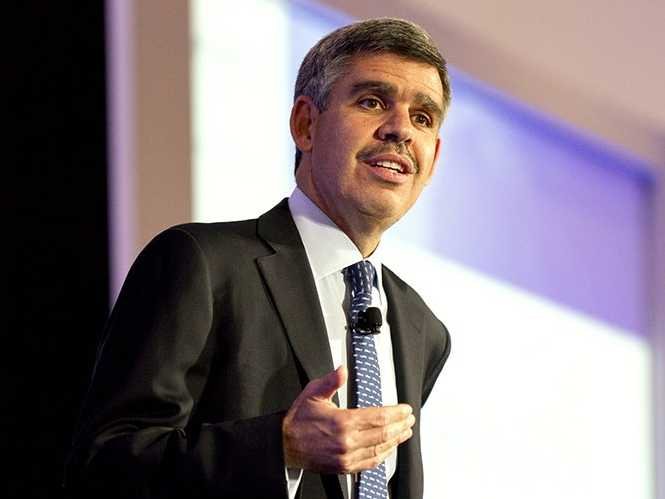 Mohamed El-Erian Explains:
Here are a few pointers as we all get ready for another highly-anticipated meeting of the FOMC, the Fed’s most important policy making committee.
The institutional context: This week’s FOMC meeting is of interest for more than its update of economic developments and prospects, policy insights and actions, and the periodic release of the summary of economic projections. It is the first FOMC meeting to be chaired by the highly-respected Janet Yellen; and it will be her first press conference as the leader of the most powerful central bank in the world.
The Policy Context: Absent some major economic acceleration or deceleration – and, I stress, it has to be major, one way or the other – the FOMC is essentially on automatic pilot for 2014. Specifically, the Fed will:
- Leave policy rates as is;
- Continue to taper in a gradual fashion with a view to fully exiting QE3 by the end of the year; and
- Evolve and strengthen its forward policy guidance.
The Economic Context: The FOMC’s approach is underpinned by the view that the underlying economic conditions are strengthening, albeit slowly; that balance sheets continue to heal; and that inflation is well contained (maybe too low). As such, senior Fed officials would attribute most of the recent weakness in economic indicators to the temporary and reversible impact of the weather. And the situation in the Ukraine would be seen as important to monitor but not a reason for a policy course adjustment.
The Intrigue: As it pivots from balance sheet purchases (QE) to greater reliance on forward policy guidance to support the economy, there are significant uncertainties as to how the Fed can/should best do this – particularly when it comes to the forward guidance component. What we know for sure is that the Fed will transition away from its current (narrow) unemployment threshold to a more holistic view of the labor market. This could even happen as early as this week. We don’t know as yet when our central bankers will supplement this by an inflation indicator that is well above the current rate. This is relevant for markets as investors would take the latter as an even stronger signal that the Fed would remain on hold for quite a while. If not, markets would be much more willing to test the central bank.
The Immediate Market Implications: Assuming other things are relatively constant (and that is a big assumption given what is happening in Ukraine and some other emerging economies), risk assets would do well if the Fed does indeed decide to evolve its forward policy guidance by moving both on the unemployment and on the inflation fronts – that is to say, inserting more comprehensive employment indicators and some type of inflation target. Also, in such circumstances, the dollar would weaken against other major currencies, inflation-protected bonds would do well, and the nominal Treasury yield curve would steepen.
The Big and Consequential Uncertainty: Notwithstanding the Fed’s continued activism and vigilance, and despite its deep and steadfast commitment to support growth and jobs, there are unanswered questions about the overall effectiveness of its current policy stance. The concern – for both Main Street and Wall Street – is that the longer the Fed experiments and the longer the economy fails to attain “escape velocity,” the greater the likelihood that the durable benefits of its unconventional policies would be offset by the “costs and risks.” Look for this issue to assume greater prominence as the Fed shifts this year from directly impacting the net supply of securities (via its QE purchases) to indirectly influencing it (via strengthened forward policy guidance). In the process, markets would likely periodically test both the Fed’s resolve and its effectiveness.
So far, investors have repeatedly given the Fed the benefit of the doubt. And it has been the correct trade, over and over again. But if the economy continues to respond rather sluggishly, and with developments in the rest of the world now acting as headwinds, the Fed may have to experiment even more to sustain the wedge between market values and underlying fundamentals.
Mohamed A. El-Erian is the former CEO/co-CIO of PIMCO. He is Chief Economic Advisor at Allianz and member of its International Executive Committee, Chair of President Obama’s Global Development Council and author of the NYT/WSJ bestseller “When Markets Collide.”
Check out Business Insider’s – 10 Things You Need To Know This Morning

The emerging market turmoil in January got the safe haven ball rolling. The slowing U.S. economy then added another boost, especially with Yellen keeping the same policies as Bernanke.
Gold is a safe haven
And now geopolitical concerns, like the crisis in Ukraine, are giving gold yet another safe haven push upward.
Plus, with the U.S. dollar under pressure, while interest rates stay low, it’s also bullish for gold.
Overall, physical demand and economic jitters are boosting the gold price.
The ever growing demand
Clearly, the world has plenty of uncertainty. From Russia, Ukraine, Venezuela, emerging currency devaluations, the sluggish U.S economy, as well as the slowdown in China, the world has hot spots.
With this backdrop it’s easy to understand why demand continues to grow. The world wants gold.
Today gold is in a C rise that began with the December lows.
So far gold’s 15% rise looks good and gold is strong above $1300. Gold could now easily rise further to test its August high near $1420.
In fact, if gold rises back up to its 23 month moving average and prior support, we could see the $1485 – $1536 level tested.
Keep in mind, a rise of this type would be a very good looking rise. But gold won’t really turn bullish until it can rise and stay above these levels.
Gold stronger than gold shares… but for long?
Gold has fallen less than gold shares. Clearly, they are the volatile ones of the group. Gold shares tend to rise more, and fall more than gold does.
But comparing gold to gold shares, you can see on Chart 1 that the mega trend still favors gold.
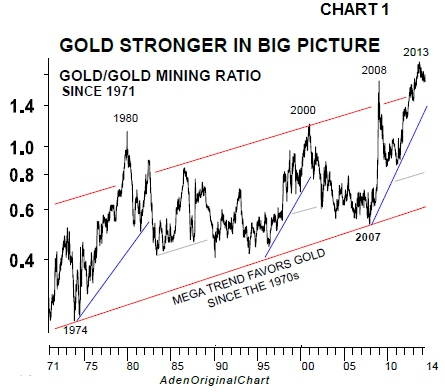
In gold shares’ case, the ratio rose to an extreme high in 2013, favoring gold, because gold shares collapsed when gold fell. This is saying that gold shares are poised to continue outperforming gold until a more balanced situation evolves.
Chart 2A provides another angle. Here you can see how much weaker gold shares have been compared to gold since the 2011 peak. This weakness widened the most last year. But as the ratio (B) shows, it’s formed a downside wedge also suggesting that gold shares will continue to outperform gold this year, and possibly beyond.

Gold shares are up 33% on average since their mid-December lows, which suggests that a major shift in sentiment is taking place. Investors are starting to turn toward gold and gold shares.
We recommend buying and keeping both.
###
Mar 14, 2014
Mary Anne & Pamela Aden
email:
info@adenforecast.com
The Aden Forecast


Strengths
Every week, our investment team reviews a variety of sources to formulate a summary of the top events in the gold, resources, and emerging markets. The results are categorized in terms of strengths, weaknesses, opportunities and threats. We believe this SWOT model helps investors make informed decisions about their gold and gold stock investments.
For the week beginning March 10, here is the SWOT for the gold market.
Strengths Weaknesses Opportunities & Threats
Every week, our investment team reviews a variety of sources to formulate a summary of the top events in the gold, resources, and emerging markets. The results are categorized in terms of strengths, weaknesses, opportunities and threats. We believe this SWOT model helps investors make informed decisions about their gold and gold stock investments.
For the week beginning March 10, here is the SWOT for the gold market.

- Gold posted a very strong week, rising $43.07 per ounce as Chinese macroeconomic data revived fears of a global slowdown, and geopolitical tensions brewed ahead of the scheduled Crimea referendum this weekend. Furthermore, as shown on the chart above, the 50-day moving average closed less than $10 below the 200-day moving average, which implies that barring a gold collapse below $1,300 next week, we should see gold making a golden cross before the end of the week. Our analysis shows that, going back to 2000, a golden cross in gold is followed on average by a 50 percent rally lasting on average 15 months.
- Gold ETFs appear to be back in fashion, as total known gold ETF holdings are now 870 thousand ounces higher since bottoming at 55.8 million ounces in mid-February. The ETF data comes as the situation in Ukraine reinforces gold’s safe haven status and the weak macroeconomic data coming from China highlight gold’s hedging properties amid a risk-off investing environment.
- Pretium Resources announced the addition of James Currie to its executive team as chief operating officer. Currie has notable mine-building experience, and was recently chief operating officer for New Gold where he led the construction of the New Afton gold mine. On a different note, Aldridge Minerals received environmental approval for its Yenipazar Project in central Turkey. With the completion of this milestone, Aldridge is positioned to advance the project towards financing and construction.
Weaknesses
- The China Gold Association (CGA) said China’s gold demand may decline by 17 percent to 250 tonnes in the first quarter of 2014, from 300 tonnes in the first quarter of 2013. Despite this fact, CGA vice chairman Zhang Yongtao expects annual demand to remain strong at 1,176 tonnes, very close to the actual annual demand for 2013. According to HSBC Research, Mr. Zhang’s forecast indicates that China’s gold demand should be stronger for the rest of 2014 after the first quarter, when compared to the same period in 2013. This may indicate that China’s strong appetite for gold is likely to be sustained well into 2014.
- As part of its fourth-quarter results release, Detour Gold stated it is permitted to enter into transactions to hedge up to 50 percent of its forecasted gold sales. As a result, Detour sold forward 40 thousand ounces at $1,241 and 45 thousand ounces at $1,327, for a total of 85 thousand ounces at $1,287. With gold closing above $1,380 per ounce today, it could be said that the hedging exercise will cost Detour shareholders nearly $80 million in forgone revenue this year.
- Hochschild Mining suspended its full-year dividend despite beating its production guidance. According to the company’s top management, 2013 proved to be a very challenging year, and despite the cost saving and cash flow optimization measures implemented, the company posted a net loss of $128.7 million after impairments, and decided to suspend its payout.
Opportunities
- A Royal Bank of Canada report shows similarities between the 2005 to 2008 gold price rally and the current gold price environment, which analysts believe could lead to a sustained gold price rally over the next 12 to 24 months. While still early in gold recovering from its lows, Chinese and emerging market gold demand combined with the absence of central bank selling both offset any ETF liquidations. Given the volumes seen in China recently, and the fact the Chinese market is not as price sensitive – thanks to high savings rates – Chinese demand on its own could replicate the 2005-08 ETF-driven gold rally.
- Integra Gold Corp. reported the results of the preliminary economic assessment carried out at its flagship Lamaque Gold project in Val d’Or, Quebec, showing an expected after-tax internal rate of return of 38 percent on peak annual production of 143,000 ounces per year. The Lamaque project is one of a handful of high grade, low capex, and stable jurisdiction projects in development right now. On a similar note, Alacer Gold reported record annual gold production at its Copler gold mine, at all-in costs of $864 per ounce. The company expects this outstanding performance to continue into 2014, at one of the lowest all-in costs in the industry.
- An independent analysis has determined that Australia’s Mineral Resource Rent Tax (MRRT) has only managed to raise A$232 million this fiscal year, a far cry from the A$4 billion originally forecast. A spokeswoman for Australia’s Treasurer Joe Hockey stated the tax should be eliminated because it has destroyed jobs and investment. Australia’s Prime Minister Tony Abbott has pledged to repeal the tax.
Threats
- A recent report by several non-governmental organizations including the Sierra Club asserts NAFTA “provided the ingredients for an explosion of dangerous foreign mining activity in Mexico.” Dorothy Kosich, Americas’ Editor for Mineweb, reports contents of the original report stating Mexico has become the largest importer of multiple toxic chemicals which are major sources of water contamination. The report concludes that NAFTA has protected foreign mining corporations and allowed harmful environmental impacts to Mexico.
- A wave of weak economic data released by the Chinese government agencies this week helped propel gold higher as U.S. and Europe markets weighed the risk of a deceleration in Chinese economic growth. The weak data points released show the risk of Chinese physical gold and jewelry buyers to defer consumption to a later date. As a matter of fact, Chinese retail sales data showed growth of 11.8 percent, missing analysts’ estimates for a 13.5 percent increase. As a result, gold demand from China may be lower in the short term, or until the festive and marriage season starts later in the year.
- The instability in Ukraine, together with the China hard-landing fears, has not changed Goldman Sachs’ bearish view on gold. According to Jeffrey Currie, the bank’s head of commodities research, the weakness in the U.S. and the turmoil in Ukraine are not driving gold. Instead, the lower mining costs mean it is more probable that gold drops below $1,000. Marc Faber on the other hand believes the near tripling of the S&P 500 since the end of the bear market in 2009, together with heavy insider selling, high valuations, and extremely high corporate profits should make any investor consider the possibility that we may be at a top of the U.S. equity cycle.
See the strengths, weaknesses, opportunities and threats of the gold, resources and emerging markets every week by subscribing to the Investor Alert. It arrives in your email inbox every Friday evening and best yet, it’s free.

###
Frank Holmes
website: www.usfunds.com
All opinions expressed and data provided are subject to change without notice. Some of these opinions may not be appropriate to every investor. Past performance does not guarantee future results. The following securities mentioned were held by one or more of U.S. Global Investors Funds as of 12/31/13: Alacer Gold Corp, Aldridge Minerals Inc., New Gold Inc., Pretium Resources Inc.

 The Aussie delivers profits just as anticipated.
HERE’S YOUR CHANCE TO SEE JACK’S TRADING IDEAS IN REAL-TIME
My chart analysis suggested a big move was possible for the Japanese yen, the British pound, and the Australian dollar. But my indicators had not trigger any trades at the moment. In fact, only today does it look like a trade idea will trigger on the yen.
Anyway, that’s why I suggested the indicators I use serve better as an early alert system than a precise timing tool.
Also as I suggested, Jack uses indicators that do offer precise timing for trading ideas that can anticipate big movements in currencies.
In fact, his indicators worked perfectly on an Australian dollar trade he issued Thursday (shortly after I wrote to you).
CLICK THE LINK BELOW TO READ MORE …

-
I know Mike is a very solid investor and respect his opinions very much. So if he says pay attention to this or that - I will.
~ Dale G.
-
I've started managing my own investments so view Michael's site as a one-stop shop from which to get information and perspectives.
~ Dave E.
-
Michael offers easy reading, honest, common sense information that anyone can use in a practical manner.
~ der_al.
-
A sane voice in a scrambled investment world.
~ Ed R.
Inside Edge Pro Contributors

Greg Weldon

Josef Schachter

Tyler Bollhorn

Ryan Irvine

Paul Beattie

Martin Straith

Patrick Ceresna

Mark Leibovit

James Thorne

Victor Adair