
Personal Finance
“an ongoing shift in the stock market’s leadership away from high flying concept and momentum stocks into more defensive sectors”
 Rich Learning, Enjoyment, and Fun through Conversation
Sherry Turkle, a psychologist and professor at M.I.T., and the author of “Alone Together: Why We Expect More From Technology and Less From Each Other” opines that, “Human relationships are rich; they’re messy and demanding. We have learned the habit of cleaning them up with technology. And the move from conversation to connection is part of this. But it’s a process in which we shortchange ourselves. Worse, it seems that over time we stop caring, we forget that there is a difference. We are tempted to think that our little ‘sips’ of online connection add up to a big gulp of real conversation…..But they don’t. E-mail, Twitter, Facebook, all of these have their places – in politics, commerce, romance and friendship. But no matter how valuable, they do not substitute for conversation……In conversation we tend to one another….We can attend to tone and nuance. In conversation, we are called upon to see things from another’s point of view.”
Aside from discussing the merits of conversation, I also examine an ongoing shift in the stock market’s leadership away from high flying concept and momentum stocks into more defensive sectors.
I am enclosing two reports. The first report Breakeven inflation – reflation time, and longer-term opportunities? is by my friend Laeeth Isharc who is one of the smartest and most intellectual individuals that I know of. Isharc opines that, “The consensus narrative is ….that inflation is not an immediate problem, and that the central bank knows very well how to defeat inflation once it becomes evident.” He, however, believes that, “these concerns over deflation and weak growth will turn out to be mistaken, that it will be more difficult to control inflation than most anticipate, and that tactically the timing and entry level are right to take the other side of the trade and bet on reflation by entering a long breakeven inflation position.”
The second report is by Jawad Mian who is a fund manager living in Dubai. He started recently a macro fund and a monthly newsletter service called Stray Reflections (jawad@stray-reflections.com). In his most recent reflections he discusses the possibility of shorting US internet and biotech stocks and his views about inflation.
Kind regards
Yours sincerely
Marc Faber
Gold Bullion Stored In Singapore Is Safest
The US has just acquired Debt to fuel Consumption
Bitcoin could be Worthless if The System Crashes
Real Estate : Dubai Property Market can still do better
Marc Faber is an international investor known for his uncanny predictions of the stock market and futures markets around the world.Dr. Doom also trades currencies and commodity futures like Gold and Oil.

“In the economic sphere an act, a habit, an institution, a law produces not only one effect, but a series of effects. Of these effects, the first alone is immediate; it appears simultaneously with its cause; it is seen. The other effects emerge only subsequently; they are not seen; we are fortunate if weforesee them.
“There is only one difference between a bad economist and a good one: the bad economist confines himself to thevisible effect; the good economist takes into account both the effect that can be seen and those effects that must beforeseen.
“Yet this difference is tremendous; for it almost always happens that when the immediate consequence is favorable, the later consequences are disastrous, and vice versa. Whence it follows that the bad economist pursues a small present good that will be followed by a great evil to come, while the good economist pursues a great good to come, at the risk of a small present evil.”
– From an 1850 essay by Frédéric Bastiat, “That Which Is Seen and That Which Is Unseen”
I’ve come to South Africa a little bit ahead of my speaking tour next week to spend a few days “on safari.” Which is another way to say that I am comfortably ensconced in a game lodge next to Kruger Park, relaxing and trying to get some time to think. We’ve been reasonably lucky on the game runs: besides the usual lions, rhinoceri, water buffalo, etc., we’ve seen both cheetah and leopard, two animals that avoided my vicinity on every other trip to Africa. I’m here at the end of the rainy season, so everything is lush and green, and you have to get a little lucky to find the animals in the dense bush.
In several moments here, I was reminded of an essay I wrote two years ago called “The Lion in the Grass.” So I went back and read it and decided to update it fairly extensively in order to talk about the hidden lions we don’t see today that could catch us unawares tomorrow. Just like the African bush I am surveying at this moment, the economic landscape out there could harbor some serious but still unseen problems.
I have been captivated by the concept of the seen and the unseen in economics since I was first introduced to the idea. It is a seminal part of my understanding of economics, at least the small part I do grasp. It was introduced by Frédéric Bastiat, a French classical liberal theorist, political economist, and member of the French assembly. He was notable for developing the important economic concept of opportunity cost. He was a strong influence on von Mises, Murray Rothbard, Henry Hazlitt, and even my friend Ron Paul. (I will have to ask Rand about his familiarity with the Frenchman the next time I see him.) Bastiat was a strong proponent of limited government and free trade, but he also advocated that subsidies (read stimulus?) should be available for those in need. “[F]or urgent cases, the State should set aside some resources to assist certain unfortunate people, to help them adjust to changing conditions.”
Today we explore a few things we can see and then try to foresee a few things that are not quite so obvious. The simple premise is that it is not the lions we can see lounging in plain view that are the most insidious threat, but rather that in trying to avoid those we may stumble upon lions hidden in the grass.
But first, I really want to urge you to consider joining me in San Diego May 13-16 for myStrategic Investment Conference. We are continuing to fill out the strongest list of speakers we’ve ever had in our 11 years at this. My good friends George Gilder, Stephen Moore of the Wall Street Journal, and Neil Howe (who wrote The Fourth Turning) have all agreed to come and join Niall Ferguson, Newt Gingrich, Kyle Bass, David Rosenberg, and a dozen other A-list speakers from around the world. You can see who else will be there by clicking on the link above or here.
And I’m especially honored and pleased to announce that Vice Admiral Robert S. Harward, Jr., has agreed to join us on Wednesday night as a special keynote speaker. The three-star admiral (just recently retired) is a Navy SEAL and former Deputy Commander of the United States Central Command. In addition to his numerous other positions and awards, he also held the title of “Bull Frog” from 2011 until 2013 (longest-serving SEAL on active duty).
This is simply the finest economic and investment conference anywhere in the country. Don’t procrastinate; make your plans to come and register now.
When I was discussing this concept with Rob Arnott (of Research Affiliates and the creator of Fundamental Indexes) in Tuscany a few years ago, he mentioned the following photo, which he took on the savannah in Tanzania. I think it’s a perfect way to start out our discussion of the lions in the grass.

Going back to Bastiat, let’s look at that first sentence:
In the economic sphere an act, a habit, an institution, a law produces not only one effect, but a series of effects. Of these effects, the first alone is immediate; it appears simultaneously with its cause; it is seen. The other effects emerge only subsequently; they are not seen; we are fortunate if we foresee them.
It is natural to focus on the apparent dangers in front of us. That is part of our evolutionary heritage from the time when humans were first dodging lions and chasing antelopes on the very African savannah in Rob’s picture. But we soon learned that, if we were to survive, it wasn’t enough to dodge the lions we could see. It is the hidden lions that may spring upon us suddenly and take an arm or a leg.
Below I have once again reproduced Rob’s picture. Even when I knew there was a hidden lion, I couldn’t find it. But after it was pointed out to me, it is now the first thing I see. And there is a direct analogy there, to both economics and investing.
So, before you go to the next page, I suggest you go back and look one more time to see if you can spot the hidden lion. Just for fun, you know.
I showed this to a friend of mine who is a hunter, and he found it almost immediately. But then he has taught himself over the years to look for hidden game. And as Bastiat noted, it is the skilled economist who looks for the effects that are hidden, the surprises that are unseen. It should be a habit to look at the potential second- and third-order consequences of what we can see happening before our eyes. That way, we not only avoid the hidden lions, we also turn what would hunt us and do us harm into the hunted. Sometimes, the dangers themselves can be turned into a very nice trophy indeed – if you can act in time.
As I noted, that previously invisible lion is now the first thing I see. And that is the way with economic lions in the grass. Once someone points one out, it’s obvious, so obvious that we soon convince ourselves that we would have seen the lion without help. How many people told you they “knew” all along that subprime debt was going to end in tears? Or that the housing market was a bubble? Or that we would be plunged into the Great Recession?
I remember that in the fall of 2006 I was beginning to talk about the probability of a recession, in this letter, in speeches, and in numerous media interviews. (There is one such episode still up on YouTube.) I was told I was ignoring what the market was telling us, and indeed the market proceeded to go up for another six months or so. Being early is lonely. Me and Nouriel. J
Today there are a lot of people who tell us they knew there was a recession coming all along. In fact, the farther we get from 2006, the greater the number of people who remember making that call. It now seems I had no reason to feel so lonely out there on that limb, scanning the tall grass of the savannah. In retrospect, it seems that limb was rather crowded.
So, with that in mind, let me show you where the other lion is. Then go back and look at the first picture. After a few times you will see the hidden lion almost before you see the obvious ones.

Black Swan or Hidden Lion?
I should note that a lion in the grass is different from a black swan. A black swan is a random event, something which takes us all by surprise. Economic black swans are actually quite rare – 9/11 was a true black swan. Other than Nostradamus some 500 years ago, who saw it coming?
The last recession and the credit crisis were not true black swans. There were those who saw it all coming, but few paid attention. They were dancing right along with Chuck Prince to the rousing music of a bull market and swelling profits.
As we know now, a few people saw the subprime crisis coming and made huge fortunes. Sadly, pulling that off generally required one to risk a small fortune to play in that game. So while I talk about the lions hidden in the grass, remember that if you can figure out how to play it, there can be large profits betting on that which is unseen by the markets.
Now, let’s look at a few obvious lions and then see if we can spot a few hidden lions lurking nearby.
By some miracle, Mario Draghi and his team at the European Central Bank (ECB) continue to get from their communication tools what most central banks have to take by force. Widespread complacency has washed over the region in the months and quarters since July 2012, when Mr. Draghi introduced the Outright Monetary Transactions (OMT) facility and adamantly promised to do “whatever it takes” to preserve the euro system.
As a result, government borrowing costs are converging back to pre-crisis levels even as falling inflation brings the next debt crisis forward … and markets are clearly still responding to the ECB’s increasingly hollow commitments.
Without changing the ECB’s main policy rate at this week’s monetary policy meeting, Mr. Draghi once again attempted to talk his way to a policy outcome by suggesting that he has the broad-based support to authorize quantitative easing, if and when it is needed. It will be needed – and maybe soon.
As I wrote late last year, European banks are in terrible shape compared to US banks. We think of German banks as the epitome of sobriety, but they have been on a lending binge to creditors who now appear to be in financial trouble; and with 30- or 40-1 leverage, they could easily see their capital fall below zero. Despite modest bank deleveraging across the Eurozone since early 2012…

… public and non-bank private debt burdens have not improved:

Low inflation is also seriously disrupting government debt trajectories. The analysis below from Bank of America Merrill Lynch shows how low inflation, near 0.5%, raises debt trajectories in France and Italy that would be a lot lower under a normal, 2%, inflation scenario. As the charts show, persistent “lowflation” for several years could add another 10% to 15% to the public debt-to-GDP ratio in each country … even if rates stay where they are today.


In addition to unsustainable debt loads and steeper debt trajectories, debtor countries continue to run relatively large fiscal deficits. Just look at Spain, France, the Netherlands, and Italy:

While this toxic combination bluntly confirms higher default risk in countries like France, Italy, and Greece relative to Germany, risk premiums over German bunds have collapsed in the quarters since Draghi’s July 2012 statement. The bond market clearly does not see any risk in sovereign debt.
As you can see in the chart below, government borrowing costs across the Eurozone have converged to pre-crisis levels without the ECB’s buying a single bond. (In fact, the ECB has let its balance sheet shrink dramatically over that time.)

Even Greek rates are back to pre-2010 levels:

Both France and Italy are getting close to the point at which the markets will begin to question their ability and willingness to deal with their deficits. Without serious action by the ECB, this situation has the potential to become quite unstable very quickly. But the lack of effort by France, at least by the Hollande government so far in its first term, is clearly taxing the patience of the Germans. They recently signaled willingness to allow the ECB to begin to come up with its own form of quantitative easing; but without French cooperation on its deficit, it is difficult to imagine the Germans staying as patient as they have been.
The bond market is clearly not paying attention to the nuances of how defaults happen. Greece’s hard-won primary budget surplus may actually raise the odds of a formal default. According to Benn Steil and Dinah Walker at the Council on Foreign Relations,
The Greek government has far less incentive to pay, and far more negotiating leverage with, its creditors once it no longer needs to borrow from them to keep the country running…. This makes it more likely, rather than less, that Greece will default sometime next year. As [the graph below illustrates], countries that have been in similar positions have done precisely this – defaulted just as their primary balance turned positive.

Here we may catch sight of a lion’s face peering out from the tall grass – not just the long anticipated possibility of a Greek default but the roaring return of default risk in Eurozone sovereign spreads. That lion could pounce this year if startled by Greece, or it could lie in wait for a distinctively French BANG! moment … but it is only a matter of time, as long as highly indebted governments continue on their current trajectories.
My young partner and protégé, Worth Wray, wrote about the nasty prospects for a Chinese slowdown in Thoughts from the Frontline just a couple weeks ago; and he pointed to a series of signs that may eventually reveal the most dangerous of big cats hiding in our global economic grasslands. I’ll let you go back and read his research for yourself, but the main ideas are powerful:
China’s private-sector debt is going parabolic…

… and the Middle Kingdom’s corporate debt is now the highest in the world.

Moreover, the Chinese economy is employing that credit very inefficiently, taking on more and more debt for less and less growth.

History suggests that China’s Minsky Moment is approaching quickly, since corporate debt has topped 150% and total debt is over 210%. Investors around the world should prepare for the inevitable demand shocks and falloff in global growth … regardless of the specific outcome. The Chinese government may have the assets to backstop a truly horrific crisis and maintain slow growth in the 2-3% range, but history suggests that China could land very hard.
Over the last fifty years, every investment boom coupled with excessive credit growth has ended in a hard landing, from the Latin American debt crisis of the 1980s, to Japan in 1989, East Asia in 1997, and the United States during both the late 1990s internet bubble and the mid-2000s housing bubble.
The lesson is always the same, and it is hard to avoid. Economic miracles are almost always too good to be true. Broad-based, debt-fueled overinvestment (misallocation of capital) may appear to kick economic growth into overdrive for a while; but eventually disappointing returns and the consequent selling lead to investment losses, defaults, and banking panics. And in cases where foreign capital seeking strong growth in already highly valued assets drives the investment boom, the miracle often ends with capital flight and currency collapse.
Worth and I talk about China constantly and always reach the same conclusion. There is no way to really know what is happening there today, much less what will happentomorrow. The primary data is flawed at best, manipulated at worst, and riddled with inconsistencies when we compare official data to more concrete measures of economic activity.
Since we published “China’s Minsky Moment?” two weeks ago, the official data flow – which shows admittedly soft but fundamentally sound production – continues to conflict with real-world indicators, which reveal some alarming declines in production, prices, and demand. For example, the official manufacturing Purchasing Manager’s Index (PMI) for March 2014 indicates that manufacturing expanded, while the more objective HSBC MarkIt PMI suggests an alarming contraction in manufacturing activity that is consistent with a rough landing.

With such an ambiguous picture, we cannot know for sure whether Chinese production is moving ahead or falling behind… but a Kookaburra in the regional economic coal mine is calling at the top of its lungs. The recent collapse in Australian new export orders and moderate contraction in Australian production could point toward a real man-eater lurking in the Chinese bamboo (now that’s what I call some real tall grass!).

Lions in the US Stock Market?
Before the credit crisis, market makers like Bear Stearns, Goldman Sachs, Merrill Lynch, Morgan Stanley, and Bank of America created a huge amount of the overall liquidity in major markets by consistently taking “the other side” of trades. If the markets were selling, market makers bought, and vice versa.
In the wake of 2008, the big market makers either went out of business, merged, and/or were forced to operate at much lower levels of leverage. The net effect is far less trading volume from market makers and other forms of “real money,” to the point that high-frequency trading and ETFs accounted for about 66% of all trading volume in 2010. While that number has fallen to about 50% today, equity mutual fund flows suggest that higher trading volume from smaller investors, not the resurrection of market makers, is responsible for the shift.
In fact, the following chart from Credit Suisse suggests that the average daily trading volume from “real money” fell by more than half from 2008 to 2012, as high-frequency trading advanced. I do suspect that “real money” volume is rising today with the rotation that is underway into an overvalued, overbought, and overbullish market (but let’s save that for our conclusion).

Understanding how the structure of market participants has changed, let’s think about the effect of there being less market-making volume to balance against high-frequency trading and the retail/institutional herd.
On May 6, 2010, the markets sold off for most of the day, and market makers expanded their volume as the media ran all-day coverage of a small riot in Greece. But (and this is critical), market makers who can no longer buy at 40x leverage will carry only so much inventory overnight. At some point market makers must stop buying … and they did when a large sell order came into the market toward the end of the day on May 6. The market makers stepped back instead of providing liquidity, precipitating a sharp drop in prices. Then many of the HFTs shut their systems down, seeing an irregular trading pattern and fearing another “Quant Crisis” like the one in October 2007. Liquidity dried up in a matter of minutes, and the market went into free fall … triggering stop losses and emotional selling from the general public. (As they saw the market collapse and the rioting in Greece, people may have thought, “Something big just happened and I am late… sell everything!”). Without market makers to provide volume, an orderly sell-off became a chaotic collapse.
Now, with market-maker volume way down, a similar situation could develop again; and once again the general public will rush to sell if liquidity evaporates. We should really think about this dynamic, because the next correction may look more like the stock market crashes of 1929 or 1987 as opposed to the more gradual “cascading crash” we all experienced in 2008.
With that in mind, investors will do well to pay attention to the ever-changing structural makeup of the markets before blindly jumping in. Just because US stock markets – along with a lot of the major markets around the world – have found new highs since 2008 doesn’t mean they have healed structurally. It doesn’t mean they are stable. And with long-term valuations at historic levels, both on an absolute basis and relative to the rest of the world, US equity markets are both unstable AND overpriced.
The inevitable correction that is coming to US markets could be a catalyst for a downturn in the broader economy, and without much of a warning. It could be another lion, prowling through fiber-optic cables, data feeds, and stock exchange servers.
I continue to believe that high-frequency trading should be reined in. It is creating the illusion of liquidity, which can dry up in a heartbeat while at the same time sucking billions of dollars from the trading of individuals and institutions.

I’m not trying to stop computerized trading, but if the bid or offer were required to last for at least half a second, I think the problem would be mostly fixed.
It has been said that you can’t consider yourself a real global macro trader until you have lost money shorting Japanese bonds. Nevertheless, Japan is a bug in search of a windshield, with a debt-to-GDP of almost 230% (and growing by 8-10% a year). The Japanese savings rate (see chart below courtesy of Kyle Bass and team at Hayman Advisors) has steadily declined from its high of nearly 20% in the early ’80s and will soon go negative. At that point the thought is that Japan will need to seek out foreign investor to buy its bonds. And who will buy a Japanese bond at 1% for ten years? Yet, if rates only rise by 2%, then Japan would be spending almost 80% of tax revenues on just the interest on its bonds. I would submit that this is not a workable business model.


So traders keep shorting Japanese bonds (JGBs) … and they keep losing money. But what if Japanese rates never rise? How could that be, you ask?
Given that Japan would collapse if interest rates were to rise, it may be that interest rates will not be allowed to rise. The Bank of Japan will crank up the printing press for their own version of Operation Twist, but on a scale that will make the other central bankers of the world jealous.
But if Japanese bonds don’t revalue (on an internal basis), the consequence is that the Japanese yen will go seriously south – 125 to the dollar? 150? 200? Do I hear 250?
This week Japan increased its consumption tax rather seriously. That is a deflationary hit to their economy and one they cannot easily withstand. But to me this move is part and parcel of their overall plan to get out of the current crisis. They are raising taxes in an effort to increase government revenue with the hope of being able to balance their budget. They will offset the negative economic effects with continual and increasingly massive injections of quantitative easing. I expect another round to be announced relatively soon.
This will bring howls of protest from Japan’s neighbors and will certainly raise eyebrows at the next gathering of the world’s major central bankers.
At what point will you be able to buy a Lexus for less than you can buy a Kia? Think that will make Korea happy? Or any of Japan’s Asian neighbors? Think the Japanese care? They will continue to churn out quality products made with robots that will compete very favorably with those of any industrial country. Japanese equities will soar in such an environment (in terms of a depreciating yen), which makes buying cutting-edge Japanese stocks and shorting the yen an interesting trade.
But that is the lion we can see. The lion we are missing is the probability that such a development will trigger a massive currency war, which will be far more significant and costly than anything we have seen in our lifetimes, as I described in my latest book, Code Red.
Which brings me to a recent interview my team conducted about the effects of the Fed’s actions. It includes segments from my friends and colleagues Grant Williams, Louis Gave, and David Hay. None of us can predict exactly what the Fed is going do next, or the aftermath of their actions (although we certainly try). But regardless of what comes next, we can prepare ourselves … and that’s the real point of today’s letter and this video.
South Africa, Amsterdam, Brussels, Geneva, and San Diego
I’m finishing this letter on a beautiful morning in South Africa near Kruger Park. Sunday I fly to Cape Town, where I will make several presentations and then fly on to Durban for more presentations and then to Johannesburg, all at the behest of my sponsors, Glacier by Sanlam. It will be a very busy four days. I will spend Friday writing up my notes about what I learned on this trip for your regular weekly letter, and then I’ll start the journey back to Dallas. I will be home for a little over two weeks before heading to Europe on another speaking tour. Then I am back home for a few days before hopping over to San Diego for my Strategic Investment Conference, where you really should join me!
As my dad would say, “I’ve been to two hog callings and three county fairs, but I never seen anything like this.” I have traveled to a few extremely nice venues over the years, but nothing approaches the level of quality and service – the total experience – that I’ve enjoyed the last few days at the Royal Malewane. The food is simply exquisite, and each night they prepare a feast somewhere under the stars. The attention to detail is amazing in every aspect of this place. It is relatively small, and each villa is set apart for total privacy – except from the monkeys and the occasional elephant that evidently finds the chlorinated water in your personal pool a refreshing treat. I want to thank my Dallas friend Erin Botsford for recommending this place and my South African partner, Prieur du Plessis, for making it happen. It has been a memorable four days and an experience that I am rat her inclined to repeat, if I have the opportunity. If you decide to pay the Royal Malewane a visit, tell them John Mauldin sent you.
There has been quite a contrast as I have been plowing through two books dealing with the effects of technological change on our future while living the slow rhythms of Africa in a facility that harkens back to a period of time when life was more genteel. It is probably a good thing I am leaving tomorrow, as I might get too used to this. It’s quite the dream for this country boy from Texas.
It is time to hit the send button – they’re calling me for my last game run. Have a great week.
Your amazed at what life brings me analyst,
John Mauldin
subscribers@MauldinEconomics.com


Spring has Sprung!
Short Version
- There is no ‘mortgage rate-war’
- Mortgage Rates are likely to remain flat or drop lower still.
- What will drive rates up? Good economic News.
- Maintain focus on the Variable Rate Product.
- 6 out of 10 CDN’s break their mortgages at an average of 38 months.
- Current clients 18 months into a 5yr fixed 2.99% – penalty $16,481 on a 470K mortgage!
- Were this a variable rate product the penalty would have been ~$3,476.43 a savings of $13,004.57.
- Bottom line; Have a serious conversation about the flexibility, merits, and safety of a variable rate mortgage with your Mortgage Broker.
Long Version
Along with a frenzy of activity in the Purchase and Sale market we also have a frenzy of activity around interest rates.
To be clear there is no ‘mortgage rate-war’ as much as the media may wish to paint such a picture. It is not as if the Banks have decided to write mortgages at a loss, or even at a ‘special’ deep discount this Spring. Rather a shift in the economic fundamentals is leading to record low rates once again. Signs of a struggling economy in which the Banks Profit margins remain strong at sub 3% interest rates.
To simplify it; Bad Economic News out of the USA and also Canada tends to precipitate lower interest rates. Worried about a massive economic shock impacting rates? As long as it is (more?) bad news then the result would likely be for rates to stay flat or drop lower still.
Rates Today
- 1yr 2.89%
- 2yr 2.49%
- 3yr 2.49%
- 4yr 2.79%
- 5yr 2.89%
- Variable 2.45% – Prime (3.00%) -.55
What will drive rates up? Good economic News. Aside from being in short supply this is rarely something that happens with short notice. More likely economic good news will build slowly, and thus any eventual interest rate increases would also be somewhat gradual. Along the lines of .50% or perhaps 1.00% over a 12 month period. However all indications point towards a delayed start for such a 12 month period. Likely late 2015 or even 2016.
Maintain focus on the Variable Rate Product;
Of note regarding variable rate mortgages is this recent story which indicates how stable Prime is.
Essentially todays variable rate mortgage is not very variable at all. i.e. No change to Prime since Sept of 2010.
The larger issue as always remains prepayment penalties, even with a 2.99% rate.
Lurking like a landmine in this perceived ‘rate-war’ amidst an artificially manufactured sense of urgency to rush and ‘lock in’ there is, laying in wait, the ever present and often undisclosed Interest Rate Differential prepayment penalty.
Listed below is actual prepayment penalty data sent to clients Monday regarding their fixed rate 5yr 2.99% from Big Bank. These clients are 18 months into a 5 yr term. They fall into a group which now measures 6 out of 10. 6 out of 10 CDN’s break their mortgages at an average of 38 months.
The prepayment penalty on fixed rate product is designed to eliminate the advantage of breaking the current agreement for a lower rate. The penalty radically outweighs any benefit of a lower rate.
Much like each of the 6 out of 10 CDN’s breaking early, these clients never expected this would be the case for them. 100% of clients believe they will for the full 5yr (or longer) term. Yet only 4 in 10 actually do.
This thing called ‘Life’, it happens!
It is worth noting that this mortgage in particular is not a ‘no frills’ product as is the current BMO offering – instead this is a fully featured mortgage. Despite this;
Balance $470,061
- 5 yr term 2.99%
- Matures 10/07/2017
- Penalty $16,481
Were this a variable rate product the penalty would have been ~$3,476.43 a savings of $13,004.57.
Bottom line; Have a serious conversation about the flexibility, merits, and safety of a variable rate mortgage with your Mortgage Broker. It is the product I continue to prefer. As does the TD Economist with whom we were on a conference call with Monday. When asked about ‘the next ten years’ his preference was also variable rate product.
For more around rates; http://dustanwoodhouse.ca/another-spring-falling-interest-rates
Have an excellent day!

 History-of- Gold
Ever since the dawn of civilization gold has been a most highly desired commodity. Whether it is
sought after as an attractive shiny metal, for perceived medical benefits, industrial uses, coinage,
or protection against government created inflation, gold has been in high demand since its discovery.
Gold and The Ancient World
Ancient civilizations discovered gold and it immediately became highly valued for ornamentation,
rituals, and even coinage. Gold is mentioned throughout the Bible. Gold is mentioned at the very
beginning of the Bible, identifying the location of gold deposits when describing the geography of
the Garden of Eden (Genesis 2:11). The Egyptians describe gold in hieroglyphics dating back over
4500 years. The first known map, more than 3000 years old, maps an area of Egypt used to quarry
stones, but includes a gold mine as well. Gold became very popular around the world with gold coins
appearing in Lydia (modern day Turkey) and in China by the 6th century. It entered its own “industrial”
era when Romans began using a crude form of hydraulic mining to extract gold in 25 BC in Spain and
later in Romania. Gold production then shifted to Mali in Africa. With Columbus’s discovery of the
America’s, the vast gold deposits of Central and Southern America opened up, resulting in the vast
wealth of the Spanish Empire and inflation in Europe as the money supply, which was based on the
gold standard, rose to record levels. That gold standard survived for the most part until 1971, bringing
us to today’s floating rate currency system.
The first and most well known use for gold is as jewelry. Again, the Bible mentions gold being used
as jewelry as far back as the time of Abraham. The ancient Egyptians wore gold jewelry and often
buried important people with gold jewelry and masks. Gold is also known to have been used as
jewelry in ancient Sumeria, Crete, Greece, England, and China. It is commonly accepted that gold
was in fact used to make jewelry everywhere it was available. The metal was in high demand in
ancient times and continues to this day for its intrinsic beauty both shiny and colorful. Additionally,
like diamonds and platinum today, gold is also an assertion of wealth and status. Pure gold is very
soft, making it an easy metal to work with to create intricate piece of jewelry. As a result of gold’s
softness, it is usually mixed with other base metals to increase its hardness. Fortunately, gold
alloys are easy to melt down to recover the original pure gold, adding further to its value.
In ancient times, gold was also believed to have healing powers. Stories have it that Cleopatra
maintained her beauty by sleeping in a gold face mask. In ancient Rome, the wealthy treated skin
problems with gold salves. Possibly the most famous ancient cure-all, the Philosopher’s Stone,
was said to be able to turn any metal into gold and create the ÒElixir of LifeÓ, establishing the link
between gold and health forever. No less than Sir Isaac Newton, possibly the greatest scientist in
history, believed in the Philosopher’s Stone and attempted to create it.
 The Modern Era
In modern days, gold is in fact used medically in specific instances. Some gold salts are used to
treat arthritis and other similar ailments due to its anti-inflammatory properties. More well known,
gold is often used as crowns and bridges in dentistry. Some cultures consider gold teeth to be
symbols of wealth, as in Central Asia, or just “cool” as in America’s hip-hop culture. Additionally,
gold-198 is sometimes used to treat cancer. In much more recent times, gold has found a number
of industrial uses, mostly in electronics. Gold is a great conductor of electricity and does not corrode,
making it ideal for transmission for use in wires, optical and semi conductors. High end stereo
equipment and cables are known for using gold connectors. Gold is even used as the reflective
layer on some high end CDs. Being extremely malleable, gold can be hammered into very thing
sheets and the resulting gold leaf is used in artwork or book edge gilding. Gold leaf, flakes, or
dust are sometimes added to food or drinks to show wealth or as a marketing gimmick, such as
in Goldschlþger, Gold Strike, and Goldwasser.
Gold as an Investment
As a trader gold has been utilized as a means to protect ones portfolio against inflation, market
and currency instability. Gold coins have a long history going back thousands of years but more
recent history has seen gold currency replaced by paper currency. Even when most countries
were still on the gold standard, people found it impractical to carry gold with them and instead
carried gold certificates in their wallets. Gold certificates enabled people to deposit their real
gold in the bank in exchange for a piece of paper that was much easier to transport. It also enabled
the bank to lend out the deposited gold and charge interest on that loan while keeping a small
percentage of the gold in reserve for demand deposits, thus creating fractional banking. Today,
gold coins are a type of bullion and not generally used for transactional purposes. The face value
on a gold coin has little relationship to the gold’s real value. However, many find owning gold coins
more practical than owning bullion due to their mass production by government mints, making them
more liquid, with tighter spreads, more easily recognized, and their weights guaranteed by the
minting government. Popular gold coins include the American Gold Eagle, Canadian Gold Maple
Leaf, Australian Gold Kangaroos, and South African Krugerrand. Others prefer using gold bars for
their larger sizes. Additionally, gold futures are settled in gold bars and not coins.
Mining Gold
The high price of gold is caused by supply and demand. While demand for gold is high for the
many reasons mentioned above, supply is limited by the high cost required to extract it in a select
number of locations where the metal can be found in sufficient quantity and quality. During the
age of gold prospecting, individual prospectors flocked to new gold finds. Think of the 1849ers
who went to California in droves to strike it rich. And that was followed by the Klondike Gold Rush
in the 1890s after gold was discovered in Alaska. In those days, prospectors came prepared with
a pickaxe and pan. But with obvious finds used up, the gold mining industry has turned to
technology to find gold.
Gold is now much more difficult to find and extract. Current gold mining yields just 1 to 5 grams of
gold for each 1000 kilograms. Furthermore, gold is only visible to the naked eye at concentrations
of 30 grams per kilograms, requiring advanced technology to find gold deposits. Today, corporations
with major funding use seismic, gravitational, or magnetic tests to search for high concentrations of
gold within the ground. Samples are then taken by digging trenches or drilling down. This is a major
expense and often results in a find with no or little gold.
Once a gold deposit is found, the difficult task of extraction begins. Most often, a method known as
gold cyanidation is used. Tons of earth is dug up and mixed with a cyanide solution. The gold dissolves
within the cyanide, enabling easy collection of the gold-cyanide solution. The gold can then be
collected out of the solution. The current method is to collect the gold using a porous carbon matrix.
Further refining and smelting is then done to remove any other metals still mixed with the gold, such
as silver, copper, mercury, and iron. The cost of this process varies widely, depending mostly on the
concentration of gold within the earth. On April 2, 2009, AngloGold, the third- biggest producer of gold,
said it will produce between 4.9 and 5 million ounces at an average cost between $435 and $450 an
ounce in 2009.
Total gold production was 2500 tons in 2007, the most recent year for which data is available. It is
estimated that 158,000 tons of gold has been mined throughout history is 158,000. If melted and
reformed into a cube, each side would measure 20.2 meters (66 feet).
Economics of Gold
For most of human history, gold has had no “price” since gold was the currency of choice and other
goods were priced in terms of gold. Adam Smith, in The Wealth of Nations, argued that gold indeed
had a price and that all goods and services including gold should be priced in terms of units of labor.
The problem with this, of course, is that each countries labor costs and thus its gold production costs
were different. Still, gold continued to be used as the standard of pricing. However, starting with
modern economic history in the early 1700s, the world gradually shifted to paper currency, at first
backed by gold and later backed by “the full faith and credit” of the issuing government.
In “recent history,” the US adopted the gold standard in 1834 with gold fixed at a price of $20.67 per
troy ounce. This Dollar standard survived until 1933 when President Franklin Roosevelt devalued the
Dollar to $35 per troy ounce of gold in 1933. In 1971, after foreign governments demanded gold in
exchange for their Federal Reserve Notes, draining the US of its gold bullion, the US finally ended
its tie to the gold standard. Without a gold standard and the Federal Reserve free to print money and
expand credit, the United States saw a surge in inflation and gold prices rose dramatically. By 1980,
gold had risen to $850, twenty-four times its price from just nine years earlier. After that bout of extreme
inflation, the US Central Banks went into an anti-inflation mindset that drove the rate of price inflation
down from 15% to near zero and gold fell by 70% to $250 as of 1999. But memories are short and the
Federal Reserve started worrying about defilation in the recession and market crash of 2000-2003.
The Fed again started expanding credit, creating a huge real estate bubble. When the bubble burst,
the Fed attempted to fix the problem with an even greater expansion of credit. As a result of this record
breaking credit expansion, gold set a new record high of $1,023 in 2008.
Rumors and Truth
Fort Knox is said to be the most impregnable vault on Earth: built out of granite, sealed behind a
22-tonne door, located on a US military base and watched over day and night by army units with
tanks, heavy artillery and Apache helicopter gunships at their disposal.
Since its construction in 1937 the treasures locked inside Fort Knox have included the US Declaration
of Independence, the Gettysburg Address, three volumes of the Gutenberg Bible and Magna Carta.
A month after President Nixon resigned over the Watergate affair Congress demanded to inspect
the contents of Fort Knox but the trip to Kentucky was dismissed by critics as a photo opportunity.
Three years earlier Mr. Nixon brought an end to the gold standard when France and Switzerland
demanded to redeem their dollar holdings for gold amid the soaring cost of the Vietnam War.
Ron Paul, the Texas Congressman and former Republican presidential candidate, is concerned
how much gold remains stored there and who owns it. He is worried that no independent auditors
appear to have had access to the reported $137 billion stockpile of brick-shaped gold bars in Fort
Knox since the era of President Eisenhower. Mr Paul has so far attracted 21 co-sponsors for a
Bill to conduct an independent audit of the Federal Reserve System – including its claims to Fort
Knox gold. Many gold investors suspect that the US has periodically attempted to flood the market
with Fort Knox gold to keep prices low and the dollar high – perhaps through international swap
agreements with other central banks – but facts remain scarce and the US Treasury denies that
any such meddling has gone on for at least the past decade. The website of the US Mint says
that the 147.3 million troy ounces of gold in Fort Knox Òis held as an asset of the USÓ.
It does not elaborate.
Paul Craig Roberts was Assistant Secretary of the Treasury in the Reagan administration. He is
coauthor of ÔThe Tyranny of Good IntentionsÕ writes: “If incompetence in Washington, the type
of incompetence that produced the current economic crisis, destroys the dollar as reserve currency,
the “unipower” will overnight become a third world country, unable to pay for its imports or to sustain
its standard of living. How long can the US government protect the dollar’s value by leasing its gold
to bullion dealers who sell it, thereby holding down the gold price? Given the incompetence in
Washington and on Wall Street, our best hope is that the rest of the world is even less competent
and even in deeper trouble. In this event, the US dollar might survive as the least valueless of the
world’s fiat currencies.”

 Conclusion
Today, there is heightened interest in gold again as a “store of value,” a way to hedge your investments
against government induced inflation and an unstable stock market. Gold did not become the de facto
currency of the world by a singular event and no government law can remove the demand to
own and use gold.
Through the free market, individuals found that using gold, and silver to a lesser extent, enabled
transactions to occur between two parties regardless of the goods they traded. Various cultures and
peoples have tried to use other items for currency throughout history: shells, grains, tobacco, precious
gems, works of art and paper, for short periods without success. Gold however, continues to create
marketsdue to its relative scarcity in addition to the worlds demand for it in modern technologies and
in jewelry. The United States may enjoy the world’s highest credit rating as the largest economy, most
powerful military, and its 220 year history of continuous representative government. However, the value
of its currency has come under scrutiny today. The history of gold currency however, goes back
thousands of years through the ancient civilizations of the Egyptians, Sumerians, and Chinese, through
multiple world wars and continues today reflected in the worlds gold reserves. Gold is a survivor in this
test of time and, in these unstable economic times gold reemerges as a time tested tool for asset
protection. Gold has never gone to zero as has the value of securities ranging from sovereign debt
(the debt of nations) to individual companies. It is indeed THE store of value for all recorded history!
“Japan’s markets are massively under-invested. No reason why Nikkei couldn’t double, its been in decline for 23 years – Jim Rogers, CEO of Rogers Holdings
The link above is a video. For a written explanation of what is happening in Japan read the following from Rick Mills – Editor Money Talks
It’s in his (Political) Genes
As a general rule, the most successful man in life is the man who has the best information”
Japanese Prime Minister Shinzo Abe’s “Abenomics” goal was to end a long miserable decade and a half of deflation by kick starting the economy. This was going to happen because of massive yen creation. The fiat balloon would induce consumers to spend and corporations to reinvest profits, convinced by a rising stock market and surging exports that all is well.
The Bank of Japan pumped liquidity into the economy at a pace even faster than the U.S. Federal Reserve – $60 billion a month versus $85 billion (the U.S. economy is three times larger than Japan’s).
 The flood of fiat did depreciate the yen, over the first six months of 2013 the yen weakened the most against the U.S. dollar since 1982.
The yen also dropped 12 percent against the euro and seven percent against the sterling, threatening European trade.
As Japanese efforts started paying off factory output rose, retail sales slowly started climbing and some inflation came creeping into consumer prices.
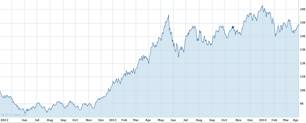 The weaker yen also drew investment away from emerging markets and toward Japanese equities – the Nikkei 225 soared.
“His plan, one of the world’s most audacious experiments in economic policy in recent memory, combines a flood of cheap cash (doubling the money supply in two years), traditional fiscal stimulus and deregulation of Japan’s notoriously ingrown corporate culture. The hope is that this will yank Japan from a debilitating deflationary spiral of lower prices and diminished expectations, stirring what Keynes called the “animal spirits” of investors and consumers.
And so it has. The stock market has soared more than 60 percent over the past year, and the yen has lost more than a quarter of its value, lifting corporate earnings in a country that is dependent on exports.” Martin Fackler, ‘Japan’s New Optimism Has Name: Abenomics’ The New York Times
The Real Deal
Many became convinced that Abenomics was the real deal meal because Japan had five quarters of high growth.
 Unfortunately the wheels seem to be falling off. Japan’s GDP expanded at just an annualized one percent during the last three months of 2013. On a quarter-on-quarter basis that’s just 0.3% growth, the same as during Q3.
The Nikkei 225-stock index has fallen 8.98 percent in the quarter ending March 31, ending a five-quarter winning streak that still has the market up 68.8 percent since November 2012.
Bloomberg says foreign investors sold 975 billion yen ($9.5 billion) of Japanese shares in one week in March, the most since the crash of 1987.
According to Japan’s Ministry of Finance foreign asset managers have pulled more than $21 billion out of the nation’s equities so far in 2014.
Most alarming is that Japanese salaries have dropped 15 percent over the past 15 years and the trend is expected to continue…
“Japanese employers will fail in the next fiscal year to heed Prime Minister Shinzo Abe’s goal of wage increases that outpace inflation, highlighting risks that the nation’s recovery will stall, surveys of economists show.
Labor cash earnings, the benchmark for wages, will increase 0.6 percent in the year starting April 1, according to the median forecast in a poll of 16 economists by Bloomberg News. Consumer prices will climb five times faster, increasing 3 percent, as Japan raises a sales tax for the first time since 1997, a separate Bloomberg survey shows.
The squeeze on consumers from higher prices risks undermining public support for Abenomics and dragging on retail spending.” James Mayger and Cynthia Li, Bloomberg ‘Japan Consumer Prices Seen Rising Five Times as Fast as Wages’
What’s a prime minister to do? Well it’s this authors opinion Abe will continue to print and debase the currency along with adding more fiscal stimulus.
These are the first two arrows in his much talked about three arrow Abenomics quiver. The third arrow, structural reform, has received little attention from the government.
That’s an unfortunate circumstance because for nearly twenty long years demand has remained far below potential supply capacity – what’s known as a deflationary gap. The only sustainable way out for the Japanese economy is for the government to increase growth potential through higher efficiency.
That will be almost impossible because of demographics.
Japan’s most serious problem is demographics, the ageing and shrinking of Japan’s population is a significant demographic drag on growth. Japan’s productive age population (15 – 64 years old) is projected to shrink by roughly 25 percent, some have the figure as high as 40 percent, by 2035.
Today the ratio between working-age people and retirees is roughly 4 to 1, but it will be 2 to 1 in 20 years.
This creates two very obvious problems:
- Many industries will have to be scaled down – an aging society is not one predisposed to increasing consumption nor will the existing workforce be able to keep up the pace in an export dependent economy.
- Controlling social security expenditures in the face of a rapidly aging population is going to be extremely difficult without raising taxes on those still working. And raising taxes will have a hugely negative impact on growth.
Whether you consider Abenomics a success, or not, many experts are questioning its sustainability.
Real term wages are set to drop by two percentage points in 2014. The domestic consumption tax is set to rise from five percent to eight percent this month. These two factors will cause a drop in consumption and a slowdown in economic growth activity.
“The real risk it that the consumption tax will exacerbate the central problem with Abenomics—a blow to household wealth and spending power as price rises accelerate ahead of income.”Tom Orlik, Bloomberg economist in Beijing
A tax increase in 1997 has been credited with kick starting 16 years of economic shrinkage. The government has designed a 5.5 trillion yen stimulus package to counter the expected decline in consumer spending.
Add one part continued currency debasement, drop in two parts of fiscal stimulus, stir a cup or two of worsening demographics into this economic witch’s brew and you’ve got the perfect recipe for Japanese stagflation.
Conclusion
The to do list of structural reforms needed in Japan is a huge mountain to climb:
- Greater international competition
- Higher female labor participation
- Employment deregulation
- Lower energy prices
- Corporate taxation
Whatever fiscal/monetary moves the government makes today will be continually undermined by Japan’s demographics. Structural reforms are necessary now.
Unfortunately while talking a lot about the need for reform the reality on the ground, and in the boardrooms is there’s been precious little actual reform. And this author doesn’t expect much from Abe’s revised ‘third arrow’ plan due in June 2014. The fact is Abe has been weak on reform and that’s not going to change, you see it’s built into his political genes.
Arch-conservatives have long dominated Japan’s politics. They’ve made the Liberal Democratic Party (LDP) their home and have stamped out almost every effort at social reform. The founder of the LDP, and its most important leader was Nobusuke Kishi – Shinzo Abe’s maternal grandfather.
The road to Japanese stagflation is being played out in real time on all our radar screens. It’s playing on mine, is it on yours?
If not, maybe it should be.
Richard (Rick) Mills
About Richard Mills
Richard lives with his family on a 160 acre ranch in northern British Columbia. He invests in the resource and biotechnology/pharmaceutical sectors and is the owner of Aheadoftheherd.com. His articles have been published on over 400 websites, including:
WallStreetJournal, USAToday, NationalPost, Lewrockwell, MontrealGazette, VancouverSun, CBSnews, HuffingtonPost, Beforeitsnews, Londonthenews, Wealthwire, CalgaryHerald, Forbes, Dallasnews, SGTreport, Vantagewire, Indiatimes, Ninemsn, Ibtimes, Businessweek, HongKongHerald, Moneytalks, SeekingAlpha, BusinessInsider, Investing.com and the Association of Mining Analysts.
Please visit www.aheadoftheherd.com
For more information, rick@aheadoftheherd.com
***
Legal Notice / Disclaimer
This document is not and should not be construed as an offer to sell or the solicitation of an offer to purchase or subscribe for any investment.
Richard Mills has based this document on information obtained from sources he believes to be reliable but which has not been independently verified.
Richard Mills makes no guarantee, representation or warranty and accepts no responsibility or liability as to its accuracy or completeness. Expressions of opinion are those of Richard Mills only and are subject to change without notice. Richard Mills assumes no warranty, liability or guarantee for the current relevance, correctness or completeness of any information provided within this Report and will not be held liable for the consequence of reliance upon any opinion or statement contained herein or any omission.
Furthermore, I, Richard Mills, assume no liability for any direct or indirect loss or damage or, in particular, for lost profit, which you may incur as a result of the use and existence of the information provided within this Report.

-
I know Mike is a very solid investor and respect his opinions very much. So if he says pay attention to this or that - I will.
~ Dale G.
-
I've started managing my own investments so view Michael's site as a one-stop shop from which to get information and perspectives.
~ Dave E.
-
Michael offers easy reading, honest, common sense information that anyone can use in a practical manner.
~ der_al.
-
A sane voice in a scrambled investment world.
~ Ed R.
Inside Edge Pro Contributors

Greg Weldon

Josef Schachter

Tyler Bollhorn

Ryan Irvine

Paul Beattie

Martin Straith

Patrick Ceresna

Mark Leibovit

James Thorne

Victor Adair