
Timing & trends
When the former Soviet Union collapsed almost 25 years ago, most global strategic forecasters assumed that the U.S. would adapt pragmatically to her new status of sole world superpower. Instead she has pursued a variety of misguided nation-building adventures and has largely shrunk from her primary responsibility of neutralizing the ambitions of petty dictators around the world. From this perspective, America’s multi-generational expenditures on military personnel and equipment has become more of a stealth economic stimulus program rather than an insurance policy for global stability.
The massive failures of U.S. intervention in Vietnam, Iraq and Afghanistan have caused the Western Allies to fear the future deployment of troops. Instead they have resorted to preserving an impression of strength by pressing their agenda with minor nations like Serbia, Libya and Syria through a combination of endless diplomacy and relatively riskless air power. In doing so, they exposed not just a reduced military capability, but also far worse, a lack of will. This vital fact was not lost on America’s potential enemies.
 Sensing this weakness, President Vladimir Putin of Russia, who is likely the continent’s most aggressive power player since the Second World War, felt free to redraw the map of Europe when political events in Ukraine did not go his way. On the economic front, the crisis has vividly illuminated the differing interests of the European Union (EU) and the U.S. According to Eurostat, the EU imported 212 billion euros ($293 billion USD) worth of goods from Russia in 2012, while the U.S. imported a mere $29 billion. Furthermore, eight of the EU member nations are in trade surplus with Russia and the adverse trade balances of the remaining nineteen EU nations are relatively small. The difference in relative costs between the U.S. and these European nations that would arise from isolating Russia with major sanctions, let alone military action, are clear.
Thus far the Western response to his power grab has been underwhelming in the extreme. The minor financial sanctions placed on Russian oligarchs tied to Putin’s inner circle, and the few guided missile destroyers that have been deployed to the Black Sea will do little to change the trajectory of the Kremlin. It should then come as no surprise that Russian pressure on Ukraine did not stop with its fast motion annexation of Crimea, but has been steadily increasing in the last few weeks. In early April, cities throughout eastern Ukraine experienced the occupation of government buildings and police stations by ‘unidentified’ protestors, whom many suspect are Russian special forces in plain clothes. By mid-April, speculation was rife that Ukraine might be headed for civil war, providing an excuse for Russian intervention to ‘keep the peace’ and, like Hitler in the late 1930’s, to protect his own countrymen living in a bordering nation.
In Iraq and Afghanistan, the U.S. and its NATO Allies squandered large quantities of blood and treasure in fruitless experiments to alter the political and sociological realities of the Muslim world. However, in the Ukraine, which yearned for western-style democracy, the West offered merely money and rations. In doing so, they eroded drastically the age-old force multiplier of international prestige.
President Putin appears set on a clear strategy to re-colonize Russia’s old ’empire’ by means of so-called salami tactics in which he takes small slices of territory too minor to spark a conflict. But the slices ultimately pile high enough to provide a satisfying meal. If Putin’s victory in the Crimea is followed by success in the Ukraine, his next targets likely will be the so-called ‘Baltics’ of Estonia, Latvia and Lithuania. All of which are NATO countries possessing the guarantee of mutual defense from other NATO members including the U.S., UK, Canada and Germany. The potential for Putin to prove false this myth of guaranteed defense could usher the world into a world of much higher uncertainty.
On the other side of the globe, China is building its military, exerting increasing influence and extending its territorial claims in the eastern Pacific. Worse still, China and Russia appear intent on destroying the U.S. dollar’s privileged role as the international Reserve currency. Any major loss of this role could threaten severe declines for the U.S. dollar and spikes in U.S. interest rates. In short, a loss of U.S. dollar’s Reserve status would create a sudden and massive strategic change in a world to which entire populations have grown accustomed since WWII.
Despite the considerable risks created by the situation in eastern Europe, most western stock, bond and property markets, fed on massive central bank fiat liquidity, continue to flirt with new highs. (See an explanation of this in our latest report Taxed by Debt) This strikes me as an exercise in whistling past the graveyard. In the short term, investors may continue to profit from risk-taking in financial markets. However, as recessionary forces mount, commodity prices can be expected to drop, even exerting some downward pressure on precious metals. In the longer term however, as realization that serious threats exist, including the possibility of armed conflict in continental Europe, precious metals once again may shine as a safe haven asset.
In the larger picture, much of the geopolitical balance of power that has been in place for much of the past 25 years will be tested on the banks of the Black Sea. Investors should take a few minutes from their daily technical chart analysis to consider these major developments.
John Browne is a Senior Economic Consultant to Euro Pacific Capital. Opinions expressed are those of the writer, and may or may not reflect those held by Euro Pacific Capital, or its CEO, Peter Schiff.
Subscribe to Euro Pacific’s Weekly Digest: Receive all commentaries by Peter Schiff, John Browne, and other Euro Pacific commentators delivered to your inbox every Monday!

The two charts below illustrate that we are on the brink of moving into a historically weaker period for Stock Markets. Well worth taking a look at this great report – Editor Money Talks
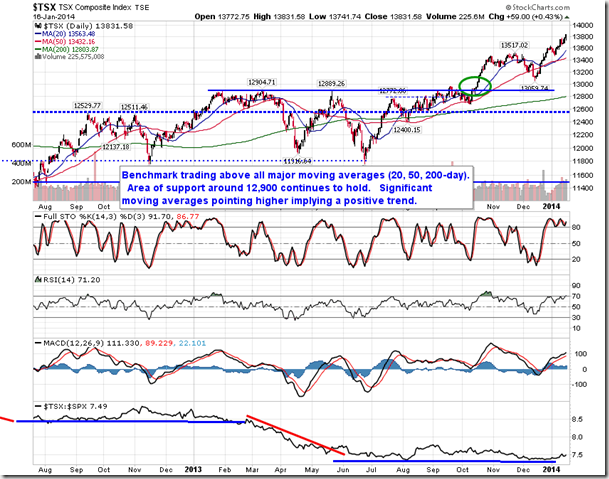
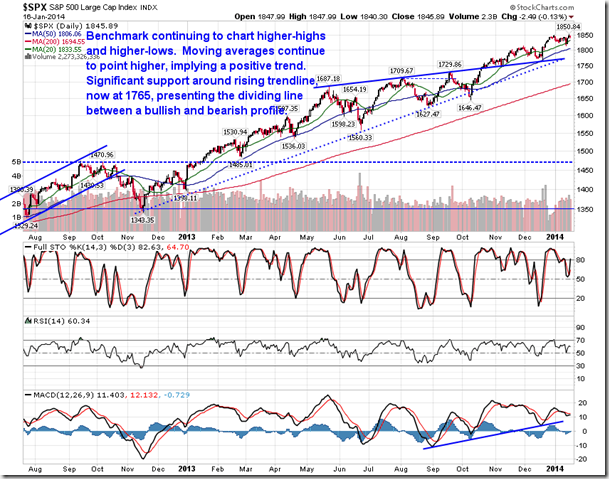
….read the entire report HERE

In all my years in the market, I’ve never heard of such an incredible track record.
The IPO prospectus from high-frequency trading firm Virtu Financial reveals that in the past four years, the company has lost money in exactly one of 1,238 trading sessions.
J.P. Morgan didn’t have a single losing day in 2013. Bank of America notched a perfect performance of its own in the first quarter of 2013.
Clearly, Wall Street trades and invests its own money a lot differently than the “buy and hold” strategy it preaches to its clients.
One of the best-kept secrets they use is selling options.
Does that sound scary? Intimidating?
If it does, there’s a very good reason for that: That’s exactly how Wall Street wants it.
Wall Street works very hard to keep one of its most powerful income strategies out of the hands of regular investors.
Because what most investors don’t realize is that selling puts isn’t just one of the most conservative options strategies… it’s one of the lowest-risk investment strategies in the entire market — more conservative than owning individual stocks and bonds or even mutual funds and ETFs.
The conservative strategy of selling options is driven by a fact you might find shocking: About 80% of options expire worthless. That means whoever sold those options gets to keep the full premium collected as income from their sale 4 out of 5 times.
And these aren’t small premiums. They’re annualized yields of 36%… 47%…. even 87% from well-known, trusted companies like Microsoft (Nasdaq: MSFT) and Verizon (NYSE: VZ).
Despite Wall Street’s best efforts, well-informed investors are embracing selling options as an important source of portfolio income. In fact, this is what we do every week in my premium newsletter service, Income Multiplier.
But deciding to sell options is only half the battle. Learning how insiders increase their returns and win ratios is the other. That’s why I’m sharing these 5 insider tips that provide a basic framework for understanding how Wall Street insiders increase the probability of winning trades.
1. Only sell options on stocks you want to own.
Selling a put offers two potential outcomes.
The first is that the options expire worthless and the put seller keeps the entire premium generated from the sale. This is a powerful income strategy and the most desirable outcome when selling an option because we keep this premium as pure profit.
The second potential outcome is that shares of the underlying stock fall below the strike price on the date the option expires. This obligates the put seller to take ownership of the shares.
Although that’s a low-probability outcome, it’s the reason why it’s so important to sell options only on stocks you actually want to own. In the event that the put seller is put shares, you want to own a great company with plenty of long-term potential that will quickly rebound from a temporary pullback.
2. Avoid long-dated expirations.
All options contracts have an expiration date. Some options expire every week; other options expire after several years. Options that are dated far into the future have a higher premium value because a longer time allows significant price swings or unexpected events to occur. That could be a macroeconomic event (like a recession) or a company-specific event, such as earnings falling short of expectations.
Conversely, options that expire in just a few weeks or a month are much less susceptible to price fluctuations. Think of this like a baseball player hitting a bunch of singles and doubles as opposed to an occasional home run with lots of strikeouts.
3. Sell puts more than 5% out of the money.
Every options contract carries a probability of expiring worthless. Some options contracts have a 90% probability of expiring worthless; others have a 50% probability. It all depends on the variables of each individual contract.
One of the biggest factors impacting the probability of a worthless expiration is an option’s strike price. Options with strike prices that are far away from the underlying stock’s current share price have a lower probability of assignment than those with strike prices that are close to current prices.
Selling puts with strike prices more than 5% away from the current share price greatly increases the chances that the puts you sell will expire worthless.
4. Diversify.
Regular stock investors should always diversify their portfolios. Holding stocks from different sectors and regions of the world is a great way to reduce volatility and short-term price risk. Stocks from different sectors and industries tend to have a lower correlation with each other.
That same concept of diversification holds true for selling options. As an options seller, it’s important to avoid highly concentrated positions in sectors, stocks or themes with a high correlation. This reduces the probability of one single event triggering assignments on multiple open put positions.
5. Don’t increase the size of positions too quickly.
This is the No. 1 mistake made by new options traders. It’s also a familiar theme across any asset class. A novice investor experiences great results early in the game with a new investment strategy. Gaining confidence, the investor begins to quickly ramp up the size of their position, increasing risk significantly. When the size of the investor’s trades has grown out of proportion to the value of the account, one small miscue can have serious implications.
This is a recipe for disaster. The value of any individual put-selling position should be calculated as a percentage of overall account value. That makes actual results and the growth of an account the primary drivers of position size as opposed to a bout of short-term confidence driven by a bull market.
The unprecedented track records that Wall Street trading firms are racking up are due in large part to successful strategies like these.
But I think it’s time that regular investors got in on the wealth-building opportunities that these traders are so set on hiding from the public.
In my premium newsletter Income Multiplier, I’m showing readers my research each and every time I sell a put option, and we’re seeing annual yields on our trades that make regular dividends look meager by comparison. As I mentioned earlier, we’re talking 36%… 47%… even 87%. To learn more about how easy it can be to multiply your income, I’d like to invite you to watch a special presentation I’ve prepared. Simply follow this link to learn more.
Good investing,
Michael Vodicka
Chief Investment Strategist
Income Multiplier
 After today’s market (april 1th) close there was a flurry of earnings announcements, some of which were way low. Not bad, mind you. In fact they were pretty good. But because Wall Street analysts were expecting more in order to justify current stock prices, the disappointments led to big price declines in the aftermarket:
….read more HERE


-
I know Mike is a very solid investor and respect his opinions very much. So if he says pay attention to this or that - I will.
~ Dale G.
-
I've started managing my own investments so view Michael's site as a one-stop shop from which to get information and perspectives.
~ Dave E.
-
Michael offers easy reading, honest, common sense information that anyone can use in a practical manner.
~ der_al.
-
A sane voice in a scrambled investment world.
~ Ed R.
Inside Edge Pro Contributors

Greg Weldon

Josef Schachter

Tyler Bollhorn

Ryan Irvine

Paul Beattie

Martin Straith

Patrick Ceresna

Mark Leibovit

James Thorne

Victor Adair