
Bonds & Interest Rates
“Markets don’t appreciate how close the Fed is to its goals,” and thus tightening is the warning from the usually quite dovish Jim Bullard.
- BULLARD SAYS MARKETS DON’T APPRECIATE HOW CLOSE FED IS TO GOALS
- BULLARD SAYS HE’S TRYING TO PUT EMPHASIS ON CLOSENESS TO GOALS
- BULLARD: MARKETS SHOULD BE PRICING IN RATE INCREASES BASED ON WHAT THE FED SAYS
- BULLARD: ECONOMY SHOULD BE ABLE TO HANDLE IT IF WE BEGIN TO PULL BACK FROM WHERE MONETARY POLICY IS NOW

Also from ZeroHedge:
Treasury Yields Hit 3-Week Lows As Stocks Near Record Highs
Gazprom Ready To Drop Dollar, Settle China Contracts In Yuan Or Rubles
From Bloomberg
Fed’s Bullard says jobs growth is ‘ahead of schedule’

 As Sunni militants continue their offensive in western Iraq, the price of oil is surging, as the markets read the unstable situation as further evidence that Iraq will be unable to sustain its oil production levels of around 3.3 million barrels per day.
The current flare-up in the Middle East has had the predictable knock-on effect on the shares of the major E&P companies, whose market values have all risen precipitously since Al Qaeda-breakaway group Islamic State of Iraq and Syria (ISIS) began swallowing up chunks of northern Iraq earlier this month. While the country only accounts for around 3.5 percent of global supply, the crisis comes amid earlier and ongoing conflicts in Syria and Libya, which have already disrupted nearly 2 million barrels a day of production. Should Iraq’s 3 mb/d be taken out of the equation, a price run beyond the current $105-$108 per barrel WTI range is a virtual guarantee.
With oil and other risk-on commodities such as gold and silver back in favor, investors would be advised to consider wading into oil stocks, particularly since E&P companies are some of the largest in the world and offer investors a relatively healthy, if not risk-free, dividend, even if growth targets fail to satisfy.
As the world’s attention stays focused on Iraq, here are five dividend-paying oil companies to keep an eye on in the weeks and months ahead. Factored into my choices below are a company’s current and past dividend payouts, its ability to sustain its dividend or increase it, and the company’s future profitability.
1. BP (NYSE:BP). At 4.29 percent, BP is a standout amongst its peers for income growth, compared to Chevron’s 3.22 percent yield and Exxon Mobil’s 2.64 percent. The integrated oil and gas producer hiked its dividend by 2.6 percent in May, following the disposition of four of its North Slope Alaska oilfields. The $1.5 billion asset sale was part of a larger strategy by BP to unload $10 billion worth of non-core assets over the next two years, in an effort to underwrite dividend increases and share repurchases. The company has so far paid out about $42 billion in charges related to the 2010 Deepwater Horizon disaster. However, BP has maintained a strong cash position, with first-quarter cash flows of around $8.2 billion, allowing it to easily cover dividend payments of $1.4 billion, according to hedge fund analyst Winning Strategies.
2. Chevron (NYSE:CVX). With a market cap of $253 billion, Chevron is one of the world’s largest oil companies, and has rewarded loyal shareholders with 25 years of consistent dividend increases. In April Chevron raised its dividend by 7 cents to $1.07 per share, giving it a yield of 3.22 percent. Over the last 10 years, Chevron has managed to increase its dividend by 11 percent a year, without stretching its dividend payout ratio (dividend divided by net income), which stands at 39 percent over the last 12 months. Analyst Mike Young notes that if Chevron’s payout ratio stays at 35.2 percent and it earns 18 percent return on equity – its average ROE over the past five years – the company’s dividend will grow by 12 percent a year.
Related Article: Big Oil Is Cashing In On Iraq Violence
3. Exxon-Mobil (NYSE:XOM). Exxon is the largest publicly traded company in the world, behind only Apple (NASDAQ:AAPL). With a gigantic market cap of $448 billion, Exxon-Mobil is a cash-generating machine, and should therefore be on every dividend investor’s radar. Like Chevron, XOM is a dividend aristocrat, having increased dividends to shareholders for more than 30 consecutive years. On April 30, Exxon-Mobil boosted its dividend by 10 percent, to 69 cents a share, and currently bears a 2.64 percent yield. As far as future dividend growth, analyst Stock Gamer determined that lower capital expenditures in 2015 and 2016 will cause free cash flow to increase by 16.8 percent (CAGR) to $16.7 billion in 2016, allowing XOM to spend $12 billion annually in share repurchases for the next two years. That, compared to a less leveraged position than its peers, would cause earnings per share to increase and thus create room for dividends to grow, at a rate of between 7 and 8 percent annually, according to Stock Gamer.
4. Occidental Petroleum (NYSE:OXY). Occidental has a market cap of $82 billion and grants shareholders a dividend of 72 cents a share, giving the stock a current yield of 2.74 percent. OXY’s dividend has risen by 118.2 percent over the past five years, putting it in the company of Williams Companies, ONEOK, and Peabody Energy for comparable dividend yield and growth. However, looking at the revenue growth of these four stocks, Occidental comes out ahead, at 42.8 percent, notes analyst Stan Stafford, making it his top E&P choice for dividend investors. Moreover, with Occidental’s $10.2 billion of capital expenditures set to decline this year on the back of its spin-off of oil and gas assets in California, investors should expect the company to increase share repurchases, allowing it to hike earnings per share and create room for dividend growth.
5. Enerplus (NYSE:ERF). Compared to the last four energy behemoths cited, Calgary-based Enerplus is a minnow swimming in a sea of great white sharks. Its $4.98-billion market cap is a fraction of the E&P majors, yet its 8 cents per share dividend gives Enerplus a decent yield of 4.06 percent. And with a dividend payout ratio of just 18 percent, investors are assured that a relatively small percentage of net income is being put towards dividends. While ERF was forced to halve its dividend in mid-2012 due to weak commodity prices, the future looks bright for the company. Last week, Enerplus announced a 250 percent increase in contingent reserves from its Fort Berthold Baaken and Three Forks formations, to 136 million BOE. That, combined with a 125 percent increase in drilling inventory and a 50 percent improvement in drilling efficiencies, spells growth for ERF, according to analyst Michael Fitzsimmons, who estimates the stock is 25 percent undervalued. “Enerplus is a BUY and a good choice for income oriented investors seeking exposure to capital appreciation via Bakken and Three Forks produced oil. I am raising my 12-month price target to $28. Combined with the dividend, that represents a total return opportunity of ~20% over the next year,” Fitzsimmons wrote on Seeking Alpha.
By Andrew Topf of Oilprice.com
Benefit From the Latest Energy Trends and Investment Opportunities before the mainstream media and investing public are aware they even exist. The Free Oilprice.com Energy Intelligence Report gives you this and much more. Click here to find out more.
Star performers Royal Gold & Silver Wheaton, high flyer Franco Nevada, American Barrick, RandGold, Goldcorp GLD & the general indexes are all studied for strengths, weaknesses, opportunities & threats by Rambus last night.
Click on the image for this study with large charts (don’t need to be clicked on for larger view) – Editor Money Talks
 A Cold Hard Look at The Big Cap Precious Metals Charts
In tonight’s report I would like to take a good hard unbiased look at some of the big cap precious metals stocks that have been in rally mode since the first of June. This rally has been pretty impressive so far but is it the real thing? Last night I showed you some charts on the GDM going from the 60 minute short term look to a year and a half look that showed the two big patterns we have in place right now, the falling flag and the inverse H&S bottom. Tonight I would like to follow up with some big cap PM stocks, on the 60 minute chart and the bigger long term chart charts, that have their own respective year long trading ranges.
First lets look at the 60 minute chart of the GDM that I showed you last night that had a H&S top forming. Today GDM did some more work on the right shoulder that is making the H&S top a little more symmetrical now. Keep this H&S top in your mind when we look at some of the other big cap PM stocks in a bit.
… click HERE for study with large charts

Stocks Fluctuate Following Recent Advance – Topping Consolidation Or Just A Flat Correction?
Briefly: In our opinion, no speculative positions are justified.
Our intraday outlook remains neutral, and our short-term outlook is now neutral, following Tuesday’s intraday reversal:
Intraday (next 24 hours) outlook: neutral
Short-term (next 1-2 weeks) outlook: neutral
Medium-term (next 1-3 months) outlook: neutral
Long-term outlook (next year): bullish
The U.S. stock market indexes gained between 0.3% and 0.7% on Wednesday, retracing Tuesday’s move down, as investors were buying stocks despite worse-than-expected GDP data release. So, ouryesterday’s short-term neutral outlook has proved to be quite accurate. The S&P 500 index continues to fluctuate slightly below its recent all-time high of 1,968.17. The resistance level is at 1,960-1,970, and the nearest level of support is at 1,940-1,950. For now, it looks like a flat correction within an uptrend. There have been no confirmed sell signals so far. The market remains above its month-long upward trend line, as we can see on the daily chart:
Click image for larger chart:

Expectations before the opening of today’s session are virtually flat and the main European stock market indexes have been mixed so far. Investors will now wait for some economic data announcements: Initial Claims, Personal Income, Personal Spending, PCE Prices – Core at 8:30 a.m. The S&P 500 futures contract (CFD) extends its short-term consolidation below the level of resistance at around 1,960. For now, it looks like a flat correction within long-term uptrend. The nearest support level is at 1,935-1,940, marked by previous local low, as the 15-minute chart shows:

The technology Nasdaq 100 futures contract (CFD) is in a relatively narrow intraday trading range, as it is relatively stronger than the broad market. The resistance level is at 3,825-3,830, and the nearest important support level is at 3,790-3,800:

Concluding, the broad stock market appears to be in a short-term consolidation, fluctuating along the level of 1,950. We decided to close our speculative long position, expecting some more consolidation or a downward correction.
Thank you.
….also from Sunshine Profits:
JUNE 26 GOLD & SILVER TRADING ALERT

“The greatest threat we have to the financial stability of the entire global economy is the collapse in liquidity.” – Martin Armstrong
…also from Martin
Why The European Banking System is Doomed
Civil Unrest Rising Everywhere – Including the UK
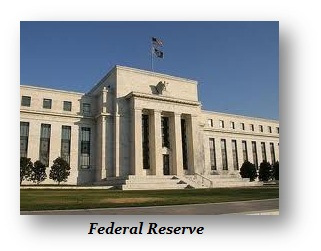 Fed’s Exit Tax on Bonds – Confirms Liquidity Crisis
The greatest threat we have to the financial stability of the entire global economy is the collapse in liquidity. Governments cannot understand that their desperate need for money that has unleashed the worldwide hunt (or shakedown) is producing the greatest collapse in liquidity on a global scale perhaps in modern history. Even just recently, the Federal Reserve Governor Jeremy Stein commented on what has become obvious that the bond market that it is too large and too illiquid. This exposes the entire market structure to a contagion crisis that is capable of seizing up the world economy like never before in history since the 1720s.
International investment has been the lynch-pin of economic expansion since ancient times. International trade began in the Babylonian era. Even in Athens, Aristotle wrote about the people who made money from money that inspired Marx. Aristotle believed that the creation of the market economy, whereby farmers could produce excess crops and sell them to brokers in Athens who resold them in foreign lands, was undermining the quiet Athenian social structure. Cicero wrote about how any disaster in Asia Minor sent panic running down the streets of the Roman Forum because of international investment.
Following the Dark Age that began with the fall of Rome, the Tulip Bubble attracted capital from all over Europe as did the Mississippi Bubble in France that burst in 1720 followed by the South Sea Bubble in England later that same year. Targeting money overseas for not paying taxes is destroying international trade and that reduces global liquidity. The greedy people in government only see their self-interest and not the consequences of their actions.
The events of 2008 when the money market funds briefly fell below par was a warning sign that we are in a bear market for liquidity. The Federal Reserve is now deeply concerned about liquidity and understands the possibility insofar as the bond market is concerned. But rather than address the issue directly that is causing the collapse in global liquidity, the Fed is directing its attention to try to slow any potential panic selling of bonds by constructing a barrier to any panic exit. According to a small story in the Financial Times, Fed officials are contemplating the requirement to impose upon retail owners of mutual bond funds an“exit fee” to liquidate their positions.
Obviously, curtailing banks from proprietary trading has also helped to reduce liquidity and this has the bankers screaming that this new policy should be reversed for it is creating a highly fragile bond market. However, what is being overlooked here is the reality of CONTAGION. Because we are in a serious bear market for liquidity, volatility will rise exponentially as liquidity declines. We are seeing the calm before the storm right now.
The risk of CONTAGION can be illustrated by the events of 1998. The 1998 Long-Term Capital Management Crisis was precisely such a CONTAGION when people could not liquidate their Russian bonds and suddenly needed cash. This liquidity crisis in Russian debt sent investors scrambling selling whatever they could in other markets from the Japanese yen to shares in equities everywhere. Yes, gold rallied briefly from $502 to $532, but it fell to new lows thereafter into 1999. They needed money and sold whatever they could to raise cash. Hence, a crisis in one area and sector has the potential to create a wave of selling in other markets that people will never see coming from the fundamentals. This is the danger of CONTAGION. The 1987 Crash was precisely that. Foreign sellers of US equities came from nowhere contrary to domestic fundamentals all based solely upon the fear the dollar would drop another 40% because of the G5 (now G20) attempt to lower the dollar to reduce the trade deficit. CONTAGION disarms fundamental analysis!
The Fed’s idea of an exit fee that would penalize people for trying to sell in a panic may sound logical, but in a panic logic goes out the window. This is not much different from banning short-selling, which Europe is moving to do. However, the Fed seems to have listened to what I have been arguing for decades. Markets collapseNOT because of short-sellers, but because everyone who is long tries to sell and there is no bid. That creates the flash crash. People will not look at the exit fee when the potential loss is greater than the tax or fee. Sorry – it will fail.
It has been mistakenly attributed to the Fed for the decline in rates over the last six years. True, the Fed can control the short-term rates up to a point within confidence. However, if confidence in the dollar collapsed, then rates would have to rise in proportion to the risk of devaluation by market forces and that the Fed could not control. This is the forces at work upon Argentina.
Additionally, the long-end has not been within the power-structure of the Fed’s control. There they embarked upon a buying spree of long-bonds to reduce the supply in hopes of lowering long-term rates. Yet the Fed realizes that it lacks the power to even try to manipulate the economy through the next down turn and thus it needs to end its quantitative easing and to allow long-rates to rise. That introduces the risk of a panic in long-bond funds and hence the idea of an exit fee. This new idea would be a more direct way the Fed hopes it could control the rise in long-rates by slowing the exit.
The Federal Reserve policy of QE purchases has extended the decline in long-rates, but this has been aided by the bid from pension funds. The short-term bond bulls have anticipated making their “risk-free” long-term debt would bring stability, but even the central banks are now buying equities. As a result, mutual fund holdings of long-term government and corporate debt have risen sharply to over $7 trillion as of the end of 2013, which is more than double that of 2008 levels. This shows there is a pool of money that the Fed realizes will wake up and run to equities as the central banks have been doing on their own.
Then there is the fact that many funds are leveraged. This introduces another complexity to the mix for leverage means you are borrowing on the short-end to buy on the long end. This has contributed artificially to further lowering the long-end yields as they dropped to under 2.5% on the 10 year. Keep in mind that playing the yield-curve like this was the very scheme that blew upOrange Country, California years ago. Buying 30 year bonds and selling 10 year bonds on a leveraged basis took the difference in rates as a profit and then when leveraged back to the actual money invested dramatically raised the appearance of the yield on the actual money put on the table. This introduction of leverage borrowing short to buy the long can reverse in a panic sending the short-term rates up faster than the long-end. Banks have being paying hardly anything and lending at spreads that are sharply higher. If short-end rises exponentially, we will end up with bank failures.
So are the Fed policies playing with fire rather than telling Congress that FATCA is destroying global liquidity? The Fed may be playing out the song Hotel California where you can check in, but you cannot check out. This will only undermine confidence even more – not firm it up. As for those who just think the Fed is all-powerful, well they will think this should protect them and buy even more in the middle of a liquidity nightmare on the horizon.
…also from Martin
Why The European Banking System is Doomed
Civil Unrest Rising Everywhere – Including the UK


-
I know Mike is a very solid investor and respect his opinions very much. So if he says pay attention to this or that - I will.
~ Dale G.
-
I've started managing my own investments so view Michael's site as a one-stop shop from which to get information and perspectives.
~ Dave E.
-
Michael offers easy reading, honest, common sense information that anyone can use in a practical manner.
~ der_al.
-
A sane voice in a scrambled investment world.
~ Ed R.
Inside Edge Pro Contributors

Greg Weldon

Josef Schachter

Tyler Bollhorn

Ryan Irvine

Paul Beattie

Martin Straith

Patrick Ceresna

Mark Leibovit

James Thorne

Victor Adair