
Timing & trends
 The sands of time are shifting, and so are vast swaths of geopolitical fault lines … entire countries … economic
systems and yes, the financial markets.
It’s the cumulative affect of intended and unintended consequences of …
 Western governments who embraced Keynesian-style socialism, thinking they could toy with economies through government spending and taxation to try and make the world a fairer place to live.
Yet it’s now backfiring on them, leading to bankrupt governments, pension crises, housing instability, class warfare and more.
Eastern governments, Asia, rising from the ashes of communism and feudal societies, ushering into the 21st century nearly 4 billion souls, more than 60 percent of the world’s population …
Creating gargantuan demand in every area of life, putting excessive demands on Mother Earth’s natural resources … sending Asian economies on a rocket ride higher, while the West slumps miserably.
Political leaders, caught in the crossfire, knowing not what to do, but to repeat the mistakes of the past. Consciously or unconsciously, leaders of Western economies are turning against their own people, raising taxes, hunting down every penny of their assets, confiscating assets in Europe, preparing to confiscate assets in the U.S. of A.
 Central banks, running amuck, still printing money, now even buying equities, trying desperately to reinflate the global economy.
Financial markets, some not knowing whether they are coming or going, some coiling up like a tightly wound spring, ready to explode higher … while others are dancing on the edge of a cliff.
What’s an investor to do?
My view: With the ramping up of the war cycles, the cycles of human nature that predispose societies to conflict and that cause immense turmoil in economics and markets …
Every investor should batten down the hatches and prepare to both protect your wealth and profit from the coming turmoil, the shifting sands of time … from the crises and the opportunities they present.
The steps I recommend …
FIRST, if you haven’t already done so, start buying gold again. Physical gold and gold ETFs. Add some silver too. Nibble away at the metals, and if they move a tad lower, buy more.
SECOND, I maintain my view that the stock markets of Europe and the United States are on the edge of a cliff. Don’t be complacent. Don’t think for a minute that they can’t go over the cliff. They can and will.
They will soon plummet in a short-lived, but very sharp plunge that will scare the dickens out of almost everyone.
How low can they go? Let me give you my new, worst-case targets:
 Dow Jones Industrials, 13,623 (20.25 percent)
S&P 500 Index, 1,510 (23.7 percent)
Nasdaq, 3,612 (19.2 percent)
Europe, in general, based on the iShares Europe ETF (IEV), still 21 percent below its 2007 high, Europe’s equity markets are headed for another devastating plunge that will see them shed, on average, more than 43 percent.
Be smart. If not already out of U.S. and European equity markets, get out now while you can.
Stand on the sidelines with most of the proceeds, using some of it to buy gold and silver, some to buy select Asian equity markets — and most of the cash kept ready to buy back equities after the crash.
THIRD, don’t be complacent about the sovereign bond markets of Europe and the U.S. either. Interest rates will stay low for a while longer, due to so many threats out there and the still present — but weakening — perceptions that sovereign securities are safe.
They are not safe. Sovereign bond prices are on the edge of a cliff too, and there are far safer and better places to put your money these days.
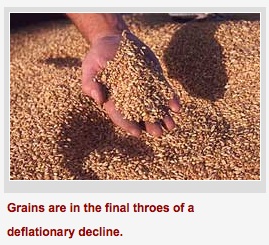
FOURTH, get ready to deploy capital intensely in the commodities sector. Oil and energy are bottoming. Grains are in the final throes of a deflationary decline that I have been warning you about.
Commodities are going to represent some of the most spectacular gains going forward. Pay particular attention to natural gas, which is now making an important secondary bottom and will soon rocket higher.
FIFTH, no matter what you do, don’t be complacent! Complacency will cost you a bloody fortune.
Stay tuned and stay safe …
Larry

This week’s newsletter is going to be a bit eclectic as there are several issues that I want to touch on that I think are significant relative to the markets, investing and your money. Some of these topics I touched on in last week’s daily posts(join me on Facebook or Twitter for notifications of when I post)but important enough to warrant repeating in case you missed them.

- Mishmash
- SEC Rules To Put “Gates” On Money Market Funds
- Alan Greenspan Still Doesn’t Get It
- “Junk Bonds” Flash A Warning Sign
- The Road To Retirement
…. read the entire report HERE
Money Talks Ed Note: One great thing about Lance’s detailed reports are the original charts that he includes like this example:


The Obama administration is becoming quite critical of US corporations acquiring foreign firms in order to relocate their tax domicile to a country with a more favorable regime. Last week, US Treasury Secretary Jack Lew suggested American companies that have done so or are thinking about doing this lack a sense of economic patriotism. In his opinion, American corporations should not take advantage of the benefits of doing business in the United States and utilize loopholes in the US system in order to write down their tax liabilities. The President joined the chorus this week suggesting “some people are calling these companies corporate deserters.”
They’re both wrong.
US corporations are abiding by the current tax legislation that is in place. It’s simplistic and absurd to suggest they have a patriotic responsibility towards the United States. In fact, management of these corporations do have a responsibility, and that is after considering their stakeholders like their employees, suppliers, and customers, they are responsible to their shareholders. Thus, one would imagine US lawmakers would need to ensure that the United States is a competitive nation in terms of offering a favorable corporate tax rate that provides US business with the right incentives, but not put the onus on them to do ‘what’s right for America.’
For this, there is no question broad based corporate tax reform is desperately needed. It is evident from the fact that an additional 25 major US companies are considering relocating overseas by the end of this year in order to take advantage of a smaller tax bill. Senate Democrats have proposed raising the foreign ownership threshold required of a US company to re-domicile their tax base from 20 per cent to 50 per cent. Despite being backed by the current administration, this is not the solution. It is simply a Band-Aid fix, and one might even suggest that if such a significant tax advantage still exists, US corporations would flee more capital from the United States to acquire larger shares of foreign companies.
As The Economist points out, there are two major flaws with America’s tax code. First, on paper America’s corporate tax rate is 35%, which is the highest amongst the 34 member countries in the OECD, but their effective tax rate is less than the OECD average thanks to a laundry list of aimless loopholes. This alone illustrates the complexities and resulting inefficiencies in their tax code. The second is that the US taxes income regardless in which country it is earned, but doesn’t collect until funds are brought back to the US. This creates yet another disincentive to repatriate foreign profits and the consequence is less investment in the US.
If the US government wants better corporate participation at home, then it behooves them to rewrite the tax code. Ultimately, this is what will incentivize these same US companies that hold profits overseas to bring those profits home and lead to the positive contributions to the American domestic economy.
 About Border Gold Corp
Border Gold Corp. (BGC) is one of Canada’s leading silver and gold dealers. Over the years BGC has become one of the largest Royal Canadian Mint direct distributor in Canada. Under the leadership and ownership of Michael Levy, BGC continues to provide clients with the best customer experience in the industry.
BGC is able to offer its clients a variety of investment bullion products. Our relationship with the Mint and other large-scale distributors allows us to consistently offer clients among the best pricing in the industry. If you’re looking to buy gold and silver, or sell it, we can help. Learn more about our services here.
BGC’s goal is to build long-term loyalty with our clients through outstanding service, above and beyond that which is offered at other financial institutions and gold dealers, a mantra of our company for over 44 years. Transactions and shipping are always conducted in a private and secure fashion.
Located in White Rock, British Columbia, Canada, Border Gold is just 6 miles from the Canada – U.S. Border. We have immediate shipping and receiving facilities on both sides of the border to facilitate both Canadian and American clients. All administrative offices and records are in Canada, and the privacy and security of our clients is a constant priority of our business.

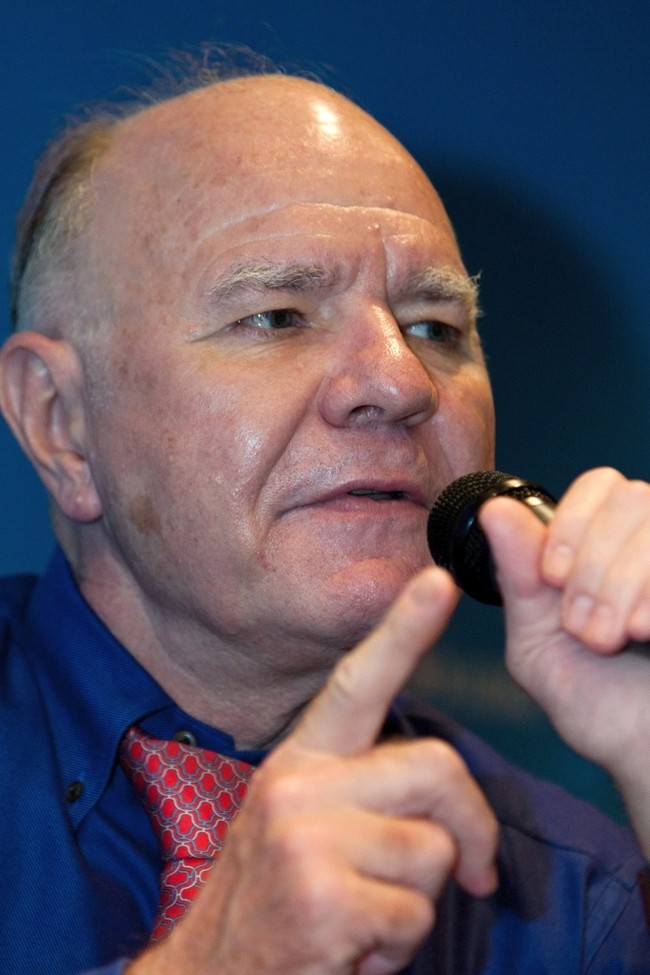 Marc Faber said at a CFA Institute financial analysts seminar in Chicago Thursday “I believe stocks are fully priced here,” he added, and “I’m of the view of Jeremy Grantham — that when you have low valuations, future returns are relatively high; when you have high valuations, future returns are relatively low.”
“Growth doesn’t come from eating and consuming — it comes from capital investment.”, “geopolitical tensions in southern Asia between China, U.S., Vietnam, Philippines, etc. will have an effect on asset prices,” he said.
source :
To read more go HERE
….related:
Marc Faber : I like Agriculture ,Chinese & Hong Kong Stocks & Precious Metals
Top Risks in China, according to Marc Faber
Marc Faber admits to have been wrong since 2012
*Note: I’ve included this because it highlights the thinking of a significant portion of the public urged on by the mainstream media into believing in the whole Global Warming scenario. Despite overwhelming evidence that it is solely based on computer models that at best are shakey, at worst outright unscientific, or used data that was manipulated.
Take for example the whole 97% of scientists claim.
Dr. Paul Ehrlich was the author of the 1970’s The Population Bomb began with this statement: The battle to feed all of humanity is over. In the 1970s hundreds of millions of people will starve to death in spite of any crash programs embarked upon now. At this late date nothing can prevent a substantial increase in the world death rate – Forty Six years later, as with the Global Warming/Climate Change scenario, Ehrlich’s scenario that warned of the mass starvation of humans in 1970s and 1980s did not happen nor has the world warmed – Editor Money Talks
Pack your portfolios with agricultural plays like Potash (POT), Mosaic (MOS), and Agrium (AGU) if Dr. Paul Ehrlich is just partially right about the impending collapse in the world’s food supply. You might even throw in long positions in wheat, corn, soybeans, and rice.
The never dull and often controversial Stanford biology professor told me he expects that global warming is leading to significant changes in world weather patterns that will cause droughts in some of the largest food producing areas, causing massive famines.
Food prices will skyrocket, and billions could die. At greatest risk are the big rice producing areas in South Asia, which depend on glacial run off from the Himalayas. If the glaciers melt, this will be gone.
California faces a similar problem if the Sierra snowpack disappears. Rising sea levels displacing 500 million people in low-lying coastal areas is another big problem.
One of the 78-year-old professor’s early books “The Population Bomb” was required reading for me in college in 1970, and I used to drive up from Los Angeles to hear his lectures (followed by the obligatory side trip to the Haight-Ashbury).
Other big risks to the economy are the threat of a third world nuclear war caused by population pressures, and global plagues facilitated by a widespread growth of intercontinental transportation and globalization. And I won’t get into the threat of a giant solar flare frying our electrical grid. “Super consumption” in the US needs to be reined in where the population is growing the fastest.
If the world adopts an American standard of living, we need four more Earths to supply the needed natural resources. We need to raise the price of all forms of carbon, preferably through taxes, but cap and trade will work too.
Population control is the answer to all of these problems, which is best achieved by giving women an education, jobs, and rights, and has already worked well in Europe and Japan.
All sobering food for thought.


About John Thomas
John Thomas is one of the leading and most seasoned analysts in international finance, he conducts exhaustive on the ground research supported by personal contacts accumulated during 40 years in the industry. He offers a mentoring program which includes trading instructions and macro analysis.


-
I know Mike is a very solid investor and respect his opinions very much. So if he says pay attention to this or that - I will.
~ Dale G.
-
I've started managing my own investments so view Michael's site as a one-stop shop from which to get information and perspectives.
~ Dave E.
-
Michael offers easy reading, honest, common sense information that anyone can use in a practical manner.
~ der_al.
-
A sane voice in a scrambled investment world.
~ Ed R.
Inside Edge Pro Contributors

Greg Weldon

Josef Schachter

Tyler Bollhorn

Ryan Irvine

Paul Beattie

Martin Straith

Patrick Ceresna

Mark Leibovit

James Thorne

Victor Adair