

Stocks & Equities

Market & 10 Companies Seasonality, Sentiment & Volume Analysis

Upcoming US Events for Today:

  1. Weekly Crude Inventories will be released at 10:30am.

Upcoming International Events for Today:

  1. German Consumer Confidence Survey for September will be released at 2:00am EST.   The market expects 8.9 versus 9.0 previous.

The Markets (read entire analysis including 10 individual companies HERE)

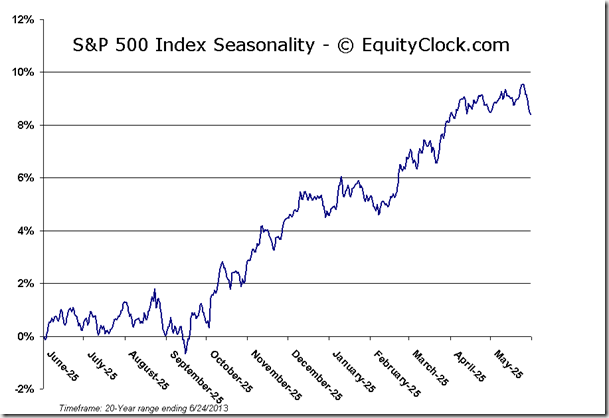
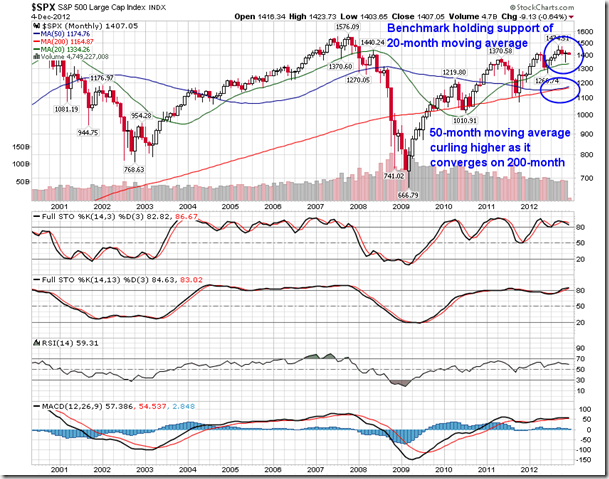
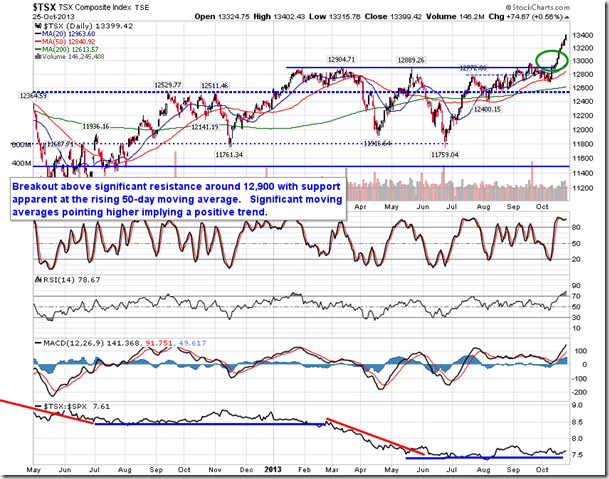
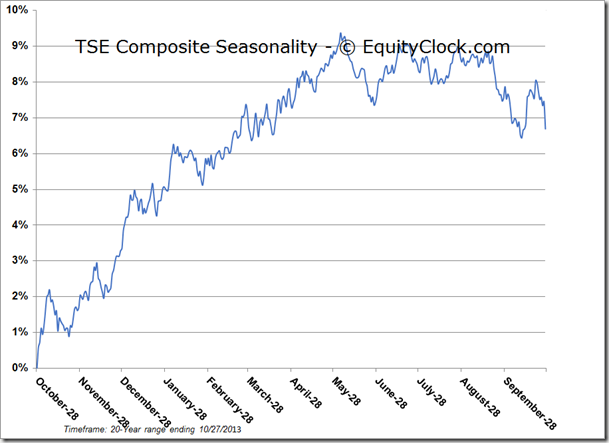
Stocks continued to gain on Tuesday, led by shares of Energy companies as investors start to nibble at the beaten-down sector.   The large cap index closed above a key psychological level at 2000, albeit on continued low volume.   Volume on Monday, according to the S&P 500, was one of the lowest in years, surpassed only by the shortened sessions ahead of the Independence Day, Christmas Day, and Thanksgiving Day holidays over the past three years.   The last regular trading day that didn’t precede or follow a holiday that had lower volumes than what was recorded on Monday was on March 2nd of 2011, just prior to the correction attributed to the Tsunami in Japan.   A few months later it became apparent that the low volume trading environment during the first half of 2011 was part of a topping process that led to the last major correction that equity markets have realized.   Despite the typical drop-off in volumes at the end of summer, often leading to equity market volatility, the level of conviction that investors have to the all-time highs appears to be low as investors show caution in putting new money to work.   The only other time that the volume on the S&P 500 Index has been lower during an August trading day was on August 5th of 2008, just ahead of the plunge declines that followed though to the 2009 lows.   Recent precedent of significantly low volume sessions has not been kind to the equity market over the months that followed.

image thumb 3

image thumb 4

image thumb 5

image thumb 6

…continue reading about the seasonality of 10 individual stocks, further market commentary, seniment & volume analysis HERE

How The Coming Silver Bubble Will Develop

In this article, precious metals market analyst Ted Butler (www.butlerresearch.comexplains his vision of how a silver bubble is going to develop. Contrary to the mainstream view, Mr. Butler believes that the silver peak of 2011, when spot silver intraday touched $49 per ounce on May 1st 2011, was only an intermediary peak. In other words, the real price explosion lies still in front of us. Of particular interest is the role of the ongoing silver price manipulation as a key driver in the creation of a bubble.

click on chart for variety of larger silver charts

silver1963-2013

What is an asset bubble? An asset bubble occurs when a large number of buyers, normally not usually prone to speculate in an asset, bid the price of that asset much higher than underlying valuations would support, most often fueled by leverage or borrowed money. Typically, towards the terminal phase of the bubble the most compelling reason for continuing to buy the asset is due to the rising price itself, as all caution is thrown to the wind amid the collective belief that prices can only move higher still. Then, when the last possible speculator has purchased the asset, the inevitable occurs and the price of the asset collapses as previous buyers turn into sellers and attempt to get out. Since the formation of the bubble and its inevitable collapse are driven by the collective emotions of greed and fear, it is generally impossible to predict how long an asset bubble will persist and how high the price can climb, as well as the timing and extent of the subsequent collapse.

How do asset bubbles develop? Most often, an asset bubble develops when an undervalued asset which has a compelling investment story and there exists an overall financial environment of sufficient buying power, catches the collective interest of the crowd. For example, by the mid-2000’s and after years of steady appreciation, residential real estate developed into an asset bubble amid the self-fulfilling cycle of continued gains and the availability of easy credit.

As far as great stories go, silver has the best potential story to develop into a bubble. First, there is little argument that it is among the most, if not the most undervalued asset of all by objective relative historical price comparison. In addition, it is at or below its primary cost of production, as evidenced in recent quarterly earnings reports. Remember, most bubbles start out with an asset that is undervalued – on this score silver more than qualifies as being undervalued.

Aside from extreme undervaluation, the silver story is multi-faceted. Silver is both an industrial metal and a primary investment asset, the net effect being that very little newly-produced silver is available for investment, perhaps only 10% of the one billion oz produced yearly (mine plus recycling), or 100 million oz annually. In dollar terms, at current prices that comes to less than $2 billion per year. There are two ways to look at that; the observation that there are countless individuals and investment funds capable of ponying up that entire amount on their own and the fact that $2 billion amounts to less than 30 cents on a per capita basis for the world’s 7 billion inhabitants. Simply put, there is no other asset class which would require less buying to develop into a bubble than silver.

Apart from newly-produced silver available for investment, the amount of previously produced metal available for investment, or world inventories, is also shockingly low. As a result of a 65 year deficit consumption pattern that ended in 2005, world silver inventories have been depleted by 90% from the levels existing at the start of World War II. Today, only a little over one billion oz of metal in accepted bullion industrial form exists with perhaps another billion oz existing in coins and bars. In dollar terms, that comes to $20 to $40 billion, where most other asset classes (stocks, bonds, real estate and even gold) are measured in the many trillions of dollars. And please, never confuse what exists with what’s available for purchase – only the owners of the small amount of silver that exists will determine at what price it is available.

The conclusion is simple – the asset requiring the least amount of buying to create a bubble is, automatically, the best candidate for developing into the biggest bubble. The fuel for any bubble is total (world) buying power versus the actual amount of an asset available for purchase. Previous, as well as prospective, bubbles in stocks, bonds and real estate grew to many trillions of dollars of total valuation. At $200 an ounce, all the silver in the world (bullion plus coins) would “only” amount to $400 billion, not even a rounding error to the total valuation of stocks, bonds, real estate and, even, gold. In other words, due to silver’s current undervaluation and its shockingly small amount in existence, it has more room to the upside than any other asset class.

But I’m not done. Silver’s unique dual role as a vital industrial material and primary investment asset creates a setup for something happening that has never occurred in any previous bubble. As and when sufficient physical investment buying develops in silver to drive prices significantly higher, the industrial consumers of silver, in everything from electrical and solar applications to medical and chemical applications, will likely be subject to delays in the customary delivery timelines of the metal. As is almost always the case, whenever industrial consumers of a commodity are deprived of timely deliveries, they resort to stockpiling that commodity as a remedy, further exacerbating delivery delays to other users.

Thus, the stage is set for something the world has never experienced previously – an asset bubble accompanied with an industrial shortage. The two greatest upward price forces known to man, an asset bubble and a genuine commodity shortage, appear set to combine in silver. Either one, alone, would have a profound impact on the price, but the combination seems both inevitable and almost impossible to contemplate in terms of how high the price of silver could be driven. And it’s hard to see how intense investment buying wouldn’t trip off industrial user attempted inventory stockpiling or vice versa; it doesn’t matter which comes first.

Tying everything together, there is one and only one explanation for why silver is so undervalued and the asset bubble/industrial shortage hasn’t occurred yet – the ongoing price manipulation on the COMEX. Massive amounts of paper contracts traded between two groups of large speculators (technical funds and commercials), measuring in the hundreds of millions of ounces and completely unrelated to the supply/demand fundamentals have set the price of silver. This COMEX price control is both the curse and the promise in that it not only explains the undervaluation, it will explain why it seems inevitable for an asset bubble/user shortage to develop.

Think of it this way – the asset with the greatest potential for becoming the biggest bubble ever had better have the greatest story ever as well.  And that is what the COMEX silver manipulation is – the key ingredient in the greatest investment potential score ever.  If silver wasn’t manipulated how good would the story be? Absent manipulation, I wouldn’t buy or hold silver because that would mean that free market forces were setting the price all along. In other words, if silver wasn’t manipulated there would be scant reason to buy it in my eyes. If I wasn’t convinced silver was manipulated, I can’t see how I would have ever written this or anything about it in the past or could have become interested in it in the first place.

As painful as recent prices have been to existing holders because of the manipulation, without it there would be little chance for a price explosion at some point. The easiest major potential change in the silver price equation is for the manipulation to end, one way or another. And if history and logic win out, the silver manipulation must end, not the least because of the coming clash between paper and physical silver. Some call it the disconnect between paper derivatives contract on the COMEX and actual physical silver, but in reality the story is that COMEX futures contracts are very much connected to each other via the delivery mechanism.

The connection between paper and physical has been forged because the main COMEX futures speculators are only interested in trading paper futures contracts and not in trading physical metal. Technical funds have no desire to buy and sell real metal for full cash payment when they can deal in paper contracts for only 10% cash down because they are trading, not investing. The problem is that the trading between the technical funds and the commercials has become so large that it dwarfs real world silver supply/demand fundamentals and ends up setting the price of silver in violation of commodity law. I know that this perversion of the price-discovery process has existed for a long time, but it would be wrong to confuse longevity with permanence.

The fact is that while the COMEX paper market dominance has lorded over the real supply and demand fundamentals, the stage has been set for a physical asset bubble/industrial user panic event. I’ve become convinced that any prospective bubble in silver won’t be driven by the aggressive buying of COMEX futures contracts, but only by physical buying. For one thing, the crooked CME and CFTC would never allow any group of traders to drive silver prices sharply higher by buying unlimited amounts of COMEX futures contracts. If the technical funds do buy big amounts of COMEX silver futures contracts (as was the case from June to mid-July), you can almost be certain that the CME and CFTC knew that those funds would be soon forced to sell on lower prices.

As a result, any bubble in silver must and will develop from physical investment buying. Surely, any industrial user inventory buying panic must involve immediate physical delivery and not a paper futures contract in a time of delivery delays and uncertainty. In fact, it is hard to imagine, as a silver bubble begins to develop, a greater urgency for holding only physical metal to intensify, due to a growing recognition that the COMEX manipulation was responsible for the former low price.

Since I am speaking in terms of a potential historic asset bubble in silver, I am implying that the price of silver will far exceed its true value at some point before correcting sharply. It is before that collapse point, that God-willing, I intend to sell. I am not deluding myself that I will come close except hoping not to be terribly early or late. While I respect anyone’s reasons for buying and holding silver, my mission has always been to help end the manipulation and be done with silver after that was accomplished and reflected in the price.

This article is based on a commentary of Ted Butler’s premium service at www.butlerresearch.com which contains the highest quality of gold and silver market analysis. Ted Butler is specialized in precious metals market analysis for over four decades.


Related articles from Ted Butler:

JP Morgan’s Perfect Silver Manipulation Cannot Last Forever
I Own Silver Because Of The Coming Silver Shortage
A Manipulation Timeline
The Silver Conspiracy

Real Estate: Predicted Decline in 2016 as Rates Rise

sdfRBC economist at Canada’s biggest bank says home prices could start falling in 2016 if interest rates return to more normal levels. And he warned that, in the meantime, what goes up will likely come down if salaries and incomes don’t keep pace.

MORE RELATED TO THIS STORY

  • Survey show 80% of renters under 50 desire home ownership

  • Why rents are softening and what’s in store for Toronto’s condo market

  • Housing sales in July highest since early 2010

….read it all HERE

Tyler Bollhorn: Strategy Of The Week

stockss

What Not to Look For

Perspectives for the week ending August 26, 2014

In this week’s issue:

  • Weekly Commentary
  • Strategy of the Week
  • Stocks That Meet The Featured Strategy

perspectives commentary

In This Week’s Issue:

– Live Trading Daily Webcast
– September Webinar – The Tools of Stockscores.com
– Stockscores’ Market Minutes Video – Buy the Dips, Sell the Rips
– Stockscores Trader Training – What Not to Look For
– Stock Features of the Week – The Turnaround

Live Trading Webcast
The Stockscores Live Trading webcast series will start up again in September. Watch Tyler’s trading screen with his current open positions and receive live trade alerts when he makes a day or swing trade. Send an email to tylerb@stockscores.com with Live Trading in the subject line to be put on the list to receive information, pricing and registration details (email details will be sent out later this week. This service is limited to 40 participants).

September’s Free Webinar – The Tools of Stockscores.com
During this webinar, Stockscores.com founder Tyler Bollhorn will show you the tools of Stockscores and how your portfolio can benefit from their use. Even veteran users of the site are likely to discover things that they never knew about what you can do with Stockscores.com. This is a free webinar. Register at:

https://attendee.gotowebinar.com/register/327138055163086593

Stockscores Market Minutes Video
Don’t chase stocks when they rip higher, wait for the pullback dip to buy. Learn more in this week’s video:

http://youtu.be/ycXpmwH8WnE

What Not To Look For
As investors, our natural inclination is to seek out stocks that have good qualities. We look for reasons to buy the stocks we are considering and often forget to look for the negatives. Since there are thousands of stocks to consider and almost all of them can have some reason for buying them, it may be better to reverse how we approach the analysis of stocks. Looking for reasons not to buy a stock will emphasize a higher standard for the stocks you do buy and will help to improve your overall market performance.

Here is a list of common reasons I use to throw a stock out of consideration:

Too Much Volatility
Volatility is uncertainty. Virtually every good chart pattern that I use to find winners demonstrates a break out from low volatility. The narrower the range before the breakout, the more important the breakout becomes. If the stock’s price is moving all over the place before it makes a break through resistance then there is a much greater chance that the breakout is false and will likely fall back. Ignore stocks that have a lot of price volatility before the break out.

Not Enough Reward for the Risk
A stock can go two ways, up or down, after you buy it. If the upside potential is not enough to justify the downside risk, then you should ignore the opportunity. I like stocks to have at least double the upside potential for the downside risk. That way, you don’t have to be right even half of the time to make money, provided you are disciplined of course.

Lack of Optimism
Fundamentals do not matter. It is the perception of Fundamentals that matter. If investors are not showing some optimism about a company’s prospects then it is likely that they are not paying any attention to the company’s fundamentals. Look for rising bottoms on the chart as an indication that investors are optimistic, if there aren’t any, leave the stock alone.

No Abnormal Behavior
The stock market is efficient most of the time. That means that you can not expect to consistently beat the stock market because all available information is priced in to the stock and your success at predicting new information can only be random. To beat the market, we have to look for break downs in market efficiency. I find that the best way to do this is look for abnormal behavior in the trading of a stock because it implies that there is significant new information playing a role in the stock’s performance. I don’t consider any stock that lacks abnormal behavior in its recent trading.

Too Far Up
The higher a stock goes, the riskier it becomes. I don’t like to chase stocks higher. If I look at a 6 month chart of a stock and it has made more than two steps up, I don’t consider it. A one day run of substantial gains is not a concern; I want to ignore stocks that have been in upward trends for some time. Look for stocks that are breaking from periods of sideways trading, not up trends.

Lack of Liquidity
The more often a stock trades, the easier it is to get in and out of it. Stocks that are not actively traded tend to have wider spreads between their bids and asks and it can be difficult to move in and out of the stock. Don’t consider stocks that don’t trade every day and they should trade at least 50 times a day but more is better.

Mixed Messages
I always try to look at a stock’s chart on more than one time frame. If the message is not the same on both charts, I leave them alone. When day trading, look at the daily and intraday charts. When position trading, look at the daily and weekly charts.

Any time you think a stock has great potential, give this list a look and see if any of these factors show up. If so, it may be a good idea to move on and look for something else.

perspectives strategy

JCP is a very liquid stock that has had a good deal of controversy over the past couple of years because of activist investor Bill Ackman’s attempts to change the company. It looks like the company may now be on the road to recovery, details below.

perspectives stocksthatmeet

1. JCP
JCP has broken its downward trend line and is now moving up from a rising bottom consolidation, a chart pattern set up that I call Bottom Fishing. Good chance it continues higher in the months ahead.

jcp

References

  • Get the Stockscore on any of over 20,000 North American stocks.
  • Background on the theories used by Stockscores.
  • Strategies that can help you find new opportunities.
  • Scan the market using extensive filter criteria.
  • Build a portfolio of stocks and view a slide show of their charts.
  • See which sectors are leading the market, and their components.

    Disclaimer
    This is not an investment advisory, and should not be used to make investment decisions. Information in Stockscores Perspectives is often opinionated and should be considered for information purposes only. No stock exchange anywhere has approved or disapproved of the information contained herein. There is no express or implied solicitation to buy or sell securities. The writers and editors of Perspectives may have positions in the stocks discussed above and may trade in the stocks mentioned. Don’t consider buying or selling any stock without conducting your own due diligence.


Juniors & Midtiers Poised for M&A-Fueled Breakout Once Gold Recovers

Some targets in this interview:

Keep the Faith says Michael Fowler senior mining analyst with Toronto-based Loewen, Ondaatje & McCutcheon. Fowler predicts when gold breaks out, mining M&A will take off. He expects the major producers to lead the next rush of M&A. The majors want development-stage companies with high-grade, near-term production assets.

COMPANIES MENTIONED: ALAMOS GOLD : CENTAMIN : FORTUNE MINERALS : GOLDCORP INC. :GUYANA GOLDFIELDS : PRETIUM RESOURCES :PRIMERO MINING : RANDGOLD RESOURCES : SEMAFO : ST ANDREW GOLDFIELDS : TOREX GOLD RESOURCES

compassgold82The Gold Report: A report titled “M&A and Capital Raising in Mining and Metals, 1H 2014” from Ernest and Young (EY) says that mining and metals deal values in H1/2014 are “down 69% year-on-year, to $16.7 billion ($16.7B), from $53.8B, with deal volumes down 34% over the same period.” Why aren’t more mergers and acquisitions (M&A) happening in the precious metals space?

Michael Fowler: The first reason is that there are some big egos in the mining sector and some mining companies would prefer to go it alone or at least be in charge. But if both companies want to be in charge, someone is going to lose out. Ego is a big factor.

Pretium Resources Inc. will be looked at strongly by some larger companies.

Job entrenchment is a second reason. CEOs, for example, want to keep their jobs versus being kicked to the curb.

Third is asset quality. Miners looking at other companies believe that their own assets are of superior quality and those of targeted companies are poor. Generally, asset quality is not high.

Number four is transaction costs. It costs a lot of money to make a transaction, especially for small companies with limited cash.

TGR: Obviously, there were more transactions last year and the quality of assets couldn’t have changed a lot since. How do you define poor quality?

MF: We define that by the return to the prospective acquirer. As companies look at some of these assets, they see decreasing mining grade or reserve grade. That means cash margins will be less than what they would have been, say, 10 years ago. Grade plays a large role in determining the economics of putting a deposit into production and making a profit. I should note, too, that recently I have seen too many overly optimistic feasibility studies and scoping studies or what they now call preliminary economic assessments (PEA). Generally, asset quality isn’t that high.

TGR: Overly optimistic feasibility studies and PEAs. Are you suggesting that recoveries won’t be as high as expected? That capital numbers are generally too low? Mine life will be shorter? All of the above?

MF: All of the above and more, particularly in the case of PEAs. The stated returns in some of these reports are far too optimistic.

TGR: EY estimates that mining-focused private equity funds may have as much as $10B ready to deploy in the mining sector. What is private equity seeking?

MF: Most of the private equity firms want big assets. They are not interested in small exploration plays or tiny companies. They want assets that are in production or near production, perhaps offloaded by majors looking to trim debt; other targets could be companies with big development projects with juicy returns. Pretium Resources Inc. (PVG:TSX; PVG:NYSE) is one example. In April, Boston-based Liberty Metals & Mining Holdings bought roughly 5.78 million (5.78M) Pretium common shares at CA$6.92 apiece and received a seat on the board. Private equity wants to be involved in the decision-making.

TGR: Typically, how large are these private equity deals?

MF: Private equity generally wants to have a big chunk of a company, typically 10–20%, maybe more in some cases. It’s about having a say in what these companies do.

TGR: Why not outright takeovers?

MF: A huge amount of private equity has not been deployed into the resource business. I don’t think private equity is particularly comfortable with it. Most private equity managers don’t have the expertise to actually run a mine. They generally prefer a big stake, but not actually run the company.

TGR: Are institutional bidders going to start bidding up these stocks or does the market rise owing to greater M&A speculation and activity? Which comes first?

MF: The institutions are going to be more actively involved in the space but they want to see more cost cutting, better earnings and cash flow, and generally good fundamentals in the gold sector. Institutions shunned the sector because there was tremendous cost inflation. Now it’s going the other way. If the gold price goes up, M&A activity will gain steam.

TGR: If M&A gains steam, who would be the likely aggressors? Is it the large-cap producers? The midtiers? Small cash-flowing juniors?

MF: The majors are still in the game for good quality assets. We saw that with Yamana Gold Inc. (YRI:TSX; AUY:NYSE; YAU:LSE) and Agnico-Eagle Mines Ltd. (AEM:TSX; AEM:NYSE) taking over Osisko Mining. There are other assets out there with reasonable quality and some of the majors may well pick them up.

TGR: As you said, Osisko and Yamana just did a deal. Kinross Gold Corp. (K:TSX; KGC:NYSE) has taken some write-downs, as have Barrick and Newmont. With the exception of Goldcorp Inc. (G:TSX; GG:NYSE), the list of majors doesn’t extend much beyond those names. It is generally understood that the major producers are focused on fixing internal problems, many of which were caused by aggressive M&A.

MF: It’s a good point but at the end of the day these companies have to face the reality that their reserves are depleting because they have not invested a lot in exploration. When we’re talking about a $10B company, companies trading for, say, $200–300M are still doable for a major. The activity level won’t be nearly the same as what it was in the past, but I can foresee an increase in that kind of transaction.

TGR: What else do you foresee in M&A?

MF: I also see an increase in juniors merging, despite what I said about egos. At the moment small producers don’t receive much interest in the stock market so they will probably be forced to merge to reach a bigger critical mass. An example of that would be Primero Mining Corp. (PPP:NYSE; P:TSX) merging with Brigus.

TGR: Is it more cost effective to buy gold production than build it?

MF: No. If you look at where the producers are trading, there’s not much to gain by taking over a producer based on the cost versus the return.

It does make sense, though, for majors to take over companies with development projects. Those are trading at much lower multiples than producing companies. There’s an accretion factor to the bigger company in those transactions. An example would be Torex Gold Resources Inc. (TXG:TSX). That company is not in production but it’s fully financed and its El Limon-Guajes gold-silver project is high grade. Torex is in the sights of some majors.

TGR: Did Torex finance El Limon-Guajes on favorable terms?

MF: It’s $400M; the actual terms were LIBOR plus 4% or 5%, which is not bad. Then there’s some hedging that goes with it. Torex actually got the money, which is a good thing.

TGR: How does the grade compare to similarly sized projects in Mexico?

MF: It’s one of the highest grades out there and it should actually make some good money. That’s why majors will certainly take a look at it.

TGR: In addition to El Limon-Guajes, Torex also has the Media Luna deposit, which has a large Inferred resource. Is that being priced into the stock?

MF: Probably not. Media Luna is an added bonus.

TGR: You mentioned Pretium earlier. Industry experts speak glowingly about the grade at Pretium and Brucejack’s potential. But it’s a complex project that’s going to need some well-tread miners to make it work. Does that make selling that asset more difficult?

MF: Pretium is not a straightforward asset. It’s not easy to define a resource when you have such a high-grade deposit, but if a suitor is looking at Pretium, that company is going to decide how it would mine Brucejack. It may be that it’s not 2,000 tons a day through a mill but rather 1,000 tons. It’s a great deposit but nobody will know the actual grade of Brucejack until it’s mined. I still think that Pretium will be looked at strongly by some larger companies.

TGR: Do you believe that Pretium has already signed confidentiality agreements with potential suitors?

MF: The tire kickers are out there and looking at Pretium. They’re probably trying to understand exactly how big this resource is, its grade and how it can be mined for a profit.

TGR: Do you formally cover Torex and Pretium?

MF: No. Our business deals more with smaller companies. I talk about the larger companies because, quite frankly, there’s not a lot of interest in the smaller companies. There are some good investment ideas among the larger developers.

TGR: Are there other development plays with near-term production?

MF: I like Guyana Goldfields Inc. (GUY:TSX). It has the Aurora gold project in Guyana. It just did a deal with the World Bank’s International Finance Company and it’s now fully financed. It’s looking good.

TGR: Guyana is not a jurisdiction that most people are familiar with. Are other significant mines operating in Guyana?

MF: Guyana was put on the map by Cambior when it started mining the Omai gold mine in 1993. Next door, there’s Gros Rosebel in Suriname, which is still being mined by IAMGOLD Corp. (IMG:TSX; IAG:NYSE). I say Suriname because it’s still part of the Guiana Shield in South America. The government of Guyana is fairly mining-friendly and it generally follows British law. It’s not a bad spot to be, although there is a net smelter royalty on production.

TGR: Is the royalty worse than what companies have to pay in Mexico?

MF: Guyana’s tax regime is not too bad. The royalties and mining taxes are all in one package. Guyana Goldfields should make very good returns from its Aurora project, despite the royalty.

TGR: What are some smaller producers you’re following?

MF: I like companies with nice growth potential. Many of the senior producers are offloading assets, lowering their costs and there’s not much growth there.

I like midtier producers like Randgold Resources Ltd. (GOLD:NASDAQ; RRS:LSE)SEMAFO Inc. (SMF:TSX; SMF:OMX)Centamin Plc (CEE:TSX; CNT:ASX, CEY:LSE) and Alamos Gold Inc. (AGI:TSX). Those are good growth stories that are in good financial shape.

TGR: Randgold, Centamin and SEMAFO are all based primarily in different parts of Africa. Is it easier to grow a mining company in African countries?

MF: Companies like Randgold, SEMAFO and, to a certain extent, Centamin, have a fair amount of experience in Africa. Randgold is in Mali, Burkina Faso and the Democratic Republic of the Congo (DRC). It understands operating in these countries. SEMAFO has been in Burkina Faso for quite a few years. It’s a similar story for Centamin in Egypt. It can be difficult to produce gold in Africa but if you have experienced people and good operators, it’s doable.

Alamos is different. It’s has been successful in Mexico but now it’s making a foray into Turkey, which is causing some issues. But, generally, those are growth companies.

TGR: Randgold is having some teething issues at the Kibali operation in the DRC. Is that a concern?

MF: Randgold started well at Kibali then had a problem in the underground. Generally, the grade is good and the company should be able to expand production there. It also has AngloGold Ashanti Ltd. (AU:NYSE; ANG:JSE; AGG:ASX) as a joint operator. Overall, it has been a reasonable startup. There have been much worse startups in other countries, like Canada, for example.

TGR: SEMAFO has a development project in Burkina Faso. What do you know about that?

MF: That’s very positive. There was always a feeling that the grade at Mana would go down and therefore production would, too. But SEMAFO found a satellite gold deposit not far from its Siou mill. It’s high grade, the stripping ratio is favorable and is certainly accretive to production, cash flow and earnings. That’s a big positive. I see SEMAFO growing in the future. The company also rid itself of some poorly performing assets, one in Guinea, the other in Niger. It’s focused on Burkina Faso.

TGR: Do you see SEMAFO playing a role in the next round of M&A?

MF: I see it potentially getting involved in M&A, but it may not be by choice. Someone may come along and attack the company. When I last talked with management my understanding was that it wants to stick to its knitting in Burkina Faso. But it certainly could be a target for someone else.

TGR: Alamos Gold has the Kirazli and Aği Daği development-stage gold projects in Turkey, which have yet to receive the required environmental permits. Does the company have the right people to work out those issues in Turkey? Eldorado Gold Corp. (ELD:TSX; EGO:NYSE) has certainly had success there.

MF: Yes, Eldorado has done well. Alacer Gold Corp. (ASR:TSX: AQG:ASX) is in production at the Çöpler mine and is doing very well there. The basic mining environment in Turkey is not bad. Alamos has environmental issues to work through but it’s only a matter of time before it is able to mine those projects. It took Eldorado time to get its environmental permits at some of its Turkish assets, too.

TGR: Let’s talk about some companies you cover. One is Fortune Minerals Ltd. (FT:TSX). It recently received an extension to buy the 88% of the Revenue silver mine in Colorado that it doesn’t already own. Does acquiring that asset finally get the market’s attention?

MF: To be honest, I was a little surprised at what Fortune did. The market is a bit confused as well. Its former strategy was to finance or joint venture the NICO gold-cobalt-bismuth-copper project in the Northwest Territories, probably with help from an Asian company. Priority No. 2 was the Arctos coal deposit in British Columbia. The decision to buy the rest of the Revenue mine came out of the blue.

It was getting difficult to finance NICO and Fortune wanted to get some market attention in the short term by being opportunistic and buying a silver producer. I think the market is taking a wait and see attitude. After Fortune takes over this producer, it will get more market attention once it starts producing silver according to plan. There are a lot of risks associated with that plan but it could be a very good idea, should it work. Fortune has good, very chunky assets. Fortune could be a target for a private equity fund because it’s got such big assets.

TGR: What other companies do you cover?

MF: One that I cover is St Andrew Goldfields Ltd. (SAS:TSX). Primero Mining bought Brigus Gold and its Grey Fox gold deposit, which is next to St Andrew’s Hislop gold mine. The whole area is crying out for consolidation. I think that Primero bought the wrong company. Nonetheless, Primero started a process that is going to continue and St Andrew will be part of that consolidation at the end of the day.

St Andrew is a very inexpensive junior producer that produces about 85,000 ounces per year and that’s not exciting the market. Some of these junior producers need to merge to reach a critical mass so that they can afford their fixed costs. There are potential synergies in the old Brigus and St Andrew because they’re right next to each other.

TGR: What’s St Andrew doing to lower its costs?

MF: It’s efficiently mining. It is increasing the throughput at the Holt mill, which is an extremely good asset. Its main asset is the Holt mine. Next door to it is the Holloway mine and farther down the trend is Hislop. The Holt mine produces about 85% of its profits.

TGR: What are St Andrew’s current all-in costs?

MF: About $1,050/ounce. The company published its earnings in mid-August, and those were nil versus nil so that’s nothing to jump up and down about. I’m recommending it because it’s very inexpensive and I see it as part of the M&A potential of that area.

TGR: You have been in this business for some time and you have seen market ups and downs. Please talk investors off the ledge.

MF: Keep the faith. There has been too much gloom and doom. It’s a cyclical business and it will turn around. My favorite space at the moment is the junior to midtier producers. I see some of these stocks breaking out. The sentiment has definitely improved. As long as you’re in good-quality stocks that are not a financial mess, you should see good returns.

TGR: Thank you for talking with us, Michael.

Michael Fowler, senior mining analyst with Loewen, Ondaatje, McCutcheon Ltd., has worked in the investment industry since 1987 as a base and precious metals mining analyst for numerous high-profile firms. His coverage list included the major North American gold mining companies, but is now focused on small- to mid-sized companies. Previously, Fowler worked as a geophysicist involved in mineral exploration for 10 years. He was involved in the discovery of the high-grade Cigar Lake uranium mine in Northern Saskatchewan in the early 1980s. Fowler holds a Master of Business Administration from Cranfield University, UK; a Master of Science in mineral exploration from Leicester University, UK; and a Bachelor of Science in geology with geophysics from Liverpool University, UK. He is a member of the Institution of Materials in the UK and a member of the Canadian Institute of Mining and Metallurgy.

Want to read more Gold Report interviews like this? Sign up for our free e-newsletter, and you’ll learn when new articles have been published. To see recent interviews with industry analysts and commentators, visit our Streetwise Interviews page.

Related Articles


DISCLOSURE: 
1) Brian Sylvester conducted this interview for Streetwise Reports LLC, publisher of The Gold Report, The Energy Report, The Life Sciences Report and The Mining Report, and provides services to Streetwise Reports as an independent contractor. He owns, or his family owns, shares of the following companies mentioned in this interview: None. 
2) The following companies mentioned in the interview are sponsors of Streetwise Reports: Guyana Goldfields Inc., Pretium Resources Inc., Primero Mining Corp. and St Andrew Goldfields Ltd. Goldcorp Inc. is not affiliated with Streetwise Reports. Streetwise Reports does not accept stock in exchange for its services.
3) Michael Fowler: I own, or my family owns, shares of the following companies mentioned in this interview: None. I personally am, or my family is, paid by the following companies mentioned in this interview: None. My company has a financial relationship with the following companies mentioned in this interview: None. I was not paid by Streetwise Reports for participating in this interview. Comments and opinions expressed are my own comments and opinions. I had the opportunity to review the interview for accuracy as of the date of the interview and am responsible for the content of the interview. 
4) Interviews are edited for clarity. Streetwise Reports does not make editorial comments or change experts’ statements without their consent.
5) The interview does not constitute investment advice. Each reader is encouraged to consult with his or her individual financial professional and any action a reader takes as a result of information presented here is his or her own responsibility. By opening this page, each reader accepts and agrees to Streetwise Reports’ terms of use and full legal disclaimer.
6) From time to time, Streetwise Reports LLC and its directors, officers, employees or members of their families, as well as persons interviewed for articles and interviews on the site, may have a long or short position in securities mentioned. Directors, officers, employees or members of their families are prohibited from making purchases and/or sales of those securities in the open market or otherwise during the up-to-four-week interval from the time of the interview until after it publishes.


 

test-php-789