 President & CEO of TriView Capital Ltd. – www.triviewcapital.com






The Energy Report: Your book, “The Colder War,” is based on the idea that world domination will come through control of the energy economy, and that Russia is winning the fight. How is Russia using the petrodollar to achieve energy supremacy?
 Marin Katusa: Under the leadership of President Vladimir Putin, Russia has reestablished itself as the alternative to the American superpower. Putin has aligned himself with nations like China to work in concert against U.S. interests globally. Furthermore, a new bank formed by the BRICS countries—Brazil, Russia, India, China and South Africa—will attempt to assert itself as an alternative to the International Monetary Fund.
The Colder War will be a long battle, just like the first Cold War, but in the Colder War, judgment day of the petrodollar will be the critical battle. One must understand global politics and the Colder War to be a successful investor in the energy sector.
TER: What is China’s role in this struggle?
MK: By the end of 2014, China will become the largest net importer of oil in the world. It signed a natural gas deal worth more than $400 billion, but importantly, the business was transacted in rubles and yuan, as opposed to U.S. dollars. I can assure you that China won’t be trading in U.S. dollars moving forward. And it has been making numerous energy deals with nations that oppose the U.S., including Iran. South Africa, Brazil and other likeminded nations are following Russia and China. But it is under Putin’s leadership that emerging markets are uniting to fight the interests of the U.S. globally.
TER: What is Africa’s role?
MK: Western companies are shying away from the political instability in northern Africa. At $75/barrel ($75/bbl) for oil, and with current metal prices, it’s difficult to develop energy and metal resources in Africa. Northern Africa has great potential, but it’s lacking the infrastructure that Europe, Asia and North America have. The Chinese and Russians have significantly more investments in Africa than Western firms. The Chinese plan in 50-year cycles, whereas North American companies need to plan in quarterly cycles for their shareholders. It’s a very different mindset. Africa will play a key role in a few decades, but currently isn’t a key player globally.
TER: What about Latin America?
MK: Latin America has great potential for resources, both energy and metal. But at current oil prices, there is much cheaper oil to be had in the Middle East and Russia. Mexico in 2015, when the nation opens up Bid Round 1 to foreign companies, will be very exciting for both shale oil and heavy oil onshore, and for the bigger companies offshore in the Gulf of Mexico. Many savvy energy companies and investors are already eyeing the potential. Energy investors should look at what successful resource titans like Ian Telfer are doing with Renaissance Oil Corp. (ROE.VN:TSX.V) to gain exposure to the big potential of shale oil in Mexico.
TER: Discuss the relationship between China and Russia. How are these countries approaching world domination this time around? Is this actually a partnership?
MK: Russia and China don’t look at it as world domination—they look at it as advancing their national interests, which they are working together to achieve. That’s no different than what America’s been doing. The difference between the Colder War and the Cold War is that China and the emerging markets did not play such a significant role the first time around—and the fact that judgment day of the petrodollar will determine who wins the Colder War.
 In the Colder War, both China and the emerging markets have aligned themselves with Russia, not the U.S. This is evident not just from an energy standpoint, but from a geopolitical standpoint as well. Putin is the face of the opposition to the U.S. globally; the world took notice in 2013, when he stood up to the U.S. on the Syria issue.
Time and time again, China has voted with Russia in the United Nations: Syria, Ukraine, Islamic State in Iraq and Syria (ISIS). The sanctions that the West has placed on Russia are irrelevant to China and the OPEC nations. In fact, the sanctions are actually bringing China and Russia closer together, and it’s going to come back to haunt Europe.
TER: How will this partnership impact Europe?
MK: The reality is that Western Europe is very dependent on Russian energy sources. Germany, the largest consumer of energy in Europe, makes up about 25% of Gazprom’s (OGZD:LSE; GAZ:FSE; GAZP:MCX; GAZP:RTS; OGZPY:OTC) revenue. Gazprom is one of the world’s largest gas producers and Russia’s largest gas company.
One BASF SE (BAS:FSE; BASFY:OTC) petrochemical plant in Germany consumes more electricity in one year than the whole country of Norway. That’s an example of how much energy Germany consumes compared to other European nations. Germany needs Russian sources of energy. Germany’s green energy program is not cheap; it’s resulted in three consecutive years of 25% price increases. It requires government subsidies. However, Germany has great geological potential, and it will benefit from applying proven modern technology to past-producing oil and natural gas fields.
For example, PRD Energy Inc. (PRD:TSX.V) has a large land position and a very high-quality, past-producing field. It has great joint ventures with companies like Exxon Mobil Corp. (XOM:NYSE). It comes down to this: Will the company be able to execute on its plan? Will the company be able to drill on budget, and keep costs down, as the risk isn’t whether oil is there or not, the risk is in management not keeping costs down on the drill program.
Vermilion Energy Corp. (VET:TSX) is another example of a company I like a lot. We made great profits on Vermilion when we sold it at the end of Q2/14 because we didn’t like the way the energy markets were looking. I’d like to buy back into a company like Vermilion. If I were Vermilion, I would be looking at PRD as a buyout target. I wouldn’t be surprised if, within 36 months, Vermilion buys out PRD.
TER: That sounds like a long-term play. Is it going to take a long time to crack the shales in German the way we have in the U.S.?
MK: Three factors are needed to make a shale play work, whether it’s in North America, South America or Europe. First, you’ve got to have the right rocks. Not all shale formations are the same. Second, you need to have existing infrastructure. That’s what a lot of investors overlook in the shale game. You can have a great shale formation, but if it’s in the middle of nowhere, how are you going to get the oil out, and then how do you get that oil to where it’s refined? Third, you need the right price.
 Exxon’s highest oil netbacks are actually in Germany. The infrastructure in Germany is amazing, something most in the energy sector are oblivious to. Less than 50 miles away from PRD’s first well is one of the largest refineries in Europe. PRD has the right oil price, good infrastructure and past-producing oil fields that have never seen modern technology. The first successful horizontal oil well in the history of Germany was drilled at the end of 2013.
This is the very early stages of what I call the European Energy Renaissance. It’s going to take many, many years to fully develop, just as it has in North America. Remember, even in North America, changes over the last seven years have been significant. I expect similar progress in certain areas in Europe, as well.
TER: If it’s going to take a long time for Europe to develop its own energy, should we be looking at investing in Gazprom in the mean time?
MK: That depends on your risk tolerance. Do I, or do funds that I manage, own any Russian oil companies? No. That said, from a fundamental analysis perspective, using Warren Buffett’s rules, if you believe the numbers in Gazprom’s financials, it’s very cheap.
However, as I stated in my newsletter, it’s a very un-American investment. You invest in Russian oil companies if you want to expose yourself to those types of risks. There are many easier ways to profit at $75/bbl oil and in the Colder War than exposing yourself to Russian oil and natural gas companies, and that is the basis of my book. I first lay out the important history, then discuss the present situation of the energy matrix, and then, most importantly, discuss the foundation of how to profit from the Colder War.
TER: Will American oil independence due to fracking shelter the U.S. from this Russian threat?
MK: Russia is the world’s No. 1 oil producer. Saudi Arabia is No. 2. Now, take a look at the U.S. numbers. Is the U.S. shale immune to the Colder War? Definitely not.
Not all shale formations are created equal. Certain areas in the Eagle Ford, Bakken and Marcellus are very economic at sub-$75/bbl oil. Those are the areas investors should look at if they want to invest in the U.S. shale sector. Some low-cost producers in those formations can be profitable at $65/bbl oil, and at $2.50 per 1,000 cubic feet natural gas, but there are other formations that will suffer with oil at $75/bbl.
Remember, the Colder War is very complex, and it’s not just about Russia. It’s about how all countries are interconnected in the Colder War. And Putin is the face of the counterforce to American supremacy.
America reaching oil independence is a very hypothetical, fantasy-based question. The U.S. still imports more than 6 million barrels of oil a day (6 MMbbl/d). The reality is that the U.S. is not oil independent; it relies on imports. Just look at Saudi Arabia’s price cutting measures right now—it is causing chaos in the North American oil patches.
TER: So, we can’t be isolationist.
MK: Definitely not.
TER: You talked about liking some of the shales more than others. What about some of the companies that could do well in the U.S.?
MK: We’ve tracked every single producer in North America for years now, and for months we have stated that a correction in the oil patch is coming. So be very careful.
In July, we published “The Difference between U.S. Producers and the Canadian Producers.” We go into great detail about which investments to consider if you’re into dividends, and which companies will benefit more at $75/bbl oil versus $100/bbl oil. It’s very company-specific. Just because a company says it’s a shale oil producer does not mean that it’s the same as another producer in the heart of the Marcellus, Eagle Ford or Bakken.
TER: Will Canadian or U.S. companies perform better at $75/bbl oil?
MK: It depends on what you’re looking for, but Canadian companies have much more fiscal discipline. They pay a much better yield than American companies. In general, American companies have higher debt, and they’re more tilted for growth than paying out their shareholders. If you’re looking for dividends, specific Canadian producers are better. But remember, it’s all company-specific, so investors should do their homework, or make sure whoever they are listening to knows the math on all the producers.
TER: You have talked about uranium as a political tool. How is that tool being used, and by whom?
MK: Unfortunately for the Americans, President Barack Obama has cannibalized the domestic uranium sector with the U.S. Department of Energy’s sales of uranium. In addition, as a result of Fukushima, we are currently in an underfeeding market. Investors need to make very specific choices when picking companies in the uranium space. Until the underfeeding changes to overfeeding, the price of uranium will not change. The key is to be exposed to a company positioned to benefit from the maximum upside when the price of uranium changes. If a company has hedged production, the price pop is irrelevant. The sad part is that in-situ recovery rates are very similar to how gas well rates decline. You’ve got to be very careful about companies you’re investing in.
 I’ve been researching this market for more than a decade, and we have very few uranium recommendations in our newsletter, but we’ve had incredible success with the companies we do recommend. Our most recent recommendation made more than 25%. We bought and sold it in less than three weeks. The recommendation before that—six months earlier—made more than 50% in less than 50 days. This is a market where most resources investors are down, on average, more than 20% year-to-date.
You don’t want to be exposed to companies that do not have infrastructure, that have high debt or that are hedged in the near term. Our subscribers have done very well with Uranium Energy Corp. (UEC:NYSE.MKT) because it’s a low-cost, in-situ recovery producer in the U.S. It’s fully permitted, with capacity of up to 2 million pounds uranium at its Hobson plant. Best of all, the company is completely unhedged. It will have the maximum upside of any U.S. producer when the price of uranium turns, which it will. Uranium Energy also has one of the best management teams in the uranium sector. When you look at the net asset value of the company, and then compare it to the market price, the company is incredibly cheap.
Uranium Energy hosted a site visit, where more than 40 Casey subscribers and large-fund managers toured the producing Hobson processing facility, truly a world-class operation. It is impressive what the company has created.
TER: What should investors do to protect themselves during the Colder War?
MK: I would start with reading the book, “The Colder War.” I’m the only person in the world talking about this, and I have been for years. The Western media is mostly ignorant to the reality of what’s going on. It is all fact-based. I can guarantee that the book will change the outlook of most energy investors. Former congressman Dr. Ron Paul, Bill Bonner, Doug Casey, Grant Williams and Ian Telfer all enjoyed the book, and more importantly, the data and analysis absolutely shocked them. They believe it’s a must read. If guys like Ron Paul take notice, investors should pay attention to that.
TER: What advice do you have for investors are afraid of the resource market right now?
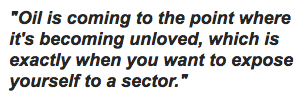
MK: Educate yourself. Everyone talks about buying low and selling high, but it’s easy to buy when it’s high because it feels good. Fortune favors the bold. You make money by being a contrarian in the resource sector, and when things look awful. Take the uranium market right now. It’s the most unloved sector in the world, but we’ve been making consistent, strong profits. It is a perfect example. If you know how to pick right and sit tight, you’re going to do very well. Oil is coming to the point where it’s becoming unloved, which is exactly when you want to expose yourself to a sector.
TER: Thanks for sharing your knowledge with us today, Marin.
MK: My pleasure.
With a background in mathematics, Marin Katusa left teaching post-secondary mathematics to pursue portfolio management within the resource sector. His hedge fund’s five-year track record has beat the peer TSX-V index by over 600%. He is regularly interviewed on national and local television channels in North America, such as the Business News Network (BNN) and many other radio and newspaper outlets for his opinions and insights regarding the resource sector. Katusa is a director of Canada’s third largest copper producer, Copper Mountain Mining Corp. (CUM.TO). Katusa is the chief investment strategist for the energy division of Casey Research. A regular part of his due diligence process for Casey Research includes property tours, which has resulted in him visiting hundreds of mining and energy producing and exploration projects all around the world. You can learn more about his book, “The Colder War” here.
Want to read more Energy Report interviews like this? Sign up for our free e-newsletter, and you’ll learn when new articles have been published. To see a list of recent interviews with industry analysts and commentators, visit our Streetwise Interviews page.
Related Articles
- Where Is Casey’s Marin Katusa Stashing His Money When Europe Heats Up?
- Colin Healey: Suppressed Uranium Price Shouldn’t Keep Hedged Producers and Promising Explorers Down
- Paul Adams: Macro Trumps Micro in Resource Sector
Check out the entire Streetwise Reports Essential Investor Bookshelf.
DISCLOSURE:
1) JT Long conducted this interview for Streetwise Reports LLC, publisher of The Gold Report, The Energy Report, The Life Sciences Report and The Mining Report, and provides services to Streetwise Reports as an employee. She owns, her family owns, shares of the following companies mentioned in this interview: None.
2) The following companies mentioned in the interview are sponsors of Streetwise Reports: None. The companies mentioned in this interview were not involved in any aspect of the interview preparation or post-interview editing so the expert could speak independently about the sector. Streetwise Reports does not accept stock in exchange for its services.
3) Marin Katusa: I own, or my family owns, shares of the following companies mentioned in this interview: PRD Energy Inc., Renaissance Oil Corp. and Uranium Energy Corp. I personally am, or my family is, paid by the following companies mentioned in this interview: None. My company has a financial relationship with the following companies mentioned in this interview: None. I was not paid by Streetwise Reports for participating in this interview. Comments and opinions expressed are my own comments and opinions. I determined and had final say over which companies would be included in the interview based on my research, understanding of the sector and interview theme. I had the opportunity to review the interview for accuracy as of the date of the interview and am responsible for the content of the interview.
4) Interviews are edited for clarity. Streetwise Reports does not make editorial comments or change experts’ statements without their consent.
5) The interview does not constitute investment advice. Each reader is encouraged to consult with his or her individual financial professional and any action a reader takes as a result of information presented here is his or her own responsibility. By opening this page, each reader accepts and agrees to Streetwise Reports’ terms of use and full legal disclaimer.
6) From time to time, Streetwise Reports LLC and its directors, officers, employees or members of their families, as well as persons interviewed for articles and interviews on the site, may have a long or short position in securities mentioned. Directors, officers, employees or members of their families are prohibited from making purchases and/or sales of those securities in the open market or otherwise during the up-to-four-week interval from the time of the interview until after it publishes.