
Timing & trends
Most of the major stock indices around the globe are signaling that the bear might be scratching at the door. Our chart of the S&P 500 Index (SPX) shows why the present area is important for deciding the market’s tone going into February. A breakdown from here could be the start of something much larger.
For two years, SPX has recognized the channel we have drawn on the weekly chart below. You know a channel is meaningful when the market responds not only to the channel’s boundaries, but also to fractional multiples (harmonics) of the channel width. In the weekly chart shown below, note how price responded to the initial breach of the center line in October.
In December and January, SPX has encountered the center line two more times and is now on the verge of a third test. This is not a pattern one should see if there were still much appetite for buying, especially with price coming down from a lower high.

If SPX breaks decisively through support (estimated to be near 2,002 at the end of the current week), then the most likely near-term target will be the lower edge of the channel. Depending on time, that could put the index near the 1,900 level in February.
You can see similar patterns in other U.S. indices. At our website, you will find an additional chart for IWM, the fund that tracks the Russell 2000 Index. It shows likely target levels if IWM and the Russell 2000 break downward.

The post meeting communique from the Fed appears slightly more hawkish that the market was hoping in that there was no mention of delays on any move in the benchmark rates based on developments in the international environment. The Fed acknowledged that economic activity was expanding at a “solid pace” versus a previous assessment of a “moderate pace “,also noting good gains in labor market conditions. The Reserve Bank of New Zealand kept its official rate unchanged at 3.5%,but moved to a neutral stance,while expecting further depreciation in the currency.This led to weakening in the NZD (-.56%) & AUD (-1.5% )with increased expectations of a rate cut by the Reserve Bank of Australia next week.The Canadian dollar ( -.11%) was a little weaker overnight on the back of the continued weakness in crude prices and general USD strength.
CAD Range 1.2563-1.2511 Current 1.2550 RES 1.2584 1.2634 SUPP 1.2435 1.2337



Briefly: In our opinion, no speculative positions are justified.
Our intraday outlook remains neutral, and our short-term outlook is neutral:
Intraday outlook (next 24 hours): neutral
Short-term outlook (next 1-2 weeks): neutral
Medium-term outlook (next 1-3 months): neutral
Long-term outlook (next year): bullish
The main U.S. stock market indexes lost between 0.6% and 1.4% on Wednesday, as investors reacted to FOMC Rate Decision release, among others. The S&P 500 index got closer to the level of 2,000, retracing most of its recent gains. The nearest important level of support is at 1,990-2,000, marked by previous local lows. On the other hand, resistance level remains at 2,050-2,065. For now, the broad stock market trades within its medium-term consolidation, as we can see on the daily chart:

Larger Image
Expectations before the opening of today’s trading session are positive, with index futures currently up 0.2-0.4%. The European stock market indexes have been mixed so far. Investors will now wait for some economic data announcements: Initial Claims at 8:30 a.m., Pending Home Sales at 10:00 a.m. The S&P 500 futures contract (CFD) is in a relatively narrow intraday consolidation, following yesterday’s sell-off. The nearest important resistance level is at 2,000, and support level is at 1,985-1,990, marked by local low:

Larger Image
The technology Nasdaq 100 futures contract (CFD) is in a similar intraday consolidation, as it fluctuates above the level of 4,100. The nearest important level of resistance is at around 4,130-4,150, among others, as the 15-minute chart shows:

Larger Image
Concluding, the broad stock market extended its sell-off yesterday, retracing most of January’s rebound. It continues to look like a volatile medium-term consolidation following last year’s October-November rally. We still prefer to be out of the market, avoiding low risk/reward ratio trades. We will let you know when we think it is safe to get back in the market.
Thank you.

Swiss – Negative rates
In the past [even the recent past] investors have often ‘parked’ their funds in a ‘safe-haven’ currency, when fears about the dollar or other currencies rose. The leading candidates have always been the Swiss Franc and the Yen, with gold, in the last three years usually being excluded, because of its declining trend against the dollar and the limited amount of stock relative to the availability of these currencies. While gold’s trend seems to have changed to the upside now, the developed world is still ‘out of gold’.
But gold has never forfeited its role as a ‘safe-haven’ for long. It is distinguished by the fact that there is no lasting link between gold and national governments and their national currencies. What gold has always had is the respect and the belief that it is money ‘in extremis’. For governments, through institutions to individuals, gold is always money, even between enemies.
In the last 40 years and more, the world led by the U.S., has sought to sideline gold as money, but inevitably it has proved its worth, most notably when currency crises appear. The success the dollar has had in these four decades has been largely due to two factors:
- It is riveted to oil as the only currency with which oil could be bought.
- It has the largest economy in the world, until now, as China appears to be moving into that place.
But as 2014 closed and a volatile, dramatic 2015 and 2016 entered our lives, this is changing. With oil at less than half its peak value today, only half the dollars that were used in the past for oil are being used now. Add to this that payments for oil in currencies other than the dollar, particularly by China, are being made. This is massively reducing the need for the dollar, globally. All theses excess dollars will become redundant, but the impact of this has yet to be seen or appreciated.
Euro Crisis masking the dangers
With the euro crises throwing a smokescreen over the dollar picture, as euros are exchanged for the U.S. dollar or through the ‘carry trade’ borrowed and sent into high yielding emerging market currencies, the dollar looks as though it is a strong currency.
Markets, market players and commentators tend to be myopic, focussed on short-term profits and only distracted when larger issues actually arrive. This is what’s happening now.
We feel that what is happening now on foreign exchanges is an early signal of much bigger issues that will appear in the next couple of years.
Now we will look at the traditional ‘safe-haven’ currencies of the Swiss Franc and the Yen to see just why currencies could only act as ‘safe-haven’ for a short time, while the monetary system remained free of fundamental crises, such as the ones we see now and on the horizon:
The Yen – The Yen hit its peak when it stood at 76 to the U.S. dollar before the leading source of energy [nuclear] was discarded and replaced by imported fuel.

As Japan’s population ages and spending habits become conservative, the real function of a currency has become apparent. It is used to allow the local economy to function smoothly as the only local means of exchange. Internationally, it is used as a basis for international trade and investment. As such, it functions well when the economy and Balance of Payments is healthy.
But when the Balance of Payments and the economy fail to function well, it hurts the international value of the currency as we have seen as Abenomics kicked in to lead Japan and the Yen into the future.
More importantly it now defines the trade competitiveness of the nation. Hence, the exchange rate itself, inevitably, is managed to the nation’s benefit and not that of its citizens or its own integrity. Its integrity as a measure of value has been abandoned alongside its role as a ‘safe haven’.
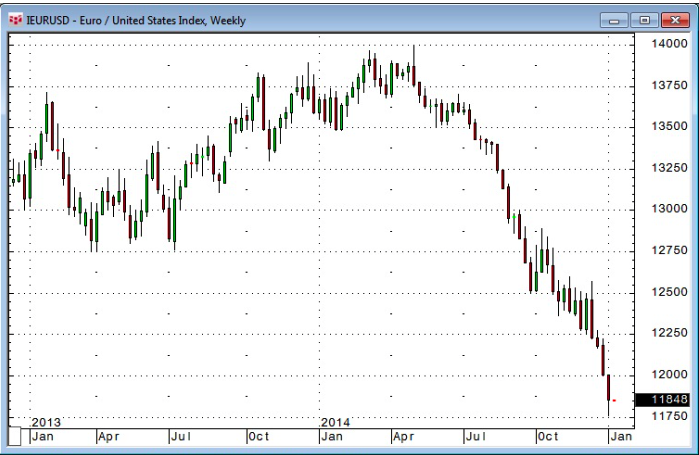
While the G-20 agreed that nations would not purposely weaken their exchange rates, the stark realities of today have overwhelmed these commitments and will continue to do so ‘where deemed necessary’. Translated, that means it is now OK to weaken ones currency in the interests of the nation’s export competitiveness. As most currencies follow this line and enter into the ‘race to the bottom’, any advantage to a nation becomes short-term as the one against whom the advantage was gained then does the same.
Today’s exchange rate of the Yen is 118 to the dollar a 55% fall from its recent peak. This fall is far bigger than the fall in the Ruble, albeit the Yen fell over a longer period of time. The fact that it has taken longer is OK as it can be absorbed in trade over that time. This makes the policy more palatable? The consequences of such myopia will focus on confidence. Confidence is the only ingredient that makes a currency viable and a quality that if lost takes a currency with it.
Hence the Yen is no longer a currency ‘safe-haven’.
The Swiss Franc
The Swiss franc has been a hallowed currency ‘safe-haven’ for generations, consistent with the earned image of Switzerland as a ‘safe-haven’ for foreigners assets and a nation that will fight to protect these investors. The events of the last three years have cost the Swiss dearly wiping out the confidence it had gained over the previous century. As of now, at least 10% of the Swiss economy depends upon the banking/asset management industry built up over this time.
But the rest of the economy doesn’t rely on this image. As a world-respected manufacturer, Switzerland needs an exchange rate that supports its international trade competitiveness, most importantly against the euro, its main trading partner.
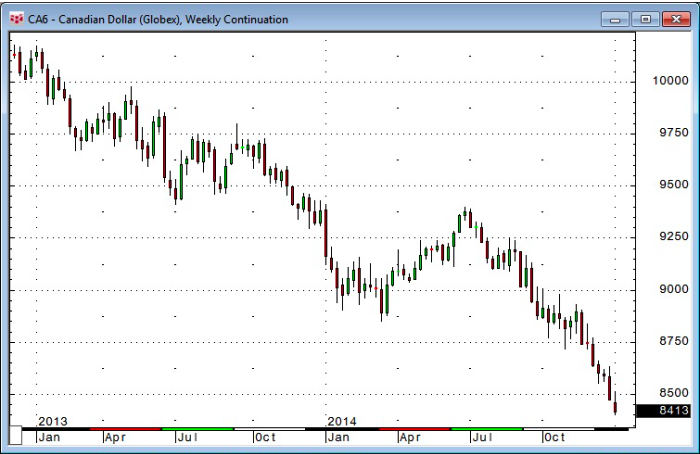
One would have thought that the two aspects of the Swiss economy could co-exist together easily. But when pressure on the global monetary system mounts, they can’t.
The pressure on the Swiss Franc has been heavy in the last three years when the Swiss National Bank [SNB] took severe action to hold the ‘Swissy’ to euro at a ceiling of 1.20 to guard Switzerland’s exchange rate against the euro without even contemplating the possibility that the world’s second most important currency could weaken so dramatically and so quickly from its peak against the dollar.
The pressures proved too much last week and to the great surprise of the whole world the ‘Swissy’ was unpegged! As we look around at the damage the Swiss National Bank caused by ‘unpegging’ from the euro and now linking it to a ‘trade weighted basket of currencies’, including the U.S. dollar, we see once more, national interests elevated far above those of the people using the ‘Swissy’ both inside and out of Switzerland.
Perhaps you are thinking that the ‘Swissy’ can once more serve as a ‘safe-haven’ currency. A look at the intentions of the SNB in now linking the Swissy to the ‘basket of currencies’, is to keep the Swiss Franc down against them. This means that the SNB will continue to intervene in the foreign exchanges and hold it down against these other currencies.
So it will not return to ‘safe haven’ status, as we are now seeing in the market place as it slowly slips down against gold and other currencies. In addition, the Swiss National Bank has imposed an interest rate of –0.75% on sight deposit account balances at the SNB. In an effort to relieve the upward pressure on the Swiss franc, from 22 January the SNB will charge an interest rate of 0.75% on account balances above a certain threshold held with it by banks and other financial institutions. But will this work?

In what can only be described as a break in the integrity of the Swiss National Bank, a week before unpegging the Swiss Franc, the SNB reaffirmed its commitment to the minimum exchange rate of CHF-EUR1.20, and “will continue to enforce it with the utmost determination”, they said. Further they said, “It remains the key instrument to avoid an undesirable tightening of monetary conditions resulting from a Swiss franc appreciation. Over the past few days, a number of factors have prompted increased demand for perceived ‘safe-haven’ investments. The SNB is prepared to purchase foreign currency in unlimited quantities and to take further measures, if required.”
And now?
The end of Currency ‘Safe-havens’
The very concept of a currency acting as a ‘safe-haven’ has now been destroyed by the actions of the currencies held up a one before. This reputation will not change because no country can afford to let it do so without mortally wounding its exports. It is hoped that the monetary system will survive a long time despite the undermining of the value of currencies. The loss of confidence in the currencies can go to the point of collapsing it because it is a currency managed by people who have differing agendas to the one that demands a solid value for their money. As examples of this in the past we look at how a currency is still used in a local economy while it is collapsing. Please note that governments impose it use on an unwilling public until it has collapsed.
We repeat, when a currency collapses internally, governments force its citizens to use it in day-to-day transactions until it becomes practically impossible to use it.
In the Weimar Republic after the first World War the German Mark fell from 4.63: $1 to 4.63 billion: $1. Germans were going around with wheelbarrows to transport the money needed for day to day transactions. Workers, when paid would rush to the gates of the factory and threw their money to wives who raced to the shops to buy whatever they could as prices rose.
One story has it that a person left their money in a bag on a bicycles outside a shop and when they returned the bag and bicycle was gone and the money left on the pavement. Nevertheless it took the total collapse of the currency before the central bank changed the currency to the Rentenmark, a currency issued against property [that could not be printed]. By this time the middle and upper classes of Germany had been wiped out financially [in the nation’s interests].
In Zimbabwe, After the Z$: $1 U.S. traded at 1:1 it took Z$70,000 just to catch a bus to work late in the collapse of that dollar in Harare. Now in Zimbabwe, the U.S. dollar is used, in a shattered economy with 95% unemployment. But again for the benefit of the government the Z$ was used right through until it was completely unacceptable as a currency [in the national interests] It even persisted with notes that had an expiry date.
In a tried and tested manner over the life of currencies, gold has always held international value. A Zimbabwean could go to Mongolia and get the world price for his gold. Not so with the Z$. The author has a Z$100,000,000,000,000 note in his desk that is worth less than a sheet of toilet paper.
Such is the history of fiat currencies and will be in the future when the games governments play reach their climax.
The U.S. $ is now in the position of being the retreat from other currencies, because the world’s currencies are the branches off the tree-trunk of the dollar. But the dollar itself is under siege too. The Treasury department has made it clear that it does not want to see a strong dollar! It too must guard its international trade competitiveness by retraining a strong dollar. At the moment it is silent on this, but for how long?
Thus we have two opposing flows in the U.S. dollar:
- The inflow of dollars sold as they are excess to requirements and
- The newly bought flows of dollars back to the U.S. as other currencies fail to provide sufficient safety for investors.
The pressures on the dollar will take time to come to fruition and will be signaled by the failure of other currencies [such as the euro] and by the stumbling of the monetary system itself first.
Can the dollar collapse?
At the moment the dollar is the strongest of the world’s currencies and is reflecting that in its exchange rates. But this is relative strength as the dollar will, if push comes to shove be the last currency standing, even if it is itself inherently weak. It will be used as there is no alternative to it in the Western world. [That’s why China is trying to free itself from dependence on the dollar and be able to stand alone.]
If the dollar collapses it will be the last currency to collapse, after the breakdown of the monetary system itself. Even if the Yuan can stand alone, the developed world will not be permitted to exchange all other currencies for the Yuan. So no matter what the state of the dollar is, it will be used in the developed world.
Then, exchange rates will not be the measure of the dollar. When that happens, once more, the dollar, relative to other currencies will still look strong. The lack of confidence in currencies [and the dollar] will be reflected in volatility, instability and uncertainty, with many ‘hallowed’ currency standards being abandoned along the way. In turn, the Treasury and equity markets alongside institutions in the financial markets will stumble and fall. But everyone will be trying to turn to items that will be effective measures of value and means of exchange.
Among these internationally, precious metals will be at the head of the list. While individuals and institutions will turn to these markets, so will governments. As happened in 1933, governments will take such items to add credibility to their currencies and be able to say that the banking system will be ‘lending against good assets’! At that time the price of gold will not be measured by the dollar, but gold will measure the dollar.
Until that day comes we can expect growing currency volatility and to the extent the precious metal markets allow, a turning to gold and then silver slowly but surely!
Durables Miss In Big Way
The slow growth/low inflation story gained additional traction Tuesday when durable goods orders came in well below expectations. From The Wall Street Journal:
U.S. businesses broadly cut capital spending in the final months of 2014, raising red flags about the economy’s ability to sustain momentum amid troubles around the globe. Orders for durable goods — products like cars and kitchen appliances designed to last at least three years — fell 3.4% in December from a month earlier, the Commerce Department said Tuesday. Orders have fallen four of the past five months.
Bonds Win In Two Of Three Scenarios
From an investment perspective, there are three major scenarios likely facing investors. Scenario one is an ongoing period of slow growth and low inflation, which can be favorable for both stocks and bonds. Scenario two, slower growth, has gained some momentum with the recent trends in earnings and economic data. Scenario three involves a stronger economy and a shift toward higher inflation. You can see a larger and economically-broader version of the flow diagram below via this link.

The least likely outcome in the short run appears to be scenario three (stronger economy). Given the stock market has not broken down in a meaningful way yet, it seems reasonable to assign the highest probability to scenario one, which is more of the same (slow growth and low inflation). The broader market’s failure to make a new high over the last seven months tells us scenario two (slower growth/recession) is creeping higher on the probability ladder. The video below puts some additional fundamental and historical context around the three scenarios.
Strong Dollar Hits Earnings
The fundamental backdrop includes increasing fear of deflation, which has helped increase demand for the world’s reserve currency, the U.S. dollar (UUP). A strong dollar has some negative consequences for U.S. corporations. From Bloomberg:
The dollar’s surge is reducing earnings at American companies from Procter & Gamble Co. (PG) to Pfizer Inc. (PFE) and DuPont Co. that make a large portion of their revenue abroad. P&G, the world’s biggest consumer-products maker, today reported profit that missed analysts’ estimates in the quarter ended Dec. 31 after what Chief Executive Officer A.G. Lafley called “unprecedented” foreign-exchange rate fluctuations reduced sales by 5 percentage points. DuPont and drugmakers Pfizer and Bristol-Myers Squibb Co. (BMY) all posted annual forecasts that trailed predictions, in part because of the dollar.
Investment Implications – The Weight Of The Evidence
In two of the three scenarios described above, bonds can perform well. Consequently, we have been slowly been ratcheting up our fixed income (TLT) exposure in recent weeks. Until the broad stock market breaks down, we can afford to remain patient with our equity-based ETFs (SPY).

Wednesday brings the latest from our friends on the Federal Reserve’s Open Market Committee. If we are willing to pay attention with a flexible and open mind, the market will guide us in the coming days and weeks.


-
I know Mike is a very solid investor and respect his opinions very much. So if he says pay attention to this or that - I will.
~ Dale G.
-
I've started managing my own investments so view Michael's site as a one-stop shop from which to get information and perspectives.
~ Dave E.
-
Michael offers easy reading, honest, common sense information that anyone can use in a practical manner.
~ der_al.
-
A sane voice in a scrambled investment world.
~ Ed R.
Inside Edge Pro Contributors

Greg Weldon

Josef Schachter

Tyler Bollhorn

Ryan Irvine

Paul Beattie

Martin Straith

Patrick Ceresna

Mark Leibovit

James Thorne

Victor Adair