Forget all the doom and gloom you hear about junior miners, says Lawrence Roulston, president of Quintana Resources Capital ULC. Canny investors should pay close attention to the flood of new money entering the sector and note carefully where it is going. In this interview with
 The Mining Report: When we last spoke in June 2014, you said that gold at $1,250 per ounce ($1,250/oz) was a reasonable baseline price going forward. Do you still believe that?
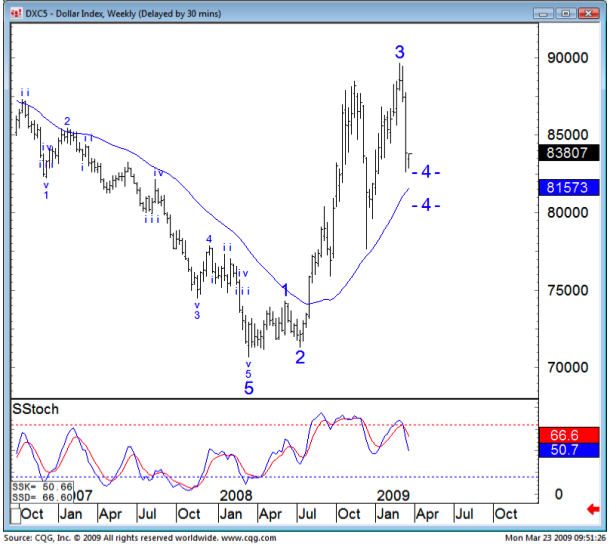
Lawrence Roulston: Yes. Actually, the fact that gold has remained at this level while the U.S. dollar has become so strong is very significant.
My preference is to pay less attention to the gold price per se and more attention to specific gold and silver companies that are good investments in their own right. This means companies with smart management teams that are expanding resources, advancing projects toward production, increasing production or doing other things that add value. As the gold price eventually moves higher, such companies will realize bonuses on top of what should already be an attractive return.
 TMR: In the last two years, two independent phenomena have occurred simultaneously: companies have greatly reduced costs, and, as you mentioned, pretty much all currencies have lost value against the U.S. dollar. Taken together, how much has this improved the condition of miners outside the U.S.?
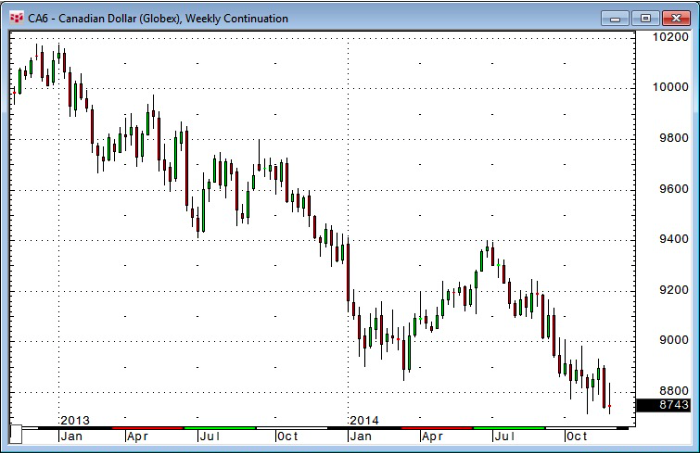
LR: In particular, Canadian and Australian miners have benefitted greatly: a 20% boost on the revenue line, which has led to an even larger boost of operating margins. As a result, many companies that were struggling two years ago are now much healthier.
TMR: We hear often that it is difficult to impossible for mining companies to raise financing in the current climate. Is this an excuse used by companies with poor management?
LR: I wouldn’t be quite so judgmental, but certainly, in spite of all the complaining about moribund financial markets, a truly enormous amount of new money is coming into the junior mining industry. From Oct. 1, 2014, to Feb. 6, 2015, junior mining and exploration companies raised $3.5 billion ($3.5B). About two-thirds of that money was raised in Canada. The balance was raised in Australia, the U.S., the United Kingdom and Hong Kong.
 Breaking that down, $1.7B was new equity, which went into about 130 companies. Another 40 companies raised $1.8B in debt. Keep in mind, this was just the juniors. The larger companies, the likes of Capstone Mining Corp. (CS:TSX) and Lundin Mining Corp. (LUN:TSX), raised several billion as well. There is no shortage of money for companies with good management teams that can win the confidence of the smart money investors. And there are billions of dollars sitting on the table waiting for the right deals.
TMR: What does the merger and acquisition (M&A) scene tell us about the financial markets and mining?
LR: I’ve counted 14 substantial takeovers in the past three months. For example, Duluth Metals Ltd. (DM:TSX) was bought for $96 million ($96M) by Antofagasta Plc (ANTO:LSE). Cayden Resources Inc. (CYD:TSX.V; CDKNF:NASDAQ) was bought for $205M by Agnico Eagle Mines Ltd. (AEM:TSX; AEM:NYSE). Tahoe Resources Inc. (THO:TSX; TAHO:NYSE)just bid $1.2B to take over Rio Alto Mining Ltd. (RIO:TSX.V; RIO:BVL). All those deals involved big premiums to the trading prices, but this good news hasn’t gotten a lot of attention in a market that’s so focused on negativity. These M&As remind us that there’s a lot of money out there ready and willing to get into the junior mining sector.
 TMR: Would you say that those companies that have not been able to raise money face a bleak future?
LR: No question. In fact, the majority of junior miners have no projects with any real value in the current metal pricing scenario, and so their managements cannot get the attention of the people who write the checks. Eventually, the market will change, and a rising tide will raise all the surviving boats. But if you are a shareholder today in a broke company without a really good project, it might be time to move on.
TMR: Companies can raise money in a number of ways: equity, debt or selling streaming royalties. How do you rate each option, starting with equity?
LR: In a downmarket like this, equity can be highly dilutive. Unfortunately, managements have often lost sight of the shareholder’s interest. They finance in a highly dilutive manner because it’s important for them to continue to collect their salaries, even as it becomes virtually impossible for existing shareholders to ever get a decent return. Some managers believe their mission is to advance their projects, but the primary mission of management should be to advance the share price and make money for shareholders. This can be accomplished only by adding real value.
 Many companies have recently done big rollbacks. Ten-for-one consolidations are now routine. After that, shareholders have little hope of ever seeing a return on initial investment.
TMR: How about debt?
LR: Debt might look cheap on the surface. For juniors, however, there are hidden costs that make the real cost of debt much, much higher than the nominal rate. There are origination fees, finder’s fees, processing fees and bonus warrants. Often, the lender will insist on hedging, which can rob shareholders of any upside in metal prices. Or the lender will take an offtake agreement, which is full of hidden costs. Sometimes lenders charge a marketing fee, which is really just a hidden royalty. And every time the mining company needs to change the terms of the loan, there is a penalty fee.
No one will loan money to a junior without a return of at least 20–25%. It’s also extremely risky for a company to take on debt if it lacks reliable production or operates a single mine. Companies with debt can lose everything should they miss payments. We’ve seen this many times over the last couple of years—companies go bust, and the shareholders get nothing.
TMR: How do you regard the third option, streaming?
LR: It makes a lot of sense in many cases, especially if the company is streaming a byproduct metal, not its primary metal. I should clarify that streaming is somewhat different from a royalty. Streaming has tax features that can benefit both the producer and the investor.
 And streaming is a lot more flexible than royalties, as it can be customized to fit the circumstances. In a streaming deal, the company receives an upfront payment and then receives a further payment for each pound or ounce of metal as delivered. It makes no sense for a company to stream silver or gold, if that is its primary commodity. Investors in those companies are counting on the upside in precious metals and pay a premium for a company that produces gold or silver, versus an equivalent value of base metals.
But most streaming companies prefer to stream only precious metals. Some miners have streamed their precious metals and suffered because of it.
TMR: Can you give an example of a recent good streaming agreement?
LR: In October, Quintana Resources Capital ULC, of which I am part of the management team, did a deal with Arian Silver Corp. (AGQ:TSX.V; AGQ:AIM) to stream a portion of the lead and zinc byproducts from its San José project in Mexico. We also assumed an existing debenture, but the primary financing was the base metal stream. Arian got $16M in capital, which was all it needed to bring San José into production. It got that money without giving up any silver or having to issue new shares. And there is no hedging, so shareholders can realize the full upside potential of Arian’s silver production.
If Arian had raised that $16M through equity—even assuming it could have done so at the then share price—existing shareholders would have surrendered 50% of the entire company. The question was whether Arian would have been better served by streaming 78% of its byproducts and keeping all its silver or by giving up half of the entire company in an equity issue. The fact that Arian’s share price held up in a down market suggests that investors like the streaming option.
TMR: What does it tell you about the management team when they own a significant amount of outstanding shares?
LR: We at Quintana say that it’s extremely important for the management team to have skin in the game. When they have an equity stake, their interests are aligned with the shareholders’. My experience over the last three decades in an extremely challenging business sector is that salaried employees just don’t have the same drive and determination as owners, who are far more likely to go the extra distance to achieve success.
TMR: When management does not own a significant amount of outstanding shares, is this always a negative?
LR: It’s a good rule of thumb. There are situations where management doesn’t own shares directly, but has big stock option positions. This is effectively the same position as owning shares directly.
TMR: What does the phrase “smart money” mean to you in the context of the mining sector?
LR: Smart money refers to investors who understand the resource market as a cyclical business. They know it makes sense to buy at the bottom of the market. Most investors today avoid the juniors, but share prices will increase because the world hasn’t stopped using metals, and existing mines are being depleted and must be replaced. The smart money people know that exploration and development projects are becoming increasingly critical to the future of mining.
TMR: How has smart money intervened in the mining markets recently?
LR: I’ve already mentioned Arian. Before Quintana’s deal with it, that company was effectively broke, with a big debt load that might have sunk the company. Arian is now weeks away from full operation at San José and is on the verge of becoming a profitable producer. Its share price is now significantly higher than it was before the deal and is set to move higher as production gets underway in the next few weeks.
Other companies that have benefitted recently from investment by smart, contrarian investors are Kaminak Gold Corp. (KAM:TSX.V), Balmoral Resources Ltd. (BAR:TSX; BAMLF:OTCQX), Dalradian Resources Inc. (DNA:TSX), Anfield Nickel Corporation (ANF:TSX.V), Lundin Gold and Corsa Coal Corp. (CSO:TSX). Readers should take a look at the people who have invested in those deals and note their history of success.
TMR: Besides Arian, which other silver juniors do you like?
LR: At the top of the list is MAG Silver Corp. (MAG:TSX; MVG:NYSE), which is advancing Juanicipio, its big Mexico silver project, toward production.
TMR: What are your favorite near-term gold production stories?
LR: GoGold Resources Inc. (GGD:TSX) is already in production at its Parral Tailings silver project in Mexico, and its Santa Gertrudis gold project, also in Mexico, is advancing toward production.
Klondex Mines Ltd. (KDX:TSX; KLNDF:OTCBB) is producing gold and silver from its Midas mine, and is ramping up gold production at Fire Creek. Both are in Nevada.
Romarco Minerals Inc. (R:TSX) has just secured financing to construct its Haile gold mine in South Carolina.
These companies offer shareholders upside potential, as they will be rerated after production commences. There is a lot of focus on gold companies, but there are some even more compelling values in the base metals.
TMR: GoGold has just increased the size of Parral. What does this say?
LR: It says that the company is getting a better understanding of what it has there. Parral is a good bread-and-butter operation that is likely to create considerable cash flow over the coming years. Santa Gertrudis is where we see the real upside. GoGold’s management has demonstrated it can develop mines in a market with lots of distressed assets. My expectation is that the company will continue to acquire and develop further operations.
TMR: What impresses you about Klondex?
LR: It is in one of the best jurisdictions for operating gold mines, and now it has two. It also has a mill. This company is in a position to become a consolidator. Nevada has a number of small mines that could benefit from a very capable management team and a milling operation with excess capacity.
TMR: Klondex shares have realized about a 40% appreciation since December. During that time, many gold shares rocketed up but then came back down again, while Klondex has remained fairly steady. Why has it done so well?
LR: Clearly, some investors are accumulating shares. At some point, there might be a takeover offer. I would hope it remains independent for at least a while. There is a lot of value-added potential yet for that management team and the potential for further consolidation.
TMR: Romarco raised $300M in a bought-deal financing. This was a company that had 725M shares before the equity issue.
LR: It’s unfortunate that Romarco needed to raise so much money with equity at its then share price. That is fairly dilutive, but the upside is that Haile now has the financing to go into production.
TMR: Haile was mired in regulatory hell for years. Did this result in Romarco’s share value being unfairly depressed?
LR: That’s exactly what happened. Investors forgot that it’s a very well-managed company with a high-quality project in an excellent location. Haile will produce gold at an all-in cost of $624/oz. It has a Proven and Probable gold reserve of 30.5 million tonnes (30.5 Mt) at 2.06 grams per ton (2.06 g/t): 2 million ounces (2 Moz) gold. The Measured and Indicated resource is 4 Moz and the Inferred resource is 0.8 Moz, and the property has great exploration potential as well.
TMR: Can you comment on any near-term production companies in Canada?
LR: Pretium Resources Inc.’s (PVG:TSX; PVG:NYSE) Brucejack gold-silver project in British Columbia was dogged by uncertainty about the quality of the resource. But we now know it’s large and high grade. It will take some engineering to develop a mine plan to optimize recovery, but there’s no doubt in my mind that this will ultimately become a very profitable gold mine. There are some challenges with the location, but it’s not as if Brucejack will be a huge open-pit operation. The logistics for an underground mine of that scale are manageable in that location.
TMR: Pretium has recently seen significant share price increases based on no new material news. This has led to takeover rumors. Is a takeover likely?
LR: Any large, high-grade gold deposit is automatically on the list of potential targets. As the company continues to better understand Brucejack, the likelihood of a takeover becomes greater. As with Klondex, I really hope that doesn’t happen because Pretium’s team is capable of building mines and can add a lot more value to the project.
TMR: Would it be fair to say that British Columbia (BC) mining is under a cloud? Over the last year, we’ve seen the Canadian Supreme Court award First Nations unspecified rights over all BC Crown land, the tailings spill at Imperial Metals Corp.’s (III:TSX) Mount Polley mine and the second rejection of Taseko Mines Ltd.’s (TKO:TSX; TGB:NYSE.MKT) New Prosperity mine.
LR: The Mount Polley disaster never should have happened. It’s unfortunate that it happened in BC, but it could have happened anywhere. It will undoubtedly lead to more frequent inspections and stricter enforcement of standards and that is a good thing for everybody, including the mining companies.
There are a lot of misperceptions about mining in BC. First, let me say that the provincial government is extremely supportive of mining and has taken concrete steps to ensure that permitting, whether for exploration or production, is handled quickly and efficiently. The rejection of the New Prosperity mine happened at the federal level after receiving full approvals from the province. It happened while there was a very sensitive case regarding First Nations that was before the Supreme Court and which was destined to become a precedent setting case. It seems that the prime minister wanted to diffuse tensions in advance of what could have been a controversial judgment.
There are undoubtedly challenges with regard to First Nations, but those challenges are manageable. The Supreme Court judgment in that case was not well reported and is generally not well understood. Much was made of the granting of the land title, but the Tsilhqot’in Nation was looking for two and a half times the amount of land that was awarded. Settling that case brings a lot more certainty in that the boundaries are now firmly established.
First Nations in BC have always had “asserted rights” to traditional lands and the judgment merely confirmed what was already in place, which is that the First Nations have the rights to continue to hunt and fish and carry on other traditional activities. Permitting in areas with asserted rights requires a public consultation process, much like the permitting process in many other jurisdictions such as the United States where affected parties have the opportunity to present their case as part of the review process.
Mines do get permitted in BC: a couple of coal mines were permitted last year: New Afton, Treasure Mountain and Copper Mountain were all brought back into production after being shut down for decades. Mt. Milligan was permitted as a greenfields project in a respectable time and is now in production.
So, yes, there is a perception problem regarding BC, but the province stacks up well against most of the rest of the world and is generally a favorable place for exploration and mining
TMR: Do you follow any juniors with multiple projects?
LR: I like “prospect generators,” companies that take on several projects and advance them with funding from joint venture partners. It has been tough finding partners with money in this market, but Riverside Resources Inc. (RRI:TSX.V), for example, has been quite successful at getting funding from larger companies.
TMR: What are the most likely M&As in 2015?
LR: Further to the companies I mentioned earlier, I would add Kaminak, Asanko Gold Inc. (AKG:TSX; AKG:NYSE.MKT) and Newstrike Capital Inc. (NES:TSX.V). [Editor’s Note: On Feb. 17, after the interview was recorded, Newstrike received an offer from Timmins Gold.] These companies have large, attractive gold deposits and are trading at attractive values relative to the fundamental values of their projects.
TMR: Many investors in gold juniors have watched their portfolios wither since 2011. Is it time for them to let go of companies that haven’t shown recent significant appreciations and recycle their holdings into more hopeful ventures?
LR: Absolutely yes. Many companies are never going to return to the prices that they traded at in 2009–2011. I understand that it’s really hard for investors to let go of companies and lock in big losses, but the reality is that they’ve already lost the money. It’s just a matter of reclaiming whatever money they can and putting it where there is better upside potential. Of course, these decisions must be made on a case-by-case basis. It’s really useful to get some professional input with regard to junior mining companies. The new team at Resource Opportunities, for example, is very helpful in evaluating juniors.
For those companies that are raising money, have good management teams and projects that are producing or advancing toward production, the outlook is quite positive. Investors should focus on those companies. By the time the overall market is once more on a solid uptrend, the better companies will have already enjoyed big gains.
TMR: Lawrence, thank you for your time and your insights.
Lawrence Roulston is an expert in the identification and evaluation of exploration and development companies in the mining industry. A geologist with engineering and business training, he is the president of Quintana Resources Capital ULC. He generated an impressive track record for Resource Opportunities, the subscriber-supported investment newsletter of which he was founder and editor.
The Quintana group has been highly successful at investing in the resource industry since the 1960s. That success is based on buying low, and that means acting contrary to market sentiment and buying at the bottom of market cycles. But, timing is only part of the key to success. The other part is knowing which companies to invest in. Quintana Resources has a team of mining industry experts with a great deal of experience and success.
Read what other experts are saying about:
Want to read more Mining Report interviews like this? Sign up for our free e-newsletter, and you’ll learn when new articles have been published. To see recent interviews with industry analysts and commentators, visit The Mining Report homepage.
Related Articles
- Lawrence Roulston: In a Sea of Gold, Three Juniors Stand Out
- The Resource Maven Tells Investors How to Take Advantage of a Rising Happiness Index
- Jeb Handwerger: A Surge in M&As Proves that Gold Is Back
DISCLOSURE:
1) Kevin Michael Grace conducted this interview for Streetwise Reports LLC, publisher of The Gold Report, The Energy Report, The Life Sciences Report and The Mining Report, and provides services to Streetwise Reports as an independent contractor. He owns, or his family owns, shares of the following companies mentioned in this interview: None.
2) The following companies mentioned in the interview are sponsors of Streetwise Reports: Balmoral Resources Ltd., MAG Silver Corp., Klondex Mines Ltd., Pretium Resources Inc., Tahoe Resources Inc. and Asanko Gold Inc. The companies mentioned in this interview were not involved in any aspect of the interview preparation or post-interview editing so the expert could speak independently about the sector. Streetwise Reports does not accept stock in exchange for its services.
3) Lawrence Roulston: I own, or my family owns, shares of the following companies mentioned in this interview: None. I personally am, or my family is, paid by the following companies mentioned in this interview: None. The company I work for, Quintana Resources Capital ULC, owns shares in the following companies mentioned in this interview: Arian Silver Corp. A related company owns shares in Corsa Coal Corp. I was not paid by Streetwise Reports for participating in this interview. Comments and opinions expressed are my own comments and opinions. I determined and had final say over which companies would be included in the interview based on my research, understanding of the sector and interview theme. I had the opportunity to review the interview for accuracy as of the date of the interview and am responsible for the content of the interview.
4) Interviews are edited for clarity. Streetwise Reports does not make editorial comments or change experts’ statements without their consent.
5) The interview does not constitute investment advice. Each reader is encouraged to consult with his or her individual financial professional and any action a reader takes as a result of information presented here is his or her own responsibility. By opening this page, each reader accepts and agrees to Streetwise Reports’ terms of use and full legal disclaimer.
6) From time to time, Streetwise Reports LLC and its directors, officers, employees or members of their families, as well as persons interviewed for articles and interviews on the site, may have a long or short position in securities mentioned. Directors, officers, employees or members of their families are prohibited from making purchases and/or sales of those securities in the open market or otherwise during the up-to-four-week interval from the time of the interview until after it publishes.







 If you have been following the price of oil over the last few months, the chances are you’re a little confused. On the one hand you have the likes of A. Gary Shilling who, in