Gold & Precious Metals

  1. On March 20, 2015, global gold price discovery changed. Transparency was introduced to the London gold market, as the new “LBMA Gold Price” was launched. 
  2. In my professional opinion, the changes in London are ushering in an entire new era of gold price stability, consistency, and transparency, and that will attract large money managers to this spectacular asset.
  3. The tortoise always beats the hare. Allow me to elaborate: while net gains of $1 – $2 a day in the price of gold may seem boring, with roughly 250 trading days in a year, that can translate into price appreciation of $250 – $500. 
  4. When the Western fear trade dominated gold, the London gold price was set by shadowy figures making private telephone calls to each other. Volatility was huge, and many money managers used large bank loans to make leveraged bets on the price.  
  5. Now, the Eastern love trade is starting to overwhelm the fear trade. It’s a theme that will probably accelerate very dramatically in the second half of this year. 
  6. Also, the transparency in London will attract unleveraged money managers that take a very long term approach to their investments, with a focus on gold stocks.
  7. Without the Eastern love trade, gold probably would trade in the $700 – $1000 area, if another financial crisis didn’t occur. That’s because Western fear traders simply don’t buy enough tonnage to overwhelm mine and scrap supply, except in the most extreme and temporary situations. 
  8. In contrast, the Eastern love trade should produce consistent 5% – 15% annual gold price appreciation, with very limited volatility, for decades to come. I expect to see gold stocks make a “stealth” change over the next 1 -2 years, from being the most hated asset class in the world, to one of the most respected.
  9. Please  click here now. That’s the daily chart for gold. There’s a strong possibility that an inverse head and shoulders bottom is forming now.
  10. Gold may react a bit here in the $1190 area, because of minor trend sell-side HSR (horizontal support and resistance). After the pause/pullback, I expect the rally to continue. Gold should reach $1220, before another pause in the upside action occurs.
  11. Please  click here now. That’s the seasonal chart, courtesy of Dimitri Speck. Clearly, gold needs to be accumulated, on any short term weakness.
  12. There’s more good news in the immediate term, for gold price enthusiasts. March 26 is option expiry day for the COMEX April gold contract. That’s just two days from now, and gold often tends to rally after the options expire.
  13. I recently swapped some gold for silver. Silver is referred to as a “game” by many hedge fund managers, but I think they may need to reconsider the use of that moniker. That’s because the increased transparency in the London market applies to silver as well as gold. 
  14. Please  click here now. That’s the daily chart for silver. There’s a great breakout in play, from a bull wedge pattern. Silver could reach the $18.50 area quite quickly, once the March 26 option expiry day is in the past. Traders should book decent profits in the $17.50 – $18.50 zone.
  15. A lot of analysts believe that Chinese gold demand is much higher than is reported in the mainstream media. I think they may be looking at a tree, rather than the forest. Here’s why:
  16. The London gold market needed to be overhauled, and it was, but Shanghai also lacks transparency. A new “Shanghai Gold Fix” should be operational before this year ends, and I expect it to feature the same transparency that now exists in London.
  17. Once the Shanghai market becomes as transparent as London, there will tremendous pressure on the New York COMEX directors, and on US commodity regulators, to bring that market to the level of excellence showcased in London and Shanghai. In 2016, Dubai should also get recognition as another major centre of transparent gold price discovery.
  18. Most investors in the gold community believe America will experience another major financial crisis that will result in tremendous money printing, and higher gold prices. Financial meltdowns will occur repeatedly in the future, but when the next one will actually arrive, is perhaps more difficult to discern than most analysts are willing to admit. 
  19. What is crystal clear, is that the general industrialization of China and India, regardless of economic cycles, is a long term process that is increasing gold demand from both Chindian citizens and central banks. With gold markets around the world entering a fabulous new era of “growth with transparency”, gold stocks are poised to receive enormous inflows of institutional capital. 
  20. On that note, please  click here now. GDX is a key holding for me. This daily chart shows the 14,7,7 Stochastics oscillator in rising mode, with the lead line only at about 38. There’s plenty of room for higher prices before that key oscillator becomes overbought. I think GDX can reach $23.40 if gold reaches $1250. If gold can reach the recent highs of about $1308, GDX should trade near the summer highs in the $27 zone.
  21. Please  click here now. That’s the daily chart of the Australian dollar, against its US counterpart. There’s a key breakout in play. Please  click here now. Australia is viewed as part of the Western world, but its geographic location force the country to benefit from the staggering growth occurring in China and India.
  22. A rally in the Australian dollar at the same time as Australian gold stocks rally could create substantial profits for investors based outside of Australia. On that note,  click here now. That’s the daily chart for Newcrest, one of the world’s top ten gold producers. 
  23. The company has roughly a twenty-five year mine life, which should produce enormous returns for shareholders, in the Chindian-based “gold bull era”. I recommended buying the stock at $13, $12.25, and $11.50, and two of those three buy points were hit, before the stock blasted higher in the past few days. Still, I will caution traders not to get greedy; some profits should be booked, as the stock approaches the $14.50 area.
  24. As this year proceeds, I think Western gold stock investors will find themselves in a fresh new mindset. Fear of lower prices and demands for much higher ones will be replaced with strong confidence, as gold stocks stage a “choo choo train” advance on the price grid, to nicely higher prices! 

Mar 24, 2015
Stewart Thomson
Graceland Updates
website: www.gracelandupdates.com
email for questions: stewart@gracelandupdates.com 
email to request the free reports: freereports@gracelandupdates.com

Tuesday Mar 24, 2015
Special Offer for Money Talks readers
: Send an email to freereports@gracelandupdates.comand I’ll send you my free “Top Gold Guns!” report. I highlight three “movers and shakers” in the GDXJ ETF, and three in the GDX ETF. These six stocks should add firepower to any gold investor’s portfolio, and I highlight key buy and sell points for each stock!

About Stewart Thomson:

Stewart is a retired Merrill Lynch broker. Stewart writes the Graceland Updates daily between 4am-7am. They are sent out around 8am. The newsletter is attractively priced and the format is a unique numbered point form; giving clarity to each point and saving valuable reading time.

Risks, Disclaimers, Legal
Stewart Thomson is no longer an investment advisor. The information provided by Stewart and Graceland Updates is for general information purposes only. Before taking any action on any investment, it is imperative that you consult with multiple properly licensed, experienced and qualifed investment advisors and get numerous opinions before taking any action. Your minimum risk on any investment in the world is 100% loss of all your money. You may be taking or preparing to take leveraged positions in investments and not know it, exposing yourself to unlimited risks. This is highly concerning if you are an invetor in any derivatives products. There is an approx $700 trillion OTC Derivatives Iceberg with a tiny portion written off officially. The bottom line:

Connecting the Dots: The Stock Market Hot Potato: Volatility, the VIX, and You!

“When did Noah build the Ark, Gladys? Before the rain, before the rain.”
—Nathan Muir (Robert Redford), in Spygame

Image 1 20150324 CTDIf you’ve ever walked a dog, you know about the zigzag path that dogs take down a sidewalk. After all, there are great odors to sniff on both sides of the sidewalk so your dog will veer far to the left, take a few deep sniffs before veering off to the right to see what olfactory surprises the other side holds.

About the only thing that’s certain is that once your dog reaches the far end of his leash, it will swing back to the middle of the sidewalk before taking off for another trip to the extreme ends of the leash.

Human psychology, when it comes to investing, isn’t so different. Investor sentiment swings from extreme readings of euphoria and anxiety and extremes of fear and greed.

Like our friendly dogs on a walk, we investors swing from the far left to the far right of the Wall Street sidewalk.

There is a way to profit from the human emotions: the VIX, or CBOE Volatility Index.

Some of you already know plenty—probably more than me—about the VIX, but for those that don’t, here is a quickie tutorial.

The VIX, often referred to as the “fear index,” is calculated by the Chicago Board Options Exchange (CBOE) and measures market expectations of short-term volatility.

The VIX is derived from prices investors are paying for options on the S&P 500 Index and measures the market’s expectation for stock market volatility over the next 30-day period.

NOTE: There are three volatility indices: the VIX, which tracks the S&P 500; the VXN, which tracks the Nasdaq 100; and the VXD, which tracks the Dow Jones Industrial Average.

The VIX was created in 1993 and investors have been using it to hedge against severe market movements ever since; it’s one of the most closely watched indicators in the market.

Image 2 20150324 CTD

The VIX has been very useful in helping spot major stock market turning points. As the above chart shows, the VIX has historically spiked after major investment calamities, such as the 2008 financial crisis and the dot-com bubble.

Conversely, the VIX has plunged to extreme low readings (in the “teens” as measured by the VIX) at stock market tops. When the stock market is rocking and rolling, investors lose all their fear and dogpile into the stock market.

Image 3 20150324 CTD

As the above chart shows, whenever the VIX falls into the teens, it’s one of the most dangerous times to be in the market and one of the most rewarding to invest in the VIX.

Where is the VIX today? The VIX is well below the levels seen at the time of the 2008 crash, when the index jumped as high as 80, and is now in the 15 range.

How can you invest in the VIX? There are three ways: futures, options, and specialty ETFs.

Image 4 20150324 CTD

There are eight different ETFs that track the VIX, but the most liquid—and one that I use—is iPath S&P 500 VIX Short-Term Futures ETN (VXX).

In fact, since starting my short-only service, Rational Bear, I have recommended VXX on five different occasions. And—knock on wood—it has been a profitable recommendation 100% of the time.

Image 5 20150324 CTD

Above are the trade-by-trade results of my VXX recommendations. If you had invested $100,000 into those, all of my VXX trades, you would now be sitting on almost $135,000.

Yup, a 35% gain in three months!

Of course, past results don’t guarantee future returns and more importantly, timing is everything when it comes to investing, so I suggest that you wait for my new VIX buy signal before jumping in.

However, with the VIX index now in the teens, it’s in the sweet spot of producing the biggest rewards AND it’s an excellent way to protect your portfolio from the next bear market.

Tony Sagami

30-year market expert Tony Sagami leads the Yield Shark and Rational Bear advisories at Mauldin Economics. To learn more about Yield Shark and how it helps you maximize dividend income, click here. To learn more about Rational Bear and how you can use it to benefit from falling stocks and sectors, click here.

Give’em the Old Razzle Dazzle

imagesJanet Yellen channels Billy Flynn? Last week the Fed Chairwoman treated us to a master class of rhetorical misdirection which produced some memorable examples of doublespeak, including the soon to be classic “Just because we removed the word ‘patient’ does not mean we’re going to be ‘impatient.”‘ But perhaps more surprising than her new heights of verbal dexterity was the market’s euphoria at being so blatantly manipulated. Never has the financial world enjoyed a lie so thoroughly.

By simultaneously claiming to be both aggressive and defensive, and to be moving forward even while standing still, Yellen positioned the Fed as being all things to all people, thereby igniting a rally in all asset classes at the same time. Stocks, bonds, gold, foreign currencies, all went up when Yellen took to the podium. While this may be the way to win friends and influence people on Wall Street, it’s no way to finally put the economy back on the path to a sustainable recovery.

If the removal of the word ‘patient’ did not move the Fed closer to raising interest rates for the first time in nine years, then why remove it at all? Why take a step forward if you are also taking a step back? It makes sense only if you believe, as I do, that the Fed is far more concerned with maintaining the illusion that rate increases are possible, when it knows that they are extremely unlikely.

This is a game that they have been playing for the better part of six years. Sound tough, set benchmarks, and then back away when crunch time seems nigh. The act should have grown stale years ago, but we have come to crave the pantomime. The more audacious it becomes, the more we applaud.

Despite the removal of a single word (that prompted the Wall Street Journal to headline its lead story that rate hikes were put into play), there were far more indications, contained in the Fed statement, or spoken by Yellen herself at the subsequent press conference, that should lead us to conclude that increases are far less likely now than they were before the statement was issued. But such a straightforward understanding should have led us to conclude that the economy is stalling. No one wants to look at that possibility squarely in the mouth.

2015 was supposed to be the year in which all the strands came together to create a real recovery, an environment in which rate hikes would be a certainty. But anyone who looks past the rosy rhetoric can see that the economy is currently in one of its weakest periods in years. The first few months of 2015 have seen more missed economic forecasts than any other comparable period since the depths of the Great Recession. Industrial production, retail sales, housing starts, just to name a few, are all continually weakening according to data from Reuters Polls, 3/18/15. In fact, the Atlanta Fed’s much talked about “GDPNow” data set, which was supposed to provide a fresh real-time look at the economy, is showing that the economy is growing at a paltry .3% annualized rate. While many people are blaming the result on the winter weather, much as they did last year, it is worthwhile to note that ice and snow in winter is not a new phenomenon.

So it should have been seen as unbelievably telling that as the data is deteriorating, the Fed has more openly shifted into a “data dependent” stance to drive its policy decisions. But at the moment, the markets are ignoring all the bad metrics to believe that the Fed is only looking at one data set that actually looks decent (at least on the surface). The “non-farm payrolls” jobs report shows unemployment drifting ever lower and now stands at just 5.5%, a level usually associated with “full employment” and a strong economy. The rate has fallen further and faster than just about anyone predicted, and has blown through the Fed’s previously announced, and abandoned, levels that were supposed to have triggered rate normalization. The rate is indeed low, but apparently not low enough for the Fed.

At her press conference Yellen stated that she would need to see improvement in the labor market, from where it stands now, in order to pull the trigger for a rate hike. But given the dismal nature of the other metrics, how can she expect further improvements in the job market anytime soon? In reality, we may have already seen the lowest unemployment number and highest job creation we are likely to see for a long, long time. If that wasn’t enough to get the Fed moving, what exactly do we think will do the job?

If the Fed does not think that 5.5% unemployment is low enough to justify even a .25% Fed funds rate (a level that would traditionally be considered an emergency stimulus for a free-falling economy), then it should be clear that it does not believe that the labor market really is that strong. Perhaps the Fed is looking at the collapse in labor force participation, and the proliferation of involuntary part-time employment, as evidence that the market is far weaker than it publicly acknowledges.

The Fed also suggested that a medium-term (whatever that means) inflation rate above its 2% target might also cause it to lose patience and raise rates, but I would not hold my breath waiting for that one. Much as it did with unemployment, I expect that goal post to be moved further and further up the field. My guess is that the Fed will tolerate an inflation rate significantly above 2% rather the risk the seemingly more adverse consequences of higher interest rates.

For now the public debate spectrum on rate increases spans those who expect the Fed to get the ball rolling in June or September (the September camp appears to have the upper hand). The shared belief that increases will certainly occur in the near term stems from the misconception that previous rate cuts (and three rounds of QE) have succeeded in putting the economy back on track. Now that the economic bicycle is rolling along, they believe that it’s long past the time for the Fed to remove the training wheels. But what if, as appears likely, QE and zero percent interest rates were the only wheels? Take them off and the bike falls. However, leave them on too long and we will eventually cycle over the edge of a cliff, as the bottom drops out of the U.S. dollar.

That is the real policy dilemma. The Fed’s hyper-stimulative monetary policy was a mistake from the start. It did not repair fundamental economic problems but merely delayed the inevitable pain associated with their resolution. However, that borrowed time comes at great cost as the now-enlarged problems will be that much more painful to resolve.

But the degree to which “experts” have accepted the false proposition that Fed policy has been helpful is now more fully entrenched. As the economy once again careens toward recession, the calls for another round of QE will grow louder. Perhaps when it comes to QE, the 4th time will be the charm. But as I said from the beginning, QE is like trying to put out a fire with gasoline. The more you throw on, the bigger the fire gets. I expect the next round of QE will be even bigger than the last. It remains to be seen if a larger dose will be enough to convince the markets that the medicine is not really working.


Best Selling author Peter Schiff is the CEO and Chief Global Strategist of Euro Pacific Capital. His podcasts are available on The Peter Schiff Channel on Youtube

Will Stem Cell Profits Measure Up?: NxR Biotechnologies’ Alain Vertès

measureup580It makes no sense to look at stem cell companies differently from drug or biologics companies. The technology may be different, but the diseases they seek to treat are the same. In fact, cell therapies may ultimately be more useful and more curative than drugs, and hence more valuable. That’s the way Alain Vertès of NxR Biotechnologies sees it. In this interview with The Life Sciences Report, Vertès talks about some of the stem cell names he knows well, and draws comparisons investors can bank on.

The Life Sciences Report: Alain, you have compared the current stage in the development of the stem cell and regenerative medicine industry to the beginning of the monoclonal antibody revolution. Companies formed to leverage stem cell technology have been around now for three decades. When are we going to start to see the approval, marketing and reimbursement of some of these technologies?

Alain Vertès: I am quite optimistic we’ll see these things soon, I have to say. 

It’s true that there is a very nice parallel between the technology of stem cell therapeutics and the technology of monoclonals. A historic look at monoclonals is a very insightful way to understand the stem cell industry, in the sense that it took about 25 years for monoclonal antibodies to emerge as a mainstream product category. As recently as 2007, there were only a handful of companies with double-digit sales derived from monoclonal antibody-based therapies. The transition and penetration of this new technology class started quite slowly. I sthink we are witnessing something similar with stem cells and regenerative medicine. 

Considering only mesenchymal stem cells, I would say that by 2017 we should have good clarity regarding deployment in major markets. First of all, we have Prochymal (allogeneic human mesenchymal stem cells; [remestemcel-L]), a product developed by Osiris Therapeutics Inc. (OSIR:NASDAQ) and acquired by Mesoblast Ltd. (MSB:ASE; MBLTY:OTCPK) in October 2013. Mesoblast is continuing the development of Prochymal in refractory Crohn’s disease. It has been conditionally approved in 2012 in Canada and New Zealand for the treatment of acute graft-versus-host disease in steroid-refractory pediatric patients, and should be deployed in major markets relatively soon, including in Japan, where it is developed by Mesoblast’s partner there. I think Prochymal, for this particular indication and for this particular patient population, will be one of the first stem cell therapies to hit the market. Having said that, let’s not forget that South Korea has already approved some of these therapies.

It is interesting also to look more closely at what is happening in Japan. That country has a new law that essentially enables companies to more quickly develop and deploy stem cell technologies into the market, as long as safety is demonstrated. This is particularly in response to an aging society, and the observation that conventional pharmaceutical approaches have not satisfactorily addressed a range of indications—for example, stroke as a leading cause of death and disability—that impose high social and financial burdens. Regenerative medicine products could change this. The Japanese parliament enacted the new law in November 2013, revising the Pharmaceutical Affairs law to define new regenerative medicine products. Companies can now get dconditional approval for stem cell products after they show safety, like they would in a Phase 2 trial.

On March 2, Chugai Pharmaceutical Co. Ltd. (4519:TSE) and Athersys Inc. (ATHX:NASDAQ) announced a deal using Athersys’ MultiStem (allogeneic multipotent adult progenitor cells) product for the treatment of ischemic stroke. MultiStem could very well be among the first few products approved in Japan. But then again, the law will be beneficial for all stem cell companies, which is very exciting.

TLSR: We are just starting to see oligonucleotides come to the market as approved therapies. It appears to take a quarter of a century for a new technology to move from lab bench to treating patients. Would you agree?

AV: It does appear that way. Hopefully, with the accelerated pathway we’re seeing in Japan, novel therapeutics will take a lot less time to get to patients. And even outside Japan, given the number of trials in Phase 2 and Phase 3 that will be reading out this year or next year, we should see some cell therapy products begin to emerge.

TLSR: Unlike cell technologies, the monoclonal antibody industry is relatively straightforward. Monoclonal antibodies act pretty much the same way as small molecules do: They engage or inhibit a protein on a cell membrane to alter signal transduction into and within the cell. With stem cells, aren’t we talking about a much more complex system? Cells perform most all metabolic activities, including reproduction. Importantly, they also express multiple genes. Are we talking about apples and oranges here?

AV: I think we can have both perspectives. We can say that stem cells and monoclonals are very much similar in terms of the S-curve of development. Speaking retrospectively, it’s quite easy to identify the S-curve that made monoclonal antibody products a reality. When we started with murine (mouse) antibodies, those didn’t work because of immune reactions. We had to progress upward on the S-curve from murine to chimeric (combining genetic elements from nonhuman and human) to humanized, and to fully human antibodies. When we reached the last level, the technology became mature enough to penetrate the market. It was only a question of allowing innovation to take over. If we look at stem cells, we see very similar lower stages of S-curve development. The safety of mesenchymal stem cells is now clear. It’s a little bit less clear for induced apluripotent stem cells or embryonic stem cell products.
But there is a difference. For the first time, we have pharmaceutical-like products—these cells—that are able to be implanted and enrich a target microenvironment. Cell therapies represent a critical development in healthcare because we now have a therapy that is going to understand, for lack of a better term—or rather sense, through a complex network of signal transduction relay molecules—the specifics of the microenvironment it encounters when it is implanted or infused. These cells will then respond as well as possible based on the area of the body targeted and, of course, based on the specific disease. We thus have the machinery to develop a fresh salvo and create arrays of cytokine growth factors and beneficial effects. That’s what makes cells better at targeting disease.

TLSR: I know you have some thoughts about the failed Athersys/Pfizer Inc. (PFE:NYSE)Phase 2 trial with MultiStem, which was reported at the end of April 2014. This study, randomized and double-blind with 126 patients, failed to meet its primary endpoint of reducing the incidence and severity of adverse events in ulcerative colitis. Did that have a chilling effect on big pharma companies, which saw Pfizer fail in this trial? 

AV: I don’t think it scared companies away because, regarding stem cell therapies, big pharma is really in the monitoring mode at the moment. Everybody in large pharma understands that emerging technologies will lead to some failures, so that’s not a surprise. Going back to monoclonal antibodies, the first 15 clinical trials were wfailures. That’s important to keep in mind, because emerging technologies are very challenging. 

I don’t think the Athersys/Pfizer failure was a dramatic problem. Understand that if we look at the fundamentals and properties of Athersys’ cell technology, they are still rock solid. Looking at the details of that Phase 2 trial with MultiStem, Athersys and Pfizer set a very, very high bar for success in terms of trial design. One reason this was so challenging was that they were essentially attempting to treat patients who were very sick, and who had already failed several types of therapy. I don’t think this was a major failure for the field of stem cell technology. It’s clearly a setback, but it’s not a fundamentally worrying setback. I don’t think it scared away people.

TLSR: You said the bar was set very high. Do you think the single-infusion design was a problem? That single infusion of cells was intended to treat or alleviate a disease some patients had been suffering with for a decade, and in some cases for half their lives. I don’t think a small molecule or even an antibody would be expected to work with a single administration.

AV: That definitely was the case. These patients had chronic moderate to severe disease for an average of ten years, and a single injection may not have been sufficient. Also, maybe the company would need to treat patients earlier in their disease progression. It was a very high bar.

TLSR: Athersys’ share price has more than doubled over the last three months. My understanding is that short covering was a contributor to that share-price appreciation, but it’s clearly a good sign. Would you summarize your thoughts on Athersys?

AV: The stock price has been recovering from the trial failure. As far as MultiStem goes, it has been found to be safe. I do like this company, and its prospects are quite positive.

TLSR: Can you speak to another company working in the cell therapy space?

AV: Yes. I’ve looked at RepliCel Life Sciences Inc. (RP:TSX.V; REPCF:OTCQB), and I think it’s an interesting company, especially when considering its business model. It has an autologous cell therapy model for hair transplant and Achilles tendinosis. In addition, the company has developed a very clever way to deliver its autologous cells for both of its indications—a dermal injector device. Its business model offers investors a reasonable cost of goods sold (COGS). RepliCel has also established a strategic partnership with Shiseido Company Ltd. (4911:TSE) in Japan. This is a partnership with a very good company. Right now, RepliCel is positioned with very good potential. I do not see any fundamental flaw or problem with this company.

TLSR: It has been a rough year for stem cell companies in general. Many companies working in the space have seen double-digit declines in their stock prices. But there’s one company that stands out because of its valuation. Mesoblast had more than a $2 billion ($2B) market cap two years ago. Now it’s just $1B. What is going on with Mesoblast?

AV: There has definitely been a group effect with regard to the share prices of all these companies. But the case of Mesoblast is very interesting. The company was at the height of its valuation a couple of years ago, and there was a correction in the stock price, following these systemic trends that you just mentioned. The key question here is whether there is a major, fundamental issue in the company. 

The answer is no. There is no flaw in terms of the company’s fundamental technology; that technology is rock solid. In terms of practical application, the company is solid as well. If we look at the portfolio of Mesoblast indications, there are several disease areas. The company has immunology, oncology, orthopedics and cardiovascular, and in each one of these indications—all of which are major—you have Phase 2 and Phase 3 programs in progress. The essential question we have to ask is, “What is the real valuation for a company with a portfolio like this?” If we were talking about monoclonal antibodies, the valuation of this company would be significantly more than $10B. If we were looking at comparable pharmas, it would be even bigger. 

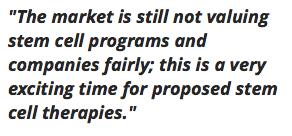
What I’m trying to say is that the market is still not valuing stem cell programs and companies fairly. I think this is a very exciting time for proposed stem cell therapies. If you look at companies with products on the market for similar disease indications, and compare those valuations to the low valuations of stem cell companies, you can see real value here.

TLSR: Alain, it was a pleasure meeting you.

Alain Vertès, Ph.D., M.B.A., is managing director of Basel, Switzerland-based NxR Biotechnologies, a consultancy that assists companies in funding, positioning and commercializing biotech products. He is an active business development consultant focused on technology deployment and innovation funding and commercialization. He has contributed to research (molecular biology, microbiology, sustainable chemistry), manufacturing (amino acids, enzymes), contract research (Battelle Memorial Institute, PPD), and strategic alliances in pharmaceuticals (Roche, Pfizer, Lilly), petrochemicals (Mitsubishi Chemical Corp.), industrial biotechnology, public research and consulting. With worldwide experience in partnering and licensing groups of big pharmas, Vertès has led reviews of strategic needs for finding, implementing and managing partnerships, from licensing to M&As. With hands-on involvement in the deployment of radical innovation—for example, bringing to patients disease-modifying, paradigm-changing therapeutics—he has managed major siRNA alliances and has led global therapeutic stem cell initiatives.

Want to read more Life Sciences Report interviews like this? Sign up for our free e-newsletter, and you’ll learn when new articles have been published. To see recent interviews with industry analysts and commentators, visit our Streetwise Interviewspage.

Related Articles


DISCLOSURE:
1) George S. Mack conducted this interview for Streetwise Reports LLC, publisher of The Gold ReportThe Energy ReportThe Life Sciences Report and The Mining Report, and he provides services to Streetwise Reports as an independent contractor. He owns, or his family owns, shares of the following companies mentioned in this interview: None. 
2) The following companies mentioned in the interview are sponsors of Streetwise Reports: Athersys Inc., RepliCel Life Sciences Inc. Mesoblast Ltd. is not affiliated with Streetwise Reports. The companies mentioned in this interview were not involved in any aspect of the interview preparation or post-interview editing so the expert could speak independently about the sector. Streetwise Reports does not accept stock in exchange for its services. 
3) Alain Vertès: I own, or my family owns, shares or options of the following companies mentioned in this interview: Mesoblast Ltd., RepliCel Life Sciences Inc. I personally am paid by the following companies mentioned in this interview: Mesoblast Ltd. My company has a financial relationship with the following companies mentioned in this interview: None. I was not paid by Streetwise Reports for participating in this interview. Comments and opinions expressed are my own comments and opinions. I determined and had final say over which companies would be included in the interview based on my research, understanding of the sector and interview theme. I had the opportunity to review the interview for accuracy as of the date of the interview and am responsible for the content of the interview. 
4) Interviews are edited for clarity. Streetwise Reports does not make editorial comments or change experts’ statements without their consent. 
5) The interview does not constitute investment advice. Each reader is encouraged to consult with his or her individual financial professional and any action a reader takes as a result of information presented here is his or her own responsibility. By opening this page, each reader accepts and agrees to Streetwise Reports’ terms of use and full legal disclaimer.
6) From time to time, Streetwise Reports LLC and its directors, officers, employees or members of their families, as well as persons interviewed for articles and interviews on the site, may have a long or short position in securities mentioned. Directors, officers, employees or members of their families are prohibited from making purchases and/or sales of those securities in the open market or otherwise during the up-to-four-week interval from the time of the interview until after it publishes.

 

The Top 10 DividendRank’ed Canadian Stocks

#10. First National Financial Corp (TSE:FN.CA) — 7.2% YIELD

At #10, First National Financial is a Canadian-based originator, underwriter and servicer of predominantly prime residential (single-family and multi-family) and commercial mortgages.

Screen Shot 2015-03-25 at 5.03.27 AM


Screen Shot 2015-03-25 at 5.03.46 AM

test-php-789