
Stocks & Equities
Today’s infographic corresponds with the Howard Group’s Opportunity Knocks Challenge, which we are proud to sponsor. In this free challenge, investors can pick a portfolio of stocks from the public companies they represent – with play money of course. The investor with the best performing portfolio wins the trip of a lifetime valued between $11,000 and $15,000.
There are some incredible trips available:
- Head to Pamplona to literally run with the bulls
- Race Ferraris and Lambos in Vegas
- Visit exotic Vietnam and Cambodia for a river cruise
- Take a bite of a the Big Apple with a big shopping spree
- Hit the famous Wailea Golf Club in Maui for a few rounds
Definitely consider registering for this free contest today. We want to see a Visual Capitalist reader as the winner!
THE MICROCAP OPPORTUNITY
We worked with Howard Group to come up with 29 points to consider when looking at investing in a microcap stock. The key here is due diligence. Good research can help you mitigate the risks that these stocks have.
Benefits of microcaps:
….go HERE for more plus a bigger chart


If the foundation of the financial system is debt… and that debt is backstopped by assets that the Big Banks can value well above their true values (remember, the banks want their collateral to maintain or increase in value)… then the “pricing” of the financial system will be elevated significantly above reality.
Put simply, a false “floor” was put under asset prices via fraud and funny money.
Consider the case of Coal.
In the US, Coal has become a political hot button. Consequently it is very easy to forget just how important the commodity is to global energy demand. Coal accounts for 40% of global electrical generation. It might be the single most economically sensitive commodity on the planet.
With that in mind, consider that Coal ENDED a multi-decade bull market back in 2012. In fact, not only did the bull market end… but Coal has erased virtually ALL of the bull market’s gains (the green line represents the pre-bull market low).

Those who believe that the global is in an economic expansion will shrug this off as the result if the US’s shift away from Coal as an energy source. The US accounts for only 15% of global Coal demand. The collapse in Coal prices goes well beyond US changes in energy policy.
What’s happening in Coal is nothing short of “price discovery” as the commodity moves to align itself with economic reality. In short, the era of “growth” pronounced by Governments and Central Banks around the world ended. The “growth” or “recovery” that followed was nothing but illusion created by fraudulent economic data points.
We get confirmation of this from Oil.
For most of the “so called” recovery, Oil gradually moved higher, creating the illusion that the world was returning to economic growth (demand was rising, hence higher prices).

That blue line could very well represent the “false floor” for the recovery I mentioned earlier. Provided Oil remained above this trendline, the illusion of growth via higher energy demand was firmly in place.
And then Oil fell nearly 60% from top to bottom in less than six months.

As was the case for Coal, Oil’s drop was nothing short of a bubble bursting. From 2009 until 2014 Oil’s price was disconnected from economic realities. Then price discovery hit resulting in a massive collapse.
Moreover, the damage to Oil was extreme. Not only did it collapse 60% in a matter of months. It actually TOOK out the trendline going back to the beginning of the bull market in 1999.

This is a classic “ending” pattern. Breaking a critical trendline (particularly one that has been in place for several decades) is one thing. Breaking it and then failing to reclaim it during the following bounce is far more damning.
In short, the era the phony recovery narrative has come unhinged. We have no entered a cycle of actual price discovery in which financial assets fall to more accurate values. This will eventually result in a stock market crash, very likely within the next 12 months.
Best Regards
Graham Summers for Phoenix Capital Research

Hedge fund billionaire Paul Tudor Jones is well known for tripling his money on Black Monday in 1987.
Mr. Tudor is now warning of an even more dangerous bubble than October 1987 thanks to Federal Reserve money printing and a ‘mania’ among stock market bulls, and predicts an imminent stock market disaster.
This 60-minute documentary explains how he does what he does, and how he views a decline as a move just as profitable as an advance.
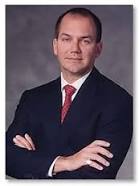 Paul Tudor Jones II, is the founder of Tudor Investment Corporation, a private asset management company and hedge fund. Wikipedia
Born: September 28, 1954 (age 60), Memphis, Tennessee, United States

Two months ago in Money and Markets, I alerted you to a troubling trend when U.S. economic reports started taking a turn for the worse, with more negative than positive surprises in the data.
Fast forward eight weeks and the downtrend in our economic data has deteriorated even further, telling me an inflection point for the stock market may be close at hand. Let me explain …
The graph below plots the Bloomberg Economic Surprise Index (ESI: blue line, middle panel), which measures the degree to which recent data has been beating economic forecasts (positive surprises), or falling short (negative). Citigroup produces a similar indicator, which I highlighted in my February article, but both tell the same sad story about the U.S. economy; it’s quickly losing momentum.
Just to recap; the line rises when economic reports are exceeding forecasts, like yesterday’s housing data — a rare positive surprise — but the index declines when data misses projections — last Friday’s disappointing Leading Economic Indicators data, for example.
As you can see above, the data has been falling far short of expectations lately.
In fact, the current trend in the ESI turned negative earlier this year, and hasn’t looked back, recently falling to the lowest level since the 2008 financial crisis!
In other words, the U.S. economy is underperforming by the widest margin since the bull market in stocks began six years ago.
And yet, despite the glaring underperformance of the real economy down on Main Street, you wouldn’t have a clue about this by looking at Wall Street’s performance.
The S&P 500 Index, in spite of volatile up-and-down swings this year, is still less than 2 percent off its record high of 2,119.60 notched in February. What gives?
This is an unusually wide disconnect between real economic performance and investor sentiment, and something’s got to give. The gap between perception and reality, must close sooner or later; either with the U.S. economy improving, or with the stock market declining.
As you can see in the chart above, there has been a very strong link between downturns in the ESI warning of trouble ahead for stocks in the past.
Now, don’t get me wrong; this doesn’t necessarily mean stocks will plunge, but a correction is certainly possible, even overdue at this point. But keep in mind, many of the corrections shown in the S&P 500 chart above were relatively brief and minor pullbacks in price of less than 10 percent.
Bottom line: Now is a good time to be cautious. And you may want to consider grabbing some open gains and/or raising your protective stops. For more aggressive investors, an inverse ETF could provide a hedge to help you profit from a correction.
Above all, keep a watchful eye on trends in the economic data, and in the stock market. If we see a string of better-than-expected data, stocks could move higher again. But watch out if the S&P 500 Index begins following recent economic data to the downside.
Good investing,
Mike Burnick
About Mike Burnick
Mike Burnick, who has over 25 years of professional investment experience, is the editor of the Ultimate Stock Options newsletter and associate editor and trader of Martin’s Ultimate Portfolio.
Mike has been a Registered Investment Adviser and portfolio manager responsible for the day-to-day operations of a mutual fund. He also held the position of investment research analyst and Director of Research for Weiss Capital Management, where he assisted with trading and asset-allocation responsibilities for a $5 million ETF portfolio.
 Judging from Western media, one might think nothing much is happening in Ukraine. Facts are wildly different as we will discuss momentarily.
Rush to Judgment
As a prelude to current events, please recall the hype when Russian opposition leader Boris Nemtsov was gunned down in March. Western media rushed to judgment. Heck, even friends who should know better rushed to judgment.
Every Western news agency, even some I would have expected better of, was quick to point the finger at Putin.
I commented on Boris Nemtsov on March 6 in Rush to Judgment and Extremely Inaccurate Reporting.
With that backdrop, let’s turn our attention to some recent events.
Death Squads Kill Four News Reporters in Ukraine
On April 17, Death Squads Killed Four News Reporters in Ukraine in 24 Hours.
Over the last two days in Ukraine, there have been four prominent killings. On Wednesday, it was former
member of Parliament from the Regions Party, leader of the All-Ukrainian Officers’ Union, and one of the founders of the AntiMaidan, Oleg Kalashnikov. On Thursday, it was journalist Sergei Sukhobok, one of the founders of the ProUA and Obkom websites. That same day, former editor of the major newspaper Segodnia, well-known journalist Oles’ Buzina, was shot dead in his own backyard; and the body of editor-in-chief of the Netishinskii Herald, Olga Moroz, was found dead in her apartment, bearing signs of a violent death.
Three journalists in one day. Four political figures in 24 hours. Where is the human rights crowd? Where is the international community? Where are the declarations of Merkel, Obama, Cameron, etc.? Where is the wave of indignation from the Western press? Where?
What did those journalists have in common? They were all against the war effort or considered “pro-Russian”.
Had four anti-Putin journalists bit the dust in Russia, this would have been front page news for six straight days.
The New York Times devoted exactly one paragraph to the Ukraine killings on page A18 of the Friday, April 17th edition.
A Ukrainian journalist with a vocal pro-Russian stance was killed in Kiev, the capital, by unidentified gunmen on Thursday, a day after a pro-Russian lawmaker was killed in a similar attack. The journalist, Oles Buzina, 45, publicly opposed the protests that led to the ouster of President Viktor F. Yanukovych in 2014. The current president, Petro O. Poroshenko, called for a swift investigation and declared that the recent killings were “conscious provocations” intended to “destabilize domestic politics in Ukraine.” President Vladimir V. Putin of Russia said Ukraine’s government was allowing a campaign of political violence against supporters of the previous government.
Note the slant by Poroshenko. Supposedly Putin is killing pro-Russia supporters!
This is what constitutes “reporting” in the US.
Wakeup Call From Poland
Please consider Polish General ‘Calls Back Support’ of Ukraine over Nationalist Glorification
Retired General Waldemar Skrzypczak, an influential figure in the Polish military, says he withdraws all words of support for Ukraine due to the country’s sliding towards nationalism. Earlier he advocated supplying heavy weapons to Kiev.
The angry U-turn in attitudes towards the Ukrainian government was published on Friday in the Gazeta Prawna newspaper. Skrzypczak said he is outraged with a law that the Ukrainian parliament passed hours after Polish President Bronis?aw Komorowski spoke before the MPs to express support for Ukraine.
The law gave benefits to all people who fought for Ukraine’s independence throughput history. Those include fighters of the Ukrainian Insurgent Army, or UPA, which was responsible for mass killings of Polish citizens in 1943-44. The tragic events are known as Volhynian slaughter in Poland.
“I wonder on what foundation is Ukrainian President Poroshenko building the future of Ukraine. Bloodthirsty nationalism? It’s frightening. I have long been telling that Ukrainians must get rid of nationalism, because otherwise cooperation with Poland would be very difficult if possible at all,” he said.
As early as January, Skrzypczak was calling on the Polish government to send some armor from its reserves to Ukraine to help its government ‘fight against Russia.’
Sanitized US News
The above was from RT, but the translation would be the same from any source. Don’t like RT? How about Newsweek?
Please note that Newsweek (Polish Edition) reports Poland Claims US Is Responsible for Destabilization in Ukraine.
This is an English translation courtesy of Watching America Published in Newsweek (Poland) on 16 March 2015 by Marta Ciastoch Translated from Polish by Justyna Demuth.
“The U.S. has spent $5 billion on the Ukrainian revolution, the snipers who shot Euromaidan protesters came from the West, the annexation of Crimea was a justified action, and Nemtsov was killed by Americans,” claims Janusz Korwin-Mikke, a Polish member of the European Union, in the interview for a Ukrainian TV program “Shuster Live.”
“Most citizens of Crimea were, by their own democratic choice, in favor of joining Russia,” argued the Polish KORWIN party leader. He emphasized that the existence of an independent Ukraine is critical for Poland, but whether Crimea remains a part of Ukraine or not, does not really matter. “Ukraine could exist without Crimea, and would, had not the U.S. invested $5 billion to destabilize it,” says Mr. Korwin-Mikke, adding that Ukraine’s loss of Crimea, followed by the loss of Donetsk and Luhansk, is a result of U.S. actions. Mr. Korwin-Mikke appealed to Ukrainians in order to make them realize the true intentions of the USA, which pretends to be allied with Ukraine, but, in fact, uses it against its own conflict with Russia.
The US is supporting neo-Nazis and murderous thugs in Ukraine because we prefer those thugs over Russia.


-
I know Mike is a very solid investor and respect his opinions very much. So if he says pay attention to this or that - I will.
~ Dale G.
-
I've started managing my own investments so view Michael's site as a one-stop shop from which to get information and perspectives.
~ Dave E.
-
Michael offers easy reading, honest, common sense information that anyone can use in a practical manner.
~ der_al.
-
A sane voice in a scrambled investment world.
~ Ed R.
Inside Edge Pro Contributors

Greg Weldon

Josef Schachter

Tyler Bollhorn

Ryan Irvine

Paul Beattie

Martin Straith

Patrick Ceresna

Mark Leibovit

James Thorne

Victor Adair