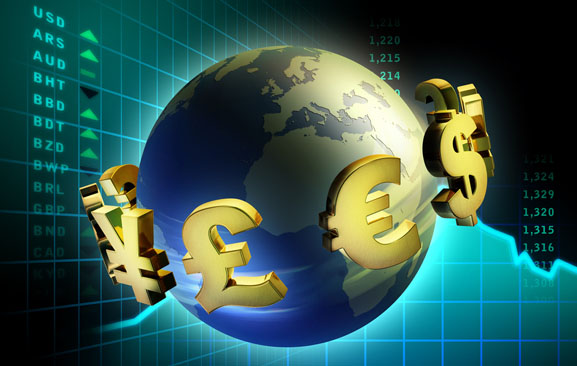
 Russia, China and the U.S. are in a battle for currency dominance and natural resource stocks have been buffeted as a result. When the dust settles, smart natural resource investors could be the big winners as long as they have taken the right protective measures. In this interview with
 The Gold Report: One of the themes of the Sprott-Stansberry Vancouver Natural Resource Symposium at the end of July is “the global currency war.” From your perspectives, who are the major stakeholders in this war and what can investors do to protect themselves?
Porter Stansberry: The three major stakeholders in the currency war are the United States, China and Europe. The volatility in those currencies over the last 18 months has been historic. It has resulted in even greater volatility in more minor currencies, including the huge moves that have occurred in the Swiss franc. I expect to see China and the yuan join the International Monetary Fund (IMF) currency basket, which will lead to a very significant and large move of reserve currencies into the Chinese yuan. That will definitely have the impact of weakening the euro and the dollar.
TGR: Do you expect the yuan to replace the U.S. dollar as the world’s reserve currency or will there be a dual reserve currency?
PS: I do not believe that the U.S. dollar will be replaced in the short term. What is significant is that the amount of dollars held as a reserve around the world has been reduced and continues to decline dramatically. Twenty years ago, U.S. dollars made up more than 80% of all reserve currencies around the world. Today, that number is closer to 60%. I think after the inclusion of the yuan, we’re going to see the dollar drop below 50%. This means at the margin it will become harder for the United States to borrow abroad and it will become more difficult for the U.S. to finance its debts.

Rick Rule: I agree with Porter. It’s difficult for the yuan to replace the U.S. dollar. The yuan could, however, challenge the hegemony of the U.S. dollar. I think that the Chinese are making efforts to make their markets more transparent, but the Chinese central government’s need for control will make it difficult for the Chinese debt markets to rival the U.S. dollar’s role.
I will tell you why. I questioned an Asian investor at one point about the size of his U.S. treasury portfolio and commented that I considered the U.S. treasury to represent return-free risk. He looked at me, smiled and said, “What you say is true, but we still trust you more than we trust each other.” When I referred to the U.S. 10-year treasury as being sort of a fiscal lie, the same man smiled and said, “Yes, but a deep, transparent, liquid lie.” I think that’s illustrative of where we are in the market now.
PS: Any country whose currency is used as a reserve enjoys tremendous benefits because those currencies gain a significant discount to financing costs. They’re able to float huge amounts of credit around the world. Today, almost all currencies are traded primarily in dollars. The fear is that if the dollar falls below 50% of the currency basket held by commercial and central banks and insurance companies, there may be a democratization of the way currencies are priced. The huge growth in bilateral trade agreements between Russia and China or China and Australia foreshadow a time where there will be no need at all for those economies to deal in dollars. That will significantly reduce demand for dollars held overseas.
 TGR: As commodities move to trading outside U.S. dollars, will we see more volatility in prices?
PS: We are going to see unprecedented volatility in currency values. This has already happened. It makes no sense whatsoever for the euro to have declined 40% against the dollar in the last 18 months. These are the two largest economic zones in the world. How can the global economy function if the weights and the measures between these two trading blocks are constantly in such flux? It becomes impossible for producers and consumers to hedge the currency risk because of the volatility and the cost involved in hedging. These are big impediments to global growth and enormous opportunities for speculators. That’s great for newsletter publishers and retirees who can trade currencies successfully, but it has a terrible impact on growth and the increasing value of wealth around the world.
TGR: How will this currency war end?
PS: That’s the $64,000 question, isn’t it, Rick? Currency regimes in the past were always destroyed by volatility. So sooner or later, people desire a currency that is stable. Of the three major players in the currency wars, which currency do you think is most likely to become the most reliable? Do you think it’s the euro, which is falling apart by the seams as the world watches? Is it the dollar, which supports unfunded liabilities of $200 trillion ($200T)? Or do you think it’s the yuan, which has a massive labor pool, tremendous domestic savings, giant trade surpluses and huge natural resource capability? I don’t think it’s very hard to figure out which of those currencies over the long term is going to be the most stable.
TGR: What does that mean for natural resources and the attendees at your conference?
RR: The currency wars are particularly good for precious metals, which have traditionally fared well in times of fear. It’s worth noting that precious metals, unlike most other commodities, respond to both greed and fear. But in my experience, fear has usually been the catalyst that begins to move precious metals higher. The volatility that Porter talks about, particularly downside volatility associated with currency, is what motivates people to store part of their wealth in precious metals.
 This connection between currency values and natural resources is evident historically. The increase we saw in natural resource prices in 2001, 2002 and the beginning of 2003 had more to do with the rollover in U.S. dollars than it did with actual increases in resource prices in other currencies. In 2000, the gold price performed very well in all currencies in the world with the exception of the U.S. dollar. In 2001, we began to see gold rising in tandem with the U.S. dollar, and as the U.S. dollar rolled over, we saw a commodities bull market get underway in earnest. There were fundamental factors associated with the bull market in resources to be sure, particularly emerging markets’ demand, but the beginning part of that bull market really was the rollover in purchasing power of the U.S. dollar. The scenario Porter described will benefit natural resource prices and, by extension, investors who are prepared for the coming shift.
TGR: With the devaluation of the euro we have already seen, why hasn’t fear of further currency erosion resulted in higher gold prices so far?
PS: I don’t believe we’re likely to see a rise in the gold price in periods where the dollar is radically strengthening. It has occurred from time to time. It happened in 2005, 2006 and 2007 as inflation heated up in the U.S. and the dollar was still relatively strong, but it is certainly a very unusual circumstance. I think it’s far more likely to see gold rally when there is uncertainty in the currency markets, volatility and a falling dollar.
RR: The only explanation I have is that people became very nervous as a consequence of the global financial crisis. The fact that the world as they knew it didn’t end caused them to put inordinate faith into the “big thinkers” of the world, the Yellens, Obamas and Merkels, and eased that sense of fear, even if that trust is misplaced.
Additionally, the manipulation of interest rates by what those big thinkers call quantitative easing (QE) (and Porter and I call counterfeiting) has led to a transfer of income from savers to spenders. It has forced savers into riskier means of maintaining wealth and created an equity markets recovery that generates no real jobs.
George Soros famously said that he became a billionaire by finding broadly held public precepts that were wrong and betting against them. It took two and a half years for him to be proved right about the British pound. After billionaire hedge fund manager John Paulson realized the U.S. mortgage securities markets were doomed in 2005, he spent two years on the bad side of the trade before his intuition paid off. I consider the confidence associated with global debt and the equities market to be a similar anomaly, where sentiment is temporarily stronger than arithmetic, but I can’t tell you how long it will take for arithmetic to prevail.
TGR: The TSX Venture Exchange (TSX.V) is off about 90% in real terms. Rick, you have said you are starting to see a bifurcation. Those companies that have strong financials are starting to appreciate, and the many more weak companies are languishing, thus hiding the “recovery” in the natural resource equity market. What needs to change before investors can realize a recovery?
RR: Three things. First, equities markets and commodities markets generally are cyclical. A market that’s down by 90% is exactly 90% more attractive than it was before.
The second thing is the bifurcation I have been talking about. A purging is taking place on the exchange. It’s also taking place in the minds of investors and speculators. There is beginning to be more concentration on the best names and a total lack of attention to the worst names, which is healthy. The circumstance that existed in resource markets between 2005 and 2011 was a complete non-acceptance of the concept of risk. People just wanted to be in the market, and they were willing to take any sort of chance. They got what they had coming to them and ran for cover. Now, there is a return, a gradual and begrudging return to be sure, to the TSX Venture.
The third factor is what we have been discussing today, the impact of currencies on commodity prices. We believe that if the economy is fundamentally bad and something happens that calls currencies into question, then the natural resource business, in particular precious metals, will do well. And even if we are wrong and the big thinkers are right, and a real economic recovery is taking place, then resources will do well too, but they’ll do well as a consequence of demand. In that case, it won’t necessarily be precious metals that will do well, but the energy and the base metals complex will flourish.
When the global natural resources business doesn’t earn its cost of capital, which is basically what is happening now, one of two things can happen. Either real resource prices go up or the stuff of civilization—copper, fertilizer, food and energy—ceases to become available. I think that investors should ask themselves which of the two outcomes is more likely.
TGR: What will happen to the energy and mining companies on the down side of that bifurcation? Will they go bankrupt or be consolidated?
RR: Yes and yes. Bankruptcies are very good. I think another important function of the conference will be to bring home to attendees that probably 80% of the companies on the TSX.V are worthless. If you took every public resource junior in the world and merged them together to form one company called Junior Explore Co., in a very good year that company would lose $2 billion ($2B), and in a bad year it would lose $5B. So the question becomes: What is the industry worth as a whole? Is it worth 6 times losses, 9 times losses, 15 times losses? That pessimism ignores the fact that the best 10% of the companies on the exchange generate such fantastic performance that they add legitimacy and occasionally luster to a sector that is overall a massive loser. The conference is focused on discriminating between the good, the bad and the ugly. Most investors, including institutional investors, don’t take enough time and don’t have enough expertise to segregate.
The good news is that companies exhibiting at the conference are all either a Stansberry recommendation or a Sprott fund position. The fact that we have money and reputation at risk doesn’t mean that they’re all going to be successful, but it sure means that we’ve studied them and we believe they’re a decent opportunity. That makes the job of segregating much easier for attendees.
TGR: I was looking at the list of companies sponsoring the conference and there were some interesting trends. Most are natural resource explorers or producers, but you also have a royalty company, a streaming company and a joint venture model company or two. Were they chosen as a way to take some risk out of investing in the sector?
RR: The answer is yes, yes and yes. The royalty and streaming companies, Franco-Nevada Corp. (FNV:TSX; FNV:NYSE) and Silver Wheaton Corp. (SLW:TSX; SLW:NYSE), respectively, take out a lot of the operational risk and capital deployment risk associated with the mining business. If you look at the assets deployed relative to the cash generated, the royalty and streaming companies enjoy tremendous market share in terms of margin in the mining industry relative to the capital that they have deployed. Midland Exploration Inc. (MD:TSX.V), Eurasian Minerals Inc. (EMX:TSX.V; EMXX:NYSE) and Riverside Resources Inc. (RRI:TSX.V), the prospect generators, reduce risk by using their intellectual capital as opposed to their physical capital in exploration. So, yes, your supposition as to our bias is accurate. It all has to do with risk management. The Sprott Gold Miners ETF is skewed to the royalty and streaming companies because of margin relative to capital deployed. So it makes perfect sense that they would be there.
Silver Wheaton and Franco-Nevada are also there because we have asked David Harquail and Randy Smallwood, who played key roles in building those companies, to share their stories from the stage so that investors can benefit from the real-world experience of executives rather than relying on analysts to filter it.
PS: If you look at the returns on net tangible assets across the resource space, you will see a lot of terrible numbers. That is important because the return on net tangible assets tells you the degree to which those companies are subject to cyclicality, low margins and high capital costs—the main killers of all equity return. But royalty companies tend to be the exception. Silver Wheaton made over $430M in cash last year, which was a terrible year for silver, and it did so on a net tangible asset base of around $3B, which produces almost a 12%, return on net tangible assets. That’s a pretty good business no matter what industry it’s in. These companies are clearly worth more than the average individual producer. The management teams in these royalty and streaming companies have the highest-quality research and the most visibility into all of the producers. So if you really want to know what’s going on in the resource space, you should talk to the management team of a royalty company.
TGR: Switching to the individual mining companies, we just interviewed the Yukon Premier Darrell Pasloski, who is vowing to streamline permitting and improve infrastructure in the Yukon. Does a regional factor like that impact why you invited a number of companies from Western Canada?
RR: In the Yukon generally, the challenge is simply logistics. There are some wonderful deposits in the Yukon, but the proximity to Santa Claus has to be overcome. Alexco Resource Corp. (AXU:NYSE.MKT; AXR:TSX) is in the enviable position of owning the Keno Hill project, which has been in production on and off for 110 years. There is a town right next to it called Faro that exists as a consequence of Keno Hill’s existence. Alexco doesn’t have to worry about access.
Kaminak Gold Corp. (KAM:TSX.V) has a deposit that is of such extraordinary quality and a CEO in the form of Eira Thomas, who is so skilled that she can overcome the challenges afforded by location.
TGR: How important is political risk and jurisdiction to your decision about adding to your coverage list or fund?
RR: It’s fourth place for me. Quality of deposit; quality of management, particularly management experience specifically correlated with the task at hand; and financial capability all come ahead of political risk.
TGR: Do you look at the same factors in the same order when it comes to energy companies—quality of deposit, quality of management and quality of balance sheet before political risk? Or do geopolitical factors impact supply and demand more in oil and gas?
RR: Many of your readers will remember the old Purolator oil filter commercial with a greasy mechanic holding up an oil filter with the message, “You can pay me now,” pointing to a $10 oil filter, “or you can pay me later,” pointing to a $5,000 blown engine. That’s where the entire commodity markets are now. If you could keep the oil price in the $65–75 a barrel ($65-75/bbl) range, producers would adjust and the oil industry could earn its cost of capital. If the oil price were to fall to $45/bbl and stay there for three years, it would destroy productive capacity and the oil price would go to $150/bbl five years out. It is very much a “pay me now or pay me later” scenario for commodities.
PS: Rick knows me as a long time energy bear. I have believed since 2007 that we were very likely to have a secular increase in production of hydrocarbons because I saw the crazy increases to capital spending that were going on across the industry. I didn’t understand anything about fracking or horizontal drilling until about 2010, when I first learned about the Eagle Ford. So I didn’t know how exactly companies were going to discover it, but I knew they were throwing so much money at it that it was inevitable that they would find it, and when they did they would produce too much.
RR: I would argue that it hasn’t been so much an increase in production that’s pushed down the oil price. The increase in production is more an American and Canadian phenomenon largely offset by decreases in Mexico, Venezuela and elsewhere. The real reason for the decline in oil prices has been maintaining steady production in the face of declining demand as a consequence of a world economic recovery that didn’t occur.
Going back to the capital-intensive nature of shale, I think there are two things that you need to consider. One is that the economic shale deposits are much less ubiquitous than is commonly believed. Six or seven counties account for most of the economic shale production in each of the deposits, Bakken, the Eagle Ford and the Marcellus.
The second thing is that capital is a constraint to technological innovation, and both equity capital and debt capital may not be as available to the North American exploration and production industry as it has been in the last eight years. I believe that capital will be less available and, hence, more expensive. That will be an important determinant in future production decisions. I don’t think that we have to pay that piper yet because my understanding is that there are as many as 20,000 wells that have been drilled to hold leases and still need to be completed. So we have some pretty good fairway.
Most people also fail to consider the production tail. The production profiles associated with artificial fracturing are hyperbolic, meaning that the flow rates decline by 60 or 70% the first year and then by 50% the year after. So effectively all the net present value happens in the first two years, then you have a very long tail, which is of course free. But when you slow down the pace of drilling, the pace of decline production relative to conventional oil and gas is extremely stiff.
Investors also need to understand that the competitive nature of 50 or 60 operators trying different fracking methods in North America will continue to result in technological advances not possible in a country like China, where one state agency is charged with following the protocol to meet a quota. Plus, the advanced capital markets in the U.S. and Canada make increased production possible at a rate not imaginable in other places.
TGR: I just interviewed Marin Katusa and he suggested looking to the U.S. and Canada for uranium investments. He believes the fact that U.S. imports 94% of the uranium it needs to power its nuclear facilities is dangerous and an opportunity to develop domestic supplies. Do you share his same concerns?
RR: I disagree when it comes to U.S. supplies. Uranium is extremely fungible. The biggest supplier of U.S. uranium for a substantial period of time has been Russia and I suspect will continue to be Russia. U.S. utilities hold an average in excess of four years’ uranium supply. It could be that capital markets reward U.S. production better than they reward production in other parts of the world as a consequence of the ethnocentricity, but the opportunities to invest in the U.S. in the uranium business are constrained by deposit size.
I agree with Marin on the importance of Canadian uranium opportunities. The Athabasca Basin is the Persian Gulf of uranium. While U.S. in situ leach deposits may be 3 or 4 million pounds (3 or 4 Mlb), Athabasca Basin deposits are consistently in excess of 100 Mlb. Athabasca Basin grades are measured in percents rather than parts per million. But I wouldn’t constrain myself as a uranium investor geographically in response to political concerns.
TGR: What is the one thing you hope readers will take away from this interview?
PS: I think now is a fantastic time to build expertise in the resource space. The best way to do that is to meet the people involved in it. If you’re serious about putting some capital to work in resources, the key is to know the people and know the cycles. That’s exactly what you’re going to learn if you come to the Sprott-Stansberry conference.
RR: I would hold out just one tickler. Porter and I are working on a joint project, which assuming we get regulatory approval, we will unveil at the conference. That’s all I’ll say.
TGR: Gentlemen, thank you for your time.
 Rick Rule, CEO of Sprott US Holdings Inc., began his career in the securities business in 1974. He is a leading American retail broker specializing in mining, energy, water utilities, forest products and agriculture. His company has built a national reputation on taking advantage of global opportunities in the oil and gas, mining, alternative energy, agriculture, forestry and water industries. Rule writes a free, thrice-weekly e-letter, Sprott’s Thoughts.
Porter Stansberry founded Stansberry & Associates Investment Research, a private publishing company based in Baltimore, Maryland, in 1999. His monthly newsletter, Stansberry’s Investment Advisory, deals with safe-value investments poised to give subscribers years of exceptional returns. Stansberry oversees a staff of investment analysts whose expertise ranges from value investing to insider trading to short selling. Together, Stansberry and his research team do exhaustive amounts of real-world independent research. They’ve visited more than 200 companies in order to find the best low-risk investments. Prior to launching Stansberry & Associates Research, Stansberry was the first American editor of the Fleet Street Letter, the oldest English-language financial newsletter.
Read what other experts are saying about:
Related Articles
- Casey Gathers Top Gold Experts to Share Secrets for Making Money in Any Market
- VSA Capital’s Paul Renken Follows the Flow of Risk Capital into the Battery Space
- Paul Renken’s Gold, Graphite and REE Names Poised for Gains
DISCLOSURE:
1) Karen Roche conducted this interview for Streetwise Reports LLC, publisher of The Gold Report, The Energy Report and The Life Sciences Report, and provides services to Streetwise Reports as an employee. She owns, or her family owns, shares of the following companies mentioned in this interview: None.
2) The following companies mentioned in the interview are sponsors of Streetwise Reports: Alexco Resource Corp., Midland Exploration Inc. and Silver Wheaton Corp. Franco-Nevada Corp. is not affiliated with The Gold Report. The companies mentioned in this interview were not involved in any aspect of the interview preparation or post-interview editing so the expert could speak independently about the sector. Streetwise Reports does not accept stock in exchange for its services.
3) Rick Rule: I own, or my family owns, shares of the following companies mentioned in this interview: All. I personally am, or my family is, paid by the following companies mentioned in this interview: None. My company has a financial relationship with the following companies mentioned in this interview: None. I was not paid by Streetwise Reports for participating in this interview. Comments and opinions expressed are my own comments and opinions. I determined and had final say over which companies would be included in the interview based on my research, understanding of the sector and interview theme. I had the opportunity to review the interview for accuracy as of the date of the interview and am responsible for the content of the interview.
4) Porter Stansberry: I own, or my family owns, shares of the following companies mentioned in this interview: None. I personally am, or my family is, paid by the following companies mentioned in this interview: None. My company has a financial relationship with the following companies mentioned in this interview: None. I was not paid by Streetwise Reports for participating in this interview. Comments and opinions expressed are my own comments and opinions. I determined and had final say over which companies would be included in the interview based on my research, understanding of the sector and interview theme. I had the opportunity to review the interview for accuracy as of the date of the interview and am responsible for the content of the interview.
5) Interviews are edited for clarity. Streetwise Reports does not make editorial comments or change experts’ statements without their consent.
6) The interview does not constitute investment advice. Each reader is encouraged to consult with his or her individual financial professional and any action a reader takes as a result of information presented here is his or her own responsibility. By opening this page, each reader accepts and agrees to Streetwise Reports’ terms of use and full legal disclaimer.
7) From time to time, Streetwise Reports LLC and its directors, officers, employees or members of their families, as well as persons interviewed for articles and interviews on the site, may have a long or short position in securities mentioned. Directors, officers, employees or members of their families are prohibited from making purchases and/or sales of those securities in the open market or otherwise during the up-to-four-week interval from the time of the interview until after it publishes.


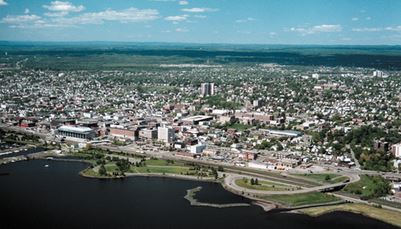 A home purchased for $100,000 in Windsor in 2010, rented for five years and sold in 2015 would earn returns of 27 per cent.