
Timing & trends
| Wed. | Thu. | Fri. | Tue. | Wed. | Thu. | Evaluation | |
| Monetary conditions | 0 | 0 | 0 | 0 | 0 | 0 | 0 |
| 5 day RSI S&P 500 | 17 | 37 | 26 | 27 | 22 | 29 | + |
| 5 day RSI NASDAQ | 15 | 35 | 24 | 24 | 23 | 23 | + |
|
McCl-
lAN OSC.
|
-268 | -168 | -239 | -247 | -274 | -174 |
+
|
| Composite Gauge | 17 | 7 | 15 | 13 | 15 | 10 | 0 |
| Comp. Gauge, 5 day m.a. | 15.0 | 13.0 | 12.6 | 12.8 | 13.4 | 12.0 | 0 |
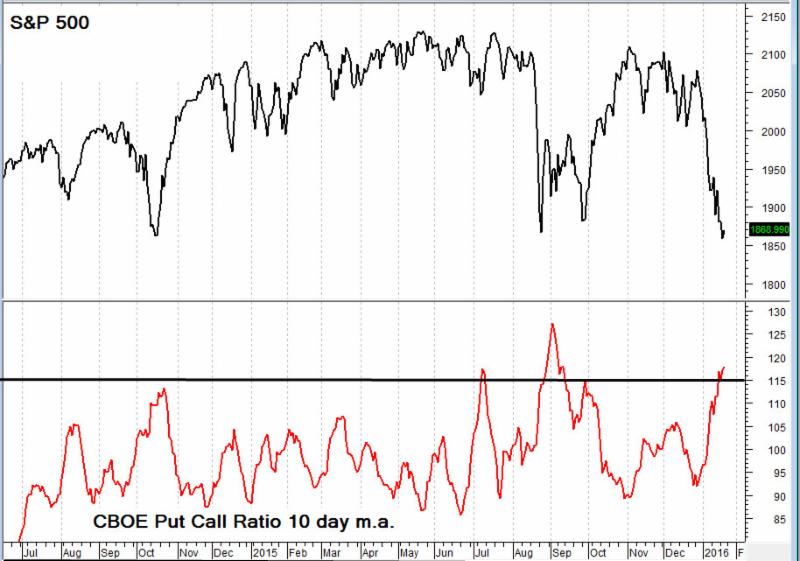
| CBOE Put Call Ratio | 1.19 | 1.01 | 1.55 | .90 | 1.18 | 1.09 |
+
|
| VIX | 25.22 | 23.95 | 27.02 | 26.05 | 27.54 | 26.69 | + |
| VIX % change | +12 | -5 | +13 | -4 | +6 | -3 | 0 |
| VIX % change 5 day m.a. | +4.6 | -0.6 | +0.4 | +1.6 | +4.4 | +1.4 | 0 |
| Adv – Dec 3 day m.a. | -812 | -498 | -1141 | -676 | -1534 | -520 | + |
| Supply Demand 5 day m.a. | .33 | .46 | .52 | .48 | .48 | .57 | 0 |
| Trading Index (TRIN) | 1.16 | .65 | 1.76 | 1.16 | 1.11 | .88 |
0
|
|
S&P 500
|
1890 | 1922 | 1880 | 1881 | 1859 | 1869 | Plurality +6 |


Later in life, our responsibilities and opportunities seem to increase in direct proportion to the decrease in available time. Renowned Canadian Entrepreneur and Philanthropist Joe Segal refers to this declining balance as ‘the runway of life’. Our lifespan is finite, and just like a runway, it will come to an end. There is no extension, or extra time, or second life to live. This is truly it!
Consequently, it’s important to be wise with the limited time you have and avoid time consuming people and activities. This will make an enormous difference in your life and immediately free you up to achieve greater productivity and focus throughout our day. While this alone won’t give you sufficient time to accomplish your most important goals, time wasters should be ruthlessly eliminated from every possible aspect of your life.
I believe the best way to generate more time is to use accelerators. Back to the runway of life analogy – while a jet fighter cannot increase the length of a runway, it can use afterburners to massively accelerate and take off in half the distance. Just like a jet, we too can use accelerators to massively increase our capacity and achieve more results in a shorter period of time.
Quality education is a form of accelerator. Whether at a top high school, university, night school or even the school of hard knocks, we can massively increase our capacity in a very short period of time and learn skills from those that have gone before us.
What are other accelerators can you use? Try these:
Take the toughest job assignment possible. This will force you outside your skill and comfort zone and move you to quickly sharpen your skills to be successful. It will likely bring you the attention of decision makers or more customers. By taking on a big challenge and building new skills, you become more valuable and marketable, leading to higher income than you would otherwise have earned.
Leverage all resources available to you. We rarely take a detailed inventory of all available resources, such as our network, special talents, unique relationships, materials that can be be converted to cash, and undeveloped skills. Only by detailing what we already have, rather than hoping for something we don’t have, can we leverage those resources to accelerate ourselves.
Use your imagination. Humans are creatures of habit and when faced with a problem we try to solve it the same way we have in the past. Get outside of the habit and use your imagination to look at an opportunity in a different way. This will help you can solve it more quickly, and move beyond the problem. Push yourself to come up with creative solutions, rather than using the same old approach.
Massively Change Your Environment. Several times in my career when I felt I needed a significant boost, I massively changed my environment. This gave me a new perspective, which enabled me to solve a problem or achieve greater heights of success much more quickly. It can be as simple as adding some new people to your network or changing offices, or as complex as moving to a new city. A fresh approach opens your mind to the possibilities, and lets you accelerate your accomplishments by letting go of past obstacles.
Get Collaborators. With access to social media and an interconnected society, it is easy to find collaborators for nearly anything. If you are feeling stuck or if the pace of your change is too slow, don’t try to do it all yourself. Reach out to a group of like-minded people, spread the work around, and dramatically accelerate your efforts. Use your time wisely and accelerate massively.


 Voleo, a Canadian financial technology mobile application company, today announced a ollaboration with the Toronto Stock Exchange and TSX Venture Exchange.
Working together to engage millennial investors and break down the barriers to investing, they have launched the Voleo TSX Equity Trading Competition.
The competiton is a simulated public markets investment competition that provides post-secondary students across the country with the tools and information they need to confidently enter the Canadian investment landscape.

Chances are you’ve never heard of William White.  You might have heard of the organization that he used to manage—the Bank of International Settlements (BIS).
The BIS is often called the central bank of central banks; their role is essentially to facilitate international financial transactions among the world’s central banks.
So they are a major component in the international financial system, just like the IMF and World Bank.
William White is a central banker who used to be on the BIS management committee. And this makes him a key member of the global financial establishment.
It’s not too often that central bankers are particularly transparent with the public.
Ben Bernanke famously told the world in July 2005 that there wouldn’t be a nationwide decline in home prices in the United States.
Then just a few months later when home prices did fall, he told Congress that the adverse effects of the housing market were ‘contained’ and wouldn’t affect the broader economy.
He was dead wrong on both accounts. And one of the biggest financial crises in history broke out shortly thereafter.
Central bankers seem to always miss the crisis just around the corner.
That’s pretty scary given that they have the power to dominate and control just about everything in the entire economy.
And despite a serial track record of failure, we’re just supposed to trust them to be smart guys. It’s madness.
A few days ago, however, William White gave an interview stating some things that you never hear coming out of the mouth of a central banker. Ever.
According to White, the global financial system is dangerously unstable.
“The situation is worse than in 2007,” he said, and went on to explain that central banks no longer have the ammunition to fight off a major crisis.
He railed against the mountain of government debt that has accumulated worldwide, saying that “it will be obvious in the next recession that many of these debts will never be serviced or repaid.”
White also suggested that banks, particularly in Europe, will have to be recapitalized on an unimaginable scale.
And due to all the new regulations, it will be depositors who have portions of their accounts confiscated by the state in order to fund the bank bailouts.
William White is not alone.
Michael Bury, the man who made $100 million betting against the last housing crisis, sees the same thing.
In an interview last month, Bury spoke about the “absurdity” of the massive level of debt in the system, and the Federal Reserve’s pitiful balance sheet.
When he gave the interview, the Fed’s balance sheet was leveraged 77:1. Today, barely a month later, it’s over 100:1. Incredible.
Financial markets have been in panic mode since the beginning of the year.
Just in the first few weeks of January, US stocks are down more than 10%. In China, the epicenter of the chaos, stocks are down 20%.
Commodity prices continue to fall. Pessimism abounds.
Look, maybe this is it. Maybe the global financial system has truly reached its limit.
Maybe the world has realized that the path to prosperity is not in conjuring money out of thin air, raising taxes, or going deeper into debt.
Maybe people have finally figured out that an insolvent government and insolvent central bank cannot possibly continue to underpin the entire financial system.
Or maybe not.
Maybe this will all be forgotten in a few weeks. And this coming Christmas no one will remember the great crisis of January that almost was.
But to me the incredible thing is how much panic there has been, particularly in banking and financial markets, just at the mere HINT of problems in the system.
It’s a clear indication of how quickly people can lose confidence and an entire system can become unglued.
Maybe things drag on like this for years, with government continuing to pile up debt and central banks continuing their slide into insolvency.
Maybe interest rates can become even more negative, and banks can become even less liquid.
But one day that confidence will turn. And as this month shows, it can all happen in an instant.
Look, I’m an optimistic guy.
Crisis always brings opportunity for those who can see the obvious realities. And I think what’s starting to unfold is tremendously exciting.
Economics isn’t complicated. The Universal Law of Prosperity is very simple: produce more than you consume.
Governments, corporations, and individuals all have to abide by it. Those who do will thrive. Those who don’t will fail, sooner or later.
When the entire financial system ignores this fundamental rule, it puts us all at risk.
And if you can understand that, you can take simple, sensible steps to prevent the consequences.
We’ll discuss some of these steps in upcoming letters.
Until tomorrow,
Simon Black
Founder, SovereignMan.com


-
I know Mike is a very solid investor and respect his opinions very much. So if he says pay attention to this or that - I will.
~ Dale G.
-
I've started managing my own investments so view Michael's site as a one-stop shop from which to get information and perspectives.
~ Dave E.
-
Michael offers easy reading, honest, common sense information that anyone can use in a practical manner.
~ der_al.
-
A sane voice in a scrambled investment world.
~ Ed R.
Inside Edge Pro Contributors

Greg Weldon

Josef Schachter

Tyler Bollhorn

Ryan Irvine

Paul Beattie

Martin Straith

Patrick Ceresna

Mark Leibovit

James Thorne

Victor Adair