
Asset protection
John Charalambakis is the Managing Director of Group, a boutique style asset and wealth management firm, which focuses on risk mitigation, capital preservation and growth through strategies that are rule based. Dr. Charalambakis has been teaching economics and finance in the US for the last twenty years. Currently he teaches economics at the Patterson School of Diplomacy & International Commerce at the University of Kentucky.
Financial Repression
“The outcome of financial repression is when the role of the markets is diminished because of the actions of central authorities, such as central banks.”

Fed: Central banks of the United States, ECB: European central bank, and BoJ Bank of Japan
Assets under management have skyrocketed from about 7% in 2007 for the U.S Fed, to over 20% as of the end of 2015, increasing 3 times. Over this time, the GDP did not equally increase 3 times. This increase eventually leads to a greater role of central authorities. Looking at Japan in 2007, they had about 20% of their GDP in their balance sheet, currently they have over 90%, meaning the role of the markets is diminishing and the role of central authorities is increasing, creating financial repression.
Gord asks John what assets people should invest in, in this era of financial repression that would create a store of value, which may not bring in a yield, but would preserve their money.
Gold – Intrinsic Value Assets
“I think the goal of any pension fund, institutional or private investor should be capital preservation. Assets should have intrinsic value. Assets that have intrinsic value such as gold or silver, historically have retained their value especially in times of crisis.” John mentions how the price of gold in 2009 rose from about $500-$500 to $1900 because investors were seeking a safe haven of intrinsic value assets. “There is not enough gold for everyone. Only 1/3 of 1%, a miniscule number, is invested in precious metals.” Hypothetically if every manager by the end 2016 would invest just 3% of their wealth into precious metals, the price of gold would rise to an estimated $2700. Growing demand and financial stress can, and likely eventually will, create a financial crisis.
Key Principles of the Austrian School of Thought
- Uncertainty is endogenous in the markets, and therefore investments should be based on rules. “Regardless of where the market temporarily may be moving, the investor, whether individual or institutional, should be guided by rules.”
- Investors, whether fortunately or unfortunately, are emotional beings, therefore there are psychological deficiencies caused through emotions, effecting investments. Due to these emotional deficiencies, investors must be disciplined, and once again be guided by rules
- The conventional methodology of 60/40, stock and bond rule is not adequate. It ignores the risk parity considerations. Investors should shift their portfolio based on the macro environment of risk, in order to take advantage of the more promising and safe investment at the time being. John mentions that in 2009-2011 bonds gave a much better return, because money had left stock and shifted to bonds. It also ignores the potential black swan phenomenon. A black swan phenomenon is likely to happen again and in greater frequency than we’ve seen before, we need to be prepared and eventually hedge our portfolios in such a way, that we are able to sacrifice some return for the sake of stability and preservation.
- Portfolios need to structure in such a way to survive in a macro and business cycle, as well as the credit cycle.
- Markets cannot escape realities of wealth creation. Nations do not become wealthy by printing money. Rather, wealth is created through free markets, when the entrepreneur is allowed to take risks, because risk liberates. “When there is excess regulation suffocating the entrepreneur, wealth cannot be created.” Investing in entrepreneurs and innovators, with proper risk analysis, can result in great returns.
“Unfortunately risks and stresses are being built up and portfolios are suffering the consequences. People think because they have wealth on a financial statement, that wealth can be preserve. When the markets collide, that wealth is destroyed because it is paper wealth, not real wealth.”
Infastructure Investment
“Infrastructure investment needs to be financed, usually countries finance infrastructure through deficit spending, and that cannot happen due to big holes in their budgets.” John questions whether or not the internal rate of return justifies infrastructure. He doesn’t believe the environment is mature enough currently, due to the possibility of a looming crisis in the next couple years. This would push back infrastructure spending.
Preparing for a Possible Crisis
- Analyzing risk, and understand where the risk is coming from.
- Anchor the portfolios. (Most usually used in hard assets)
- If applicable; hedge the portfolio either by selling covered calls, and collect premium by doing so, as well as mitigating risks. Individuals may also consider buying puts.
“Since we are in an era of financial repression you cannot expect the income from treasuries or CDs, explore all sources of income”

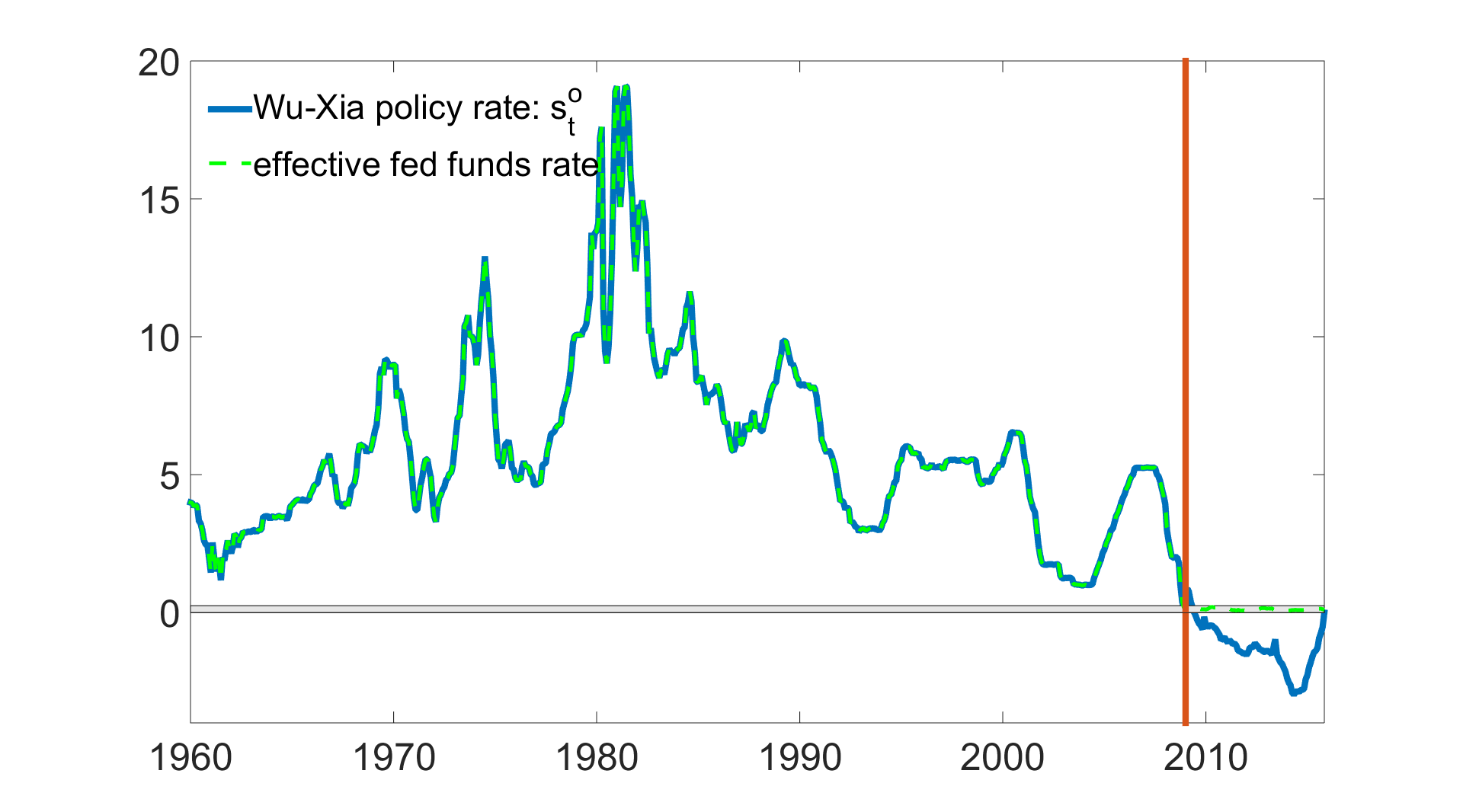
Despite short-term interest rates being only a whisper above zero, we increasingly hear assertions that “financial conditions have tightened.” Now, understand that the reason they’ve “tightened” is that low-grade borrowers were able to issue a mountain of sketchy debt to yield-seeking speculators in recent years, encouraged by the Federal Reserve’s deranged program of quantitative easing, and that debt is beginning to be recognized as such. As default risk emerges and investors become more risk-averse, low-grade credit has weakened markedly. The correct conclusion to draw is that the consequences of misguided policies are predictably coming home to roost. But in the labyrinth of theoretically appealing but factually baseless notions that fill the minds of contemporary central bankers, the immediate temptation is to consider a return to the same misguided policies that got us here in the first place, just more aggressively.



 The pervasive narrative on Wall Street is that the collapse in oil prices will, any second now, restore consumers to their profligate spending ways. In fact, financial pundits have been calling for plunging energy prices to imminently rescue the economy for the past 18 months. Most importantly, these same gurus, who love to espouse the benefits of a collapse in oil prices, never connect the dots to what this collapse says about the state of global growth. Instead they argue it is solely a function of a supply glut that is the result of increased production.
West Texas Intermediate Crude (WTI) fell from $105 a barrel in June of 2014, to well below $30 in January of this year. The cratering price of WTI did not occur from a sudden surge in crude supply, but rather due to the market beginning to discount future plummeting demand coming from a synchronized global deflationary recession. According to the U.S. Energy Information Administration, world crude oil production has increased by just 3.3% since June 2014. Therefore, it is sheer quackery to maintain that such a small increase in crude production would result in prices to drop by 75%.
Oil prices are either discounting an unprecedented surge in supply, or a rapid destruction in demand. The Baker Hughes Rig count on an international basis is down by 218 rigs y/y. Therefore, despite any marginal increase in new supply from the lifting of Iranian sanctions, the drop in prices has to be due to the market’s realization that demand for this commodity is headed sharply south.
It’s not just the oil price that has tanked. Stock market cheerleaders have to ignore commodity prices in aggregate and a plethora of economic data to claim the global economy is faring well. Nearly all commodities are trading at levels not seen since the turn of the millennium. It’s not just energy that has crashed but base metals and agricultural commodities as well. In addition, half of US stocks are down more than 25% and the equity market carnage is much greater in most foreign shares. High-yield debt spreads to Treasuries also indicate a recession is nigh.
But to prove the point most effectively, why would the Dow Jones Transportation Average be down nearly 25% y/y in light of the fact that the cost to move goods has dropped so severely? If the economy was doing fine, dramatically lower fuel costs would be a gigantic boon for the trucking, railroad and airline industry. In sharp contrast, these companies have entered a bear market as they anticipate falling demand.
Also, why have home building stocks crashed by nearly 20% in the last 2.5 months if the economy was doing well? Especially in light of the fact that long term rates are falling, making homeownership costs more affordable. And interest rates certainly aren’t falling because governments have balanced their budgets, but because investors are piling into sovereign debt seeking safety from falling equity prices and faltering global GDP growth.
Market apologists are also disregarding the blatant U.S. manufacturing recession confirmed by Core Capital goods orders that are down 7.5% y/y. And the ISM Manufacturing survey, which has posted four contractionary readings in a row. And now the service sector is lurching toward recession as well: the ISM Non-manufacturing Index dropped to 53.5 in January, from 55.8 in the month prior.
It’s not just the U.S. markets that are screaming recession. Indeed, equity market havoc is evident in North America, South America, Europe and Asia. In the vanguard of this mayhem is the Shanghai Composite, which has lost 50% of its value since June 2015; as the debt disabled communist nation tries in vain to migrate from the biggest fixed asset bubble in history to a service based economy.
The chaos in global markets: from high-yield debt, to commodities, to equites is all interrelated. It is no coincidence that the oil price began its epic decline around the same time QE ended in the U.S., and intensified as the Fed began to move away from ZIRP. The termination of Fed balance sheet expansion caused commodities and equities to roll over, just as the USD started to soar; putting extreme distress on the record amount of emerging market dollar denominated debt.
Therefore, it is inane to keep waiting for lower gas prices to save the consumer–that point is especially moot because whatever savings they are enjoying at the pump is being consumed by soaring health insurance premiums. The collapse in the oil price is a symptom of faltering global growth for which there is no salve immediately available. This is because there isn’t anything central banks can do to provide further debt service relief for the public and private sectors because borrowing costs are already hugging the flatline.
And that leads to the truly saddest part of all. If the deflationary recession were allowed to run its course lower asset prices, including energy, would eventually lead to a purging of all such economic excesses and imbalances. However, since deflation is viewed as public enemy number one, no such healthy correction will be allowed to consummate. To the contrary, what governments and central banks will do is step up their attack on the purchasing power of the middle class in an insidious pursuit of inflation through ZIRP, NIRP and QE.
That’s the truth behind the oil debacle. Don’t let anyone convince you differently.
Super Force Precious Metals Video Analysis
posted Feb 5, 2016
Here are today’s videos and charts (double click to enlarge):
US Bonds, Dollar, & Stock Market Video Analysis
Gold & Silver Bullion Video Analysis
Precious Metal ETFs Video Analysis


-
I know Mike is a very solid investor and respect his opinions very much. So if he says pay attention to this or that - I will.
~ Dale G.
-
I've started managing my own investments so view Michael's site as a one-stop shop from which to get information and perspectives.
~ Dave E.
-
Michael offers easy reading, honest, common sense information that anyone can use in a practical manner.
~ der_al.
-
A sane voice in a scrambled investment world.
~ Ed R.
Inside Edge Pro Contributors

Greg Weldon

Josef Schachter

Tyler Bollhorn

Ryan Irvine

Paul Beattie

Martin Straith

Patrick Ceresna

Mark Leibovit

James Thorne

Victor Adair