
Stocks & Equities
Okay, okay, we have heard it before; this market should crash, everything is fake, etc. We are as we have spoken many times over the past two years in a new paradigm. Reality is being recreated; this entire economic recovery is a hoax but despite this, the markets have soared higher. What gives? If you manipulate the data, you can control the outcome, and that’s what has been done throughout this so-called economic recovery phase. Hence, there is no point in looking at the markets through old lenses, because the playing field has changed. The only thing you can focus on now is price and market psychology.
Most players refuse to believe this market can trend higher, and they call us insane when we state that it can. Mind you; they have been calling us insane for over months on end and yet in each instance, they were wrong, but they will never admit to this. When push comes to shove, they will blame everyone, including their bag of tea leaves, skull bones, or crystal ball. Having said that let’s look at some random data that illustrates that this market should continue to trending higher. Note that; the upward ride will not be smooth, sharp pullbacks like the ones we experienced in August of 2015 and in Jan of this year should be expected. On each occasion, we stated much to dismay and later surprise of many that these pullbacks/corrections were nothing but buying opportunities

90%-95% will look at this chart and claim the Fed is in deep trouble. How far from the truth that conclusion is. Do you see what being part of the mass mindset does? If the premise is wrong, no matter how many experts you get to join your group, the analysis will be flawed. Look at the channels we have drawn in. The Fed is simply taking a break before they get ready to flood the markets with even more money. The longer the channel, the more explosive the upward move, so expect a massive flood. Naysayers will immediately respond and state; this can’t go on, the world will resist. Oh really; so when the assets doubled from $800 billion to $1.6 trillion, nobody did anything. When they doubled again from $1.6 to $3.2 trillion, still nothing was done. Now the Fed’s assets are up by over 400%, and naysayers feel that the end is nigh. Sorry dudes, the masses are still asleep. The number is irrelevant; have the masses woken up or not is the only question of relevance in this case. In this instance, they have not woken up, so we suspect that the Fed’s assets could surge to $8 trillion with ease. The Fed prints money with one hand, then with other it purchases treasuries in a process that is known as debt monetization, which is just a fancy word for a giant Ponzi Scheme. Do you see the masses revolting? As they are not revolting there is nothing to prevent this process from continuing.
Negative rates
Central bankers worldwide are slowly embracing negative rates. There is no choice now as we are in the “devalue or die era” and the race to the bottom is picking up in intensity. Hence, it is just a matter of time before the Fed embraces negative rates. This will be the equivalent of pouring rocket fuel on a raging fire; the corporate world will kick-start even larger buyback programs as this is the easiest way to boost earnings without having to do any work. The rewards for corporate officers are huge as their pay is based on performance. As greed is the main governing force in the corporate world, there is almost no chance that these chaps will pass up an offer to lock in huge bonuses. Share buybacks have increased every single year since 2009, and will continue to do so as long as rates remain low; you can imagine what will happen if rates turn negative.
Conclusion
We don’t expect the markets to rally upwards in one straight line, it will be more like a zig-zag type of upward move, but overall the markets will trend higher. The markets are currently overbought, after mounting extremely strong rallies from their Jan lows, so a nice pullback would not surprise us. All strong pullbacks should be viewed as buying opportunities and not as signal to run for the hills.
“Anybody who gets away with something will come back to get away with a little bit more.” ~ Harold Schoenberg

 Summary
- Bond managers are supposed to hate inflation, but Janus Capital’s Bill Gross – a long time Fed critic – reverses course and asks for massive QE to support jobless Americans.
- Chris DeMuth Jr. finds a fund that may be a good investment after it has swindled enough investors to make its discount attractive.
- Ian Bezek offers advice on how to invest in light of the Trump victory he sees as likely in November’s general election.
related:
Negative Interest Rates Claim More Victims. Today It’s Deutsche Bank, Tomorrow German Insurers?
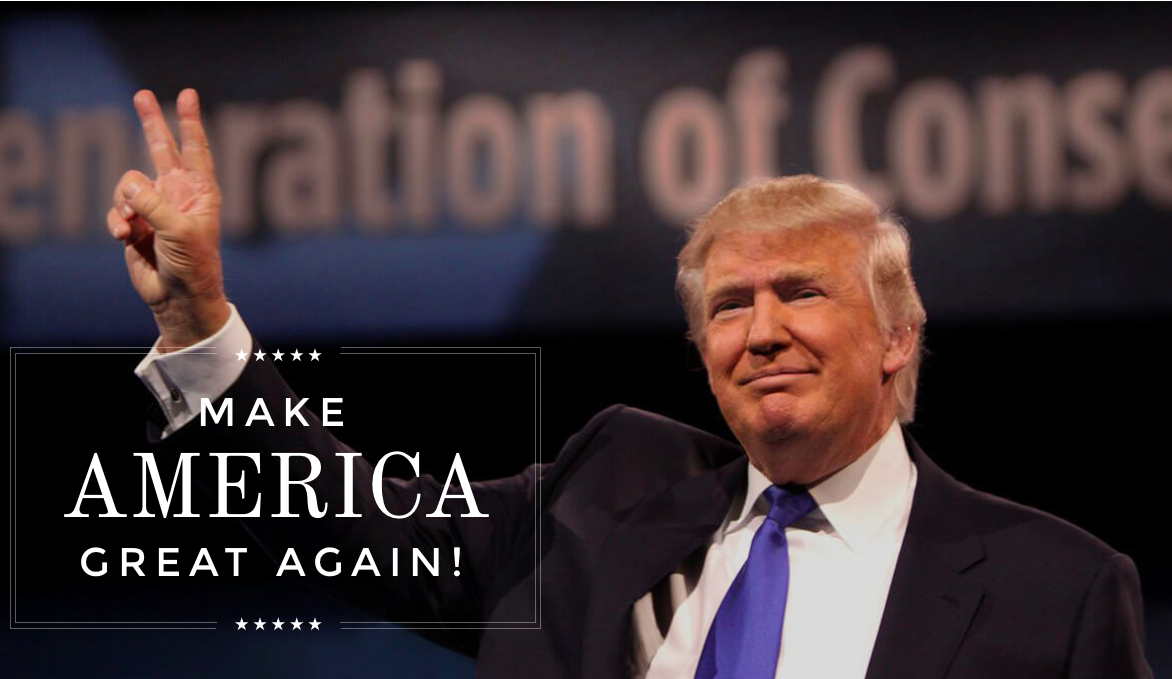 Donald Trump’s critics have heaped scorn on his calls for protective tariffs to deal with America’s widening trade imbalance and the resulting loss of higher-paying blue color jobs. Some have accused him of trying to turn back the clock in pursuit of a cheap populist ploy and have said that he simply refuses to acknowledge that America is now an information and service economy for which large trade deficits are the new normal. But voters are sensing that The Donald is right to sound alarm bells, and that something radical needs to be done to revive manufacturing to make America great again. But his tariff solution is hardly the best medicine. To be honest, given the even worse solutions that are being offered by the left, Trump’s instincts may be preferable.
Ironically, in the late 19th and early 20th Centuries, the elimination of tariffs was a populist issue. A little more than a century later, the polls have reversed completely. Prior to the introduction of the income tax in 1913, tariffs were the Federal Government’s principal source of revenue. During the long and contentious campaign to enact the 16th Amendment (which allowed the government to tax incomes for the first time since the emergency Civil War-era 3% to 10% income tax), proponents argued that the passage of a “soak the rich” income tax would allow the government to repeal the tariffs and thereby transfer the tax burden from the working class, who paid the tariffs through higher prices on imports, to the ultra-wealthy, who were the sole target of the income tax as it was originally conceived, packaged and sold.
(The tax originally imposed rates from 1% to 7%, and only applied to fewer than 1% of Americans. The 99% supported its enactment solely because they believed they were getting something for nothing, in this case, government services paid for by the rich. In fact, in 1895, when the Supreme Court bravely declared the government’s first attempt to replace tariffs with an income tax unconstitutional, the justices were personally vilified as defenders of the rich.)
But once the Federal Government got its foot in the door, it rapidly raised the tax rates and expanded the base of taxpayers, ultimately subjecting the middle class to rates far higher than anything originally contemplated for the Rockefellers, Carnegies, or Vanderbilts. If this does not provide a sterling example to the legions of Democrats “Feeling the Bern” of how class warfare can backfire on the class waging the war, I don’t know what does. Ironically, no single tax has done more harm to the middle class than the income tax.
So while the populist movement of the early 20th Century demanded the removal of tariffs, the populist movement of today wants to bring them back. But Trump is not talking about replacing income taxes with tariffs. He simply wants to add tariffs to the existing tax structure (though he does want to lower the rates). This will only compound our problems and make our economy far less competitive. It will not bring back our jobs; it will only increase the tax burden on the American economy, destroying even more jobs. If we want to undo the deal we made with the devil over 100 years ago, we need to repeal the income tax as well.
If that substitution were on the table, I would argue that tariffs offer the lessor burden. Tariffs are a much simpler form of taxation that do not require armies of accountants, lawyers, and tax preparers, who are needed to comply. And while we are repealing the income tax, we should repeal most of the other federal taxes (particularly the payroll and estate taxes) and laws enacted since then as well. But that is not what is being discussed.
Our trade deficits do not result from bad deals but bad laws. Put simply, the amount of taxation and regulation that have been layered on our business owners and their employees have made it impossible for American firms to compete with foreign rivals. Contrary to the currently popular talking points, low wages are not the only means to establish successful trade balances. America became the dominant exporter in the world in the 19th and 20th centuries while our currency was strengthening, we were paying the highest wages, and our workers enjoyed the world’s highest living standards.
Germany is doing so today. Strong economies compete with quality, innovation, efficiency, and flexibility. Those capacities have been stifled by government policies that have nothing to do with trade agreements and have everything to do with domestic policies. We need to repeal those laws. Trade deficits are not the problem. They are the consequence of the problem. The problem is big government, financed largely by the income tax, which has made America uncompetitive.
But it is unlikely that tariffs alone, or even a broad-based national sales or value-added tax, could bring in all the revenue generated by the direct taxes we should eliminate. To survive on excise taxes, as the founding fathers envisioned, requires making the Federal Government a lot smaller.
But Trump is not promising to make government smaller. If anything, he is promising to make it even bigger. He has made no promises to cut government spending across the board, including popular “entitlements” like social security, which Trump has promised not to touch.
To make America great again, we need to recreate the free-market environment that made her great in the first place. It’s not just oppressive direct taxes that must go. It’s all the regulations that have driven up the cost of doing business, and labor laws that make employing workers so expensive and risky that business does all it can to create as few jobs as possible.
But contrary to Trump’s stump speeches, our trading partners are not taking advantage of us; we are taking advantage of them. They give us their products and we give them nothing but our debt. They expend scare resources (land, labor and capital) to create consumer products for us to enjoy, while we just conjure intrinsically worthless dollars out of thin air. But years of excessive regulation and taxation have resulted in an accumulation of trade deficits that has transformed America from the world’s largest creditor to its largest debtor. Our once mighty savings financed a high-wage industrial economy that has been hollowed out, replaced by a weak, debt-financed, low-wage service sector economy.
Trump is right. This is a big problem and it needs big solutions. If tariffs were offered as a replacement to our ridiculous and destructive personal and corporate tax, and payroll and estate taxes, then America may become more competitive and our greater efficiency may even allow us to overcome the tariffs that other countries would likely impose on us in response. But slapping tariffs on imports, while doing nothing to improve the conditions for business efficiency, simply means that prices for American consumers will rise significantly, without sparking a revitalization of American manufacturing prowess. Don’t forget the global market contains over 7 billion consumers, the U.S. market just under 320 million. Insulating our manufacturers from this larger marketplace guarantees that we will never become globally competitive.
Tariffs or sales taxes will drive up the cost of goods for consumers, a fact that Trump seems to ignore. If he would acknowledge this issue, he could offer the counter argument that if we could couple tariffs with income tax relief that Americans would also have higher incomes to pay those higher prices. But even if incomes rise, higher prices will inevitably lead to less consumption and more savings, especially if we allow interest rates to be set by the free market rather than the Federal Reserve. More savings and less spending is exactly what we need if we want the capital to rebuild our industry. Protective tariffs alone will not work, especially when there is little industry left to protect.
So instead of criticizing Trump for his misguided advocacy of tariffs as a panacea, we should at least give him credit for recognizing a serious problem that so many others ignore. The real criticism should be directed at those who would allow America to continue down this self-destructive path.
Read the original article at Euro Pacific Capital
Best Selling author Peter Schiff is the CEO and Chief Global Strategist of Euro Pacific Capital. His podcasts are available on The Peter Schiff Channel on

Saxo Bank CIO and chief economist Steen Jakobsen pinged me via email with some of his thoughts on who to believe and which assets to hold.
Steen says “gold long, weak US growth, FED is lost, and negative interest rates make no sense”.
Email from Steen
I have been doing this job for close to 30 years now. Through that time I have worked with some of the best talents in trading in the world, I have also had the pleasure of meeting many great business people, but in my world there is two or three people who I:
- ALWAYS listen to
- ALWAYS respect
- ALWAYS need to check my world view against
Some of these are private, but the most public one, and the only person I am a “fan” of is Stanley Druckenmiller.
He is not only is he one of modern history’s best fund managers, but he analysis is crisp, clear and open minded. He is far more diplomatic than me – and better – in expressing those views, but tonight’s speech by Druckenmiller at Sohn Conference confirms to me long held view:
- Gold is the superior asset in present part of cycle
- Fed is lost – totally lost and nothing they say match their action
- Negative interest is worst policy mistake ever
- Debt is and remains the elephant in the room
Here is quick note from Druckenmiller’s speech:
Stanley Druckenmiller warned on Wednesday that the Federal Reserve’s low-rate policy is creating vast long-run risks for the US economy.
Mr Druckenmiller, a billionaire former hedge fund manager, said at the Sohn Conference in New York that Fed policymakers are “raising the odds of the economic tail risk they are trying to avoid”, such as spurring credit bubbles, by keeping interest rates near historic lows.
Mr Druckenmiller reckons current economic conditions suggest the Fed’s benchmark interest rate should be closer to 3 per cent. “This is the least data-dependent Fed in history,” he said.
Mr Druckenmiller said the “longest period ever of easy monetary policies” has caused groups to borrow at a quick clip and then use the funds in ways that are not economically productive. For instance, he noted that “most of the debt today has been used for financial engineering,” in the form of stock buybacks and other methods that provide a boon to corporate profits and are often cheered by investors.
He said that contrasts with other periods, such as the 1990s when debt was used to craft the building blocks of the Internet.
Stanley Druckenmiller: Corporate America, China And The Fed Are Stuck – Buy Gold
“I have argued that the myopic policy makers have no endgame,” billionaire Stanley Druckenmiller said towards the end of a scathing twenty minute romp through all of the world’s economic problems.
The U.S. debt is out of control, China is even worse and the worst offender is the Federal Reserve, Druckenmiller said. Corporations in the United States are stuck in the mud, forelorn of growth, unwilling to invest and addicted to share buybacks to gin up their stocks. It is a sentiment Druckenmiller has had for years, but at the Sohn conference the famed hedge fund manager indicated he means it this time.
Eleven years ago, Druckenmiller warned the Sohn audience of then Federal Reserve chair Alan Greenspan’s blunders in inflating an epic mortgage bubble that was sure to crash. On Wednesday, he said the bubble inflated by former chair Ben Bernanke and current chairwoman Janet Yellen is many magnitudes worse. The Fed, Druckenmiller said, is using low interest rates to ease borrowing costs and smooth over problems in the global economy.
This radical Central Bank accommodation is leading to unproductive investment, and is an issue that is even worse in China, an engine of global demand. Whether it is S&P 500 Index corporations, U.S. households or the state-managed economy in China, Druckenmiller believes cheap money is borrowing from future growth, and will backfire spectacularly.
“While policy makers have no endgame, markets do,” he said. Druckenmiller is increasingly nervous about risk assets and recommended investors take refuge in gold.
Bull Market Exhausting Itself

Reckless Behavior
ZeroHedge offers this commentary A Very Bearish Stanley Druckenmiller Blows Up At The Fed; Reveals His Biggest “Currency” Position
The Fed “causes reckless behavior” said Druckenmiller, adding “the Fed has no endgame and the end objective seems to be preventing the S&P from having a 20% decline.”
“Some regard it as a metal, we regard it as a currency and it remains our largest currency allocation” he said, without naming the metal.
We know what he was talking about. Gold.
MC – The Red Cross has set up an emergency ‘Alberta Fires’ appeal. You can also text REDCROSS to 30333 to make a $5 donation. Please call the Red Cross for family reunification 1-888-350-6070.



-
I know Mike is a very solid investor and respect his opinions very much. So if he says pay attention to this or that - I will.
~ Dale G.
-
I've started managing my own investments so view Michael's site as a one-stop shop from which to get information and perspectives.
~ Dave E.
-
Michael offers easy reading, honest, common sense information that anyone can use in a practical manner.
~ der_al.
-
A sane voice in a scrambled investment world.
~ Ed R.
Inside Edge Pro Contributors

Greg Weldon

Josef Schachter

Tyler Bollhorn

Ryan Irvine

Paul Beattie

Martin Straith

Patrick Ceresna

Mark Leibovit

James Thorne

Victor Adair