
Investment/Finances
Ed Note: go HERE for Silver Investing Rules #1 #2 #3
4. Dollar – cost average to lower your costs – and increase your discipline.
Dollar-cost averaging is an ideal way to implement Rule 2. By making same-dollar purchases at regular time intervals, you wind up buying more metal when prices are low and less when they are high. This approach helps you develop discipline, erasing the “trader’ mentality that infects many market participants and instead fostering an “investment” philosophy. Dollar-cost averaging also eases some of the sting when prices move against you, allowing you to view the downturn as an improved buying opportunity rather than a disappointing loss.
5. Do not get a raw deal from your dealer.
Because of the specialized nature of the physical metals markets, selection of a well established dealer with a quality reputation is essential. A good dealer will provide timely executation of your trades at fair prices with reasonable fees. Note, as well, that the lowest price is not necessarily the best price. In the past, some dealers who squeezed their price margins too low in order to attract clients were unable to make delivery, leaving those clients holding the bag.
This unfortunately is an area that prevents many people from purchasing precious metals in the first place. People are leery of dealing with someone over the phone and sending them money, and then waiting for their precious metals to show up. It is very rare that something goes wrong and almost all dealers are reputable. However, as in most aspects of life the occasional fraud does appear.
It has been our experience that most questionable dealers are fairly easy to spot by simply using common sense. Also, we must mention that fraudulent schemes normally appear near the end of the cycle which is not for another five years or so in our view.
Years ago as we were nearing the peak in gold and silver, a nation wide campaign was started in all the major newspapers in the U.S. and the Headline read “Buy Gold and Silver Below Spot”
Now, this is simply impossible and anyone with a shred of common sense would have stayed clear of such a “dealer” , but since some people seek that special deal many customers were taken to the cleaners as this company filed bankruptcy.
Again, we want to point out our special coin report doing actual transactions with several different dealers in the U.S. the small price of this report could save you time, money and heartache.
6. What’s yours is yours – so keep it that way.
While it is wise to keep some of your silver where you can get to it easily, it is also important to keep the bulk of your metal in a safe place- especially as you holdings increase. However, if you establish an account with a brokerage warehouse or other public storage facility, you should make sure your holdings are kept segregated and that you can inspect them when you wish.
Anyone that has studied the Silver-Investor website knows there is far more paper silver than real silver in the world. In fact our primary premise is that the real sustained move up in silver will not occur until the market recognizes this fact. You certainly can participate in alternative precious metals investments such as pool accounts or options but remember you are dealing in the paper world and expect settlement in paper not in metal.
Fully paid Comex warehouse certificates held by you in your name do comprise real silver.
Mr. Morgan has followed the silver market for more than thirty years. He wrote the book, Get the Skinny on Silver Investing. Much of his Web site, Silver-Investor.com, is devoted to education about the precious metals, it is both a free site and does have a members only section. To receive full access to The Morgan Report click the hyperlink.
Subscribe To The Silver Investor Today
Sign up for FREE email reports HERE.
Disclaimer: Information contained herein has been obtained from sources believed to be reliable, but there is no guarantee as to completeness or accuracy. Because individual investment objectives vary, this Summary should not be construed as advice to meet the particular needs of the reader. Any opinions expressed herein are statements of our judgment as of this date and are subject to change without notice. Any action taken as a result of reading this independent market research is solely the responsibility of the reader. Stone Investment Group is not and does not profess to be a professional investment advisor, and strongly encourages all readers to consult with their own personal financial advisors, attorneys, and accountants before making any investment decision. Stone Investment Group and/or independent consultants or members of their families may have a position in the securities mentioned. Investing and speculation are inherently risky and should not be undertaken without professional advice. By your act of reading this independent market research letter, you fully and explicitly agree that Stone Investment Group will not be held liable or responsible for any decisions you make regarding any information discussed herein.
Sign Up For Our Monthly Newsletter – THE MORGAN REPORT HERE.
We go to great lengths to bring you the very best newsletter in the entire precious metals arena. Our members only section contains, The Morgan Report– a monthly service additionally we have videos, audios, webinars, special updates, alerts, mining company reports, bonus materials and discounts for members.
Once a member, you receive exclusive access to the members only portion. You’ll be able to view the most current issue of The Morgan Report. Plus three previous issues of to get you up to speed quickly. All members receive pertinent alerts, and updates.
WHY SUBSCRIBE TO THE MORGAN REPORT
Times have changed just as predicted by us so long ago, and it requires action on your part! Yes we have always advocated buying real metal first and still do but the biggest gains for us, our readers, and even the coin dealers we feature in this free newsletter have all made the most money in the “paper” markets.
Right now early 2009 presents a gift and opportunity you don’t want to miss, we truly think the next run up in mining shares is going to make the housing and tech bubbles look small. It will take time for this to happen but NOW is the time to get started. For the cost of dinner for a family of four at a mid tier restaurant you can get six months of our best thinking to help you make as much money as safely as possible.
Silver Investing – Rule #3
Boost the buying power of your dollars with silver mining shares.
If you are a typical investor, you cannot expect to be an expert on silver and the silver market- but you can invest in the people who are. Once you have established a core holding of physical silver, leverage both your knowledge and your buying power by purchasing the stocks of mining companies. These shares are highly responsive to changes in silver prices, frequently producing much higher percentage returns than the metal itself.
This rule is one that many silver investors know quite well and the joys of watching your mining stock outperform the increase in bullion prices by a factor of two or three to one is exciting. However, leverage works in both directions and when the price of the precious metals fall back the mining shares fall back hard. This is normal market behavior and should be anticipated by the savvy metals investor.
Silver Investing – Rule #2 – Start small- keep it simple.
Too many investors, upon deciding to beef up the metals portion of their portfolio, buy too much physical silver at once-and in the wrong forms. Beginning metals investors should concentrate on pure bullion bars or coins, in smaller sizes, looking to pay a minimum premium over the actual metal value. Avoid commemorative coins, decorative items, jewelry and other collectibles, all of which carry large premiums and have limited resale markets.
Anyone that has spent much time on our website www.silver-investor.com knows we have consistently advocated that all metals investors begin with a physical position before making any other type of precious metals investment. Certainly, mining stocks offer leverage and can at times multiply your wealth substantially it is only by starting with the sure thing, real metal that you build a foundation of wealth.
Silver Investing – Rule #1
The following is a recent interview l did with Ellis Martin on the first rule of silver investing. As you will read, we got off topic but did cover a great deal of current concerns of investors.
David Morgan: I was asked to write the ten rules of silver investing for a book titled, Investing Rules. Rule Number One states, “When all else fails, there’s silver.” No one likes to be a prophet of doom, but the simple truth is that silver is the world’s money of last resort. Should a severe economic collapse occur, leaving paper assets worthless, silver would be the primary currency for purchases of goods and services (gold will be a store of major wealth but would be priced too high for day-to-day use). Thus every investor should own some physical silver and store a portion of it where it’s accessible in an emergency.
I wrote that, and it’s as valid today as it was when I wrote it. I haven’t reviewed these in a very long time. If I had to assert one rule of silver investing it would be to buy physical silver. The truth of the matter is, in the absolute worst-case conditions you would want some silver. As I just said, the reason silver is important in a currency crisis is that you’re not going to buy gas with a one- or half-ounce gold coin—it’s going to have too much value.
Silver has been money more often, for longer periods of time, in more places in the world than gold has. And that is because it’s the merchant-class metal, because most of the time in your daily transactions, what are you buying? You’re not buying your car or your house; the car is perhaps a purchase you make every five years, the house sometimes once in a generation. But it’s the silver that passes hands on a daily basis.
Certainly I am a gold advocate. Indeed, as I say in this Number One rule, it’s a way to preserve large amounts of wealth in a very small space and that’s great and all investors should recognize that fact. But if you’re really thinking outside the envelope, silver is absolutely the place you should be for part of your money.
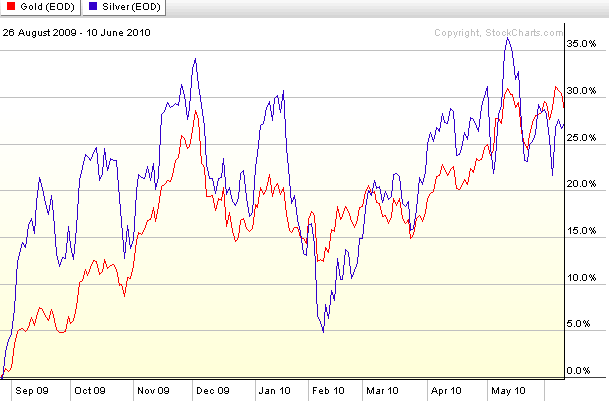
Mr. Martin: We’re not just talking about obtaining physical silver for investment purposes. You’re saying it is also the best metal currency to use in the case of complete economic collapse, in order to obtain either a loaf of bread or a gallon of gas?
Mr. Morgan: Right; it’s more liquid. It’s simple because, you know, $0.25 in today’s money is worth about 14 times. It’s worth $2.50, $3.00, maybe three and a half bucks. So a quarter in silver would probably buy you a couple of loaves of bread or a gallon of gas now in today’s economy. But I want to emphasize, too, that this is absolutely the worst-case scenario. Do I see the worst-case scenario taking place? I don’t think so.
But that doesn’t mean you shouldn’t buy silver. I mean there are lots of other reasons to buy silver. If you go the other extreme—the best-case scenario—the world gets turned around and we start having prosperity everywhere and it’s the best global economy that’s ever happened in the history of mankind. Okay, so let’s take that extreme. In that case, silver would still make an absolutely excellent investment. Most likely far superior to gold from the aspect that there would be such a boom in industry and such a boom in commerce that there would be so much more silver used by the average person because everyone would have an iPod or two, a flat-screen TV, a couple of computers, another car or a washing machine, more electronic devices. So there would be this huge boom to the silver market. Thus, silver is as much a good-time investment as it is during uncertain economic times.
Mr. Martin: Let’s talk about your Web site, www.silver-investor.com.
Mr. Morgan: I actually started it as a Web page and built the initial site myself. I don’t have the ability or don’t have the time to do that now. It was a research site I established for myself when I was doing some consulting and trading. After a couple of years I renamed it silver-investor.com. One thing led to the next—it started getting traffic and it grew into a commercial site.
There are really two newsletters if you want to call them that. One is a free newsletter you can receive by e-mail just by signing up for free on the Web site. This free newsletter provides updates on silver, where I’m speaking, and my answer to a question of the week. This is useful because many people ask me questions on the market, and part of my mission is to educate people. I try to pick one and answer that for everyone.
Then there’s The Morgan Report, which is for your serious, sophisticated investor. It really isn’t a newsletter for someone who is a beginning investor. I’m sure I’ve got a few beginners, but most members are extremely intelligent and very knowledgeable and experienced in the investment arena, and those are the type of people who pay for this type of work.
I’m always trying to bring more value to people, both for the free site and members portion. Charles Savoie has done great research for us. He’s in the archive section of the Web site. It’s a very in-depth site, as you know, and ranked well in the Google search engine.
Mr. Morgan has followed the silver market for more than thirty years. He wrote the book, Get the Skinny on Silver Investing. Much of his Web site, Silver-Investor.com, is devoted to education about the precious metals, it is both a free site and does have a members only section. To receive full access to The Morgan Report click the hyperlink.
Subscribe To The Silver Investor Today
Disclaimer: Information contained herein has been obtained from sources believed to be reliable, but there is no guarantee as to completeness or accuracy. Because individual investment objectives vary, this Summary should not be construed as advice to meet the particular needs of the reader. Any opinions expressed herein are statements of our judgment as of this date and are subject to change without notice. Any action taken as a result of reading this independent market research is solely the responsibility of the reader. Stone Investment Group is not and does not profess to be a professional investment advisor, and strongly encourages all readers to consult with their own personal financial advisors, attorneys, and accountants before making any investment decision. Stone Investment Group and/or independent consultants or members of their families may have a position in the securities mentioned. Investing and speculation are inherently risky and should not be undertaken without professional advice. By your act of reading this independent market research letter, you fully and explicitly agree that Stone Investment Group will not be held liable or responsible for any decisions you make regarding any information discussed herein.
Fear is no doubt controlling the equity markets as the bulls and the bears continue to battle it out. The flight out of the Euro and into the US Dollar over the past couple of months has been dramatic to say the least.
This trend could continue until the Eurozone finds a viable solution to its debt problems. The equity markets have been manic with some very dramatic moves from day to day. On a technical basis, equities are oversold at current prices and a bounce is due any time. That being said, markets could experience another wave of panic selling to wash out the “weak hands” before any kind of a summer rally ensues. In preparation for what we believe could be a difficult Fall, we have been recommending clients take a measured investment approach by reducing equity exposure.
One characteristic of any lengthy, grinding bear market is its tendency to be compromised by a series of sharp pullbacks, interspersed with strong rebounds which usually tend to last several weeks. The 1930-32 bear market is probably one of the best examples, in which we had nearly a dozen separate retreats, each of which led to a sharp, short-term surge. Could we be on the cusp of another bear market? The interesting aspect of this type of environment is that the opportunities for the prudent, astute investor are tremendous. Ultimately we believe that the combination of “Tactical Equity” investing and ownership of quality fixed income positions will prove to be a successful portfolio strategy. We will continue to capitalize on the market volatility by buying equities when panic sets in and selling when the headlines are rosy.
Policymakers hold the key to easing investors concerns and it starts with the European banks finding viable solutions to the sovereign debt problems. The proposed global bank tax hardly looks like a pressing need until the European Union can stop the contagion from spreading any further.
Soundbite
- A new survey by Royal LePage Real Estate Services says BC residents identify lifestyle as the chief reason for purchasing recreational property. 49% of potential purchasers are looking to improve their lifestyle while 44% see it as a good investment according to the Angus Reid survey. Those polled sighted waterfront or beach access as the most coveted feature with 44% desiring four-season use. Recreational property in BC is by far the country’s most expensive, with average prices between $345,000 and $1.5 million compared with Ontario at $140,000 to $1,050,000.
To read Jamie and Marc’s Weekly Wrap go HERE
Please check out our website at:
http://www.raymondjames.ca/jamieswitzer
If you would like to receive our “Weekly Wrap”, please click HERE to subscribe.
JAMIE SWITZER | Raymond James Ltd.
Senior Vice President, Financial Advisor
North Vancouver IAS
PH: 604.981.3355 | FAX: 604.981.3376
jamie.switzer@raymondjames.ca
MARC LATTA | Raymond James Ltd.
Senior Vice President, Financial Advisor
PH:604-981-3366 | FAX: 604.981.3376
marc.latta@raymondjames.ca
Suite 480, 171 West Esplanade
North Vancouver, British Columbia

This newsletter expresses the opinions of the writers, Marc Latta and Jamie Switzer, and not necessarily those of Raymond James Ltd. (RJL) Statistics and factual data and other information are from sources believed to be reliable but their accuracy cannot be guaranteed. It is for information purposes only and is not to be construed as an offer or solicitation for the sale or purchase of securities. It is not meant to provide legal, taxation, or account advice; as each situation is different, please seek advice based on your specific circumstance. RJL and its officers, directors, employees and their families may from time to time invest in the securities discussed in this newsletter. It is intended for distribution only in those jurisdictions where RJL is registered as a dealer in securities. Any distribution or dissemination of this newsletter in any other jurisdiction is strictly prohibited. This newsletter is not intended for nor should it be distributed to any person residing in the USA. Within the last 12 months, Raymond James Ltd. has undertaken an underwriting liability or has provided advice for a fee with respect to the securities of the Royal Bank of Canada. Raymond James Ltd is a member of the Canadian Investor Protection Fund.
JAMIE SWITZER | Raymond James Ltd.
Senior Vice President, Financial Advisor
North Vancouver IAS
PH: 604.981.3355 | FAX: 604.981.3376
jamie.switzer@raymondjames.ca
MARC LATTA | Raymond James Ltd.
Senior Vice President, Financial Advisor
PH:604-981-3366 | FAX: 604.981.3376
marc.latta@raymondjames.ca
Suite 480, 171 West Esplanade
North Vancouver, British Columbia
This newsletter expresses the opinions of the writers, Marc Latta and Jamie Switzer, and not necessarily those of Raymond James Ltd. (RJL) Statistics and factual data and other information are from sources believed to be reliable but their accuracy cannot be guaranteed. It is for information purposes only and is not to be construed as an offer or solicitation for the sale or purchase of securities. It is not meant to provide legal, taxation, or account advice; as each situation is different, please seek advice based on your specific circumstance. RJL and its officers, directors, employees and their families may from time to time invest in the securities discussed in this newsletter. It is intended for distribution only in those jurisdictions where RJL is registered as a dealer in securities. Any distribution or dissemination of this newsletter in any other jurisdiction is strictly prohibited. This newsletter is not intended for nor should it be distributed to any person residing in the USA. Within the last 12 months, Raymond James Ltd. has undertaken an underwriting liability or has provided advice for a fee with respect to the securities of the Royal Bank of Canada. Raymond James Ltd is a member of the Canadian Investor Protection Fund.
……Over Too-Small Raises, Despite Massive Unemployment
Sometimes people look at the strikes going on Greece and wonder what’s wrong with the protestors…..read more HERE
Ahead of the highly watched and anticipated BoC rate decision today, first-quarter GDP surprised to the upside yesterday coming in at 6.1%
QoQ, better than the 5.9% pencilled in by analysts and the Bank’s own 5.8% estimate. The Q1 result follows the 4.9% jump in Q4, which was revised down slightly. March GDP was also better than expected, rising 0.6% MoM, which means the momentum heading into Q2 is a respectable 2.0% annualized (and we noticed that most Canadian sell- side economists stand ready to upgrade their Q2 forecasts).
Final domestic demand was very respectable coming in at 4.7%, slightly lighter than the 5.0% Q4 tally. Most details were solid but one surprise was the increase from inventories, which accounted for 2.4ppts or 40% of the gain in total GDP — most economists have been saying that the boost from inventories would come later in the year. What caught our eye was the 23.6% jump in residential investment QoQ, which followed the 26.3% rise in Q4. Housing-related spending was also strong, with the 4.4% jump in total PCE getting a major boost from the 10% QoQ increase in furniture and furnishings category — together with residential construction, we calculate that this accounted for 30% of the increase in GDP. In fact, to add a bit of perspective, housing and related spending plus inventories accounted for 70% of total GDP growth in Q1.
While the momentum heading into Q2 is indeed strong, we believe that we will see a major slowdown in activity in the second half of the year. We have seen signs already that housing activity is slowing especially in the face of higher mortgage rates in Q2 and this will continue into H2. We could see some more business inventory building in this quarter but it’s highly unlikely that we will see inventories provide such a boost as it did in Q1 beyond Q2. Without housing and inventories to pack such a powerful punch, we expect GDP to grow at much more modest pace for the remainder of the year.
Via David Rosenberg’s Breakfast with Dave 06/01/2010
To sign up to recieve David’s Market Musings & Data Deciphering go HERE
-
I know Mike is a very solid investor and respect his opinions very much. So if he says pay attention to this or that - I will.
~ Dale G.
-
I've started managing my own investments so view Michael's site as a one-stop shop from which to get information and perspectives.
~ Dave E.
-
Michael offers easy reading, honest, common sense information that anyone can use in a practical manner.
~ der_al.
-
A sane voice in a scrambled investment world.
~ Ed R.
Inside Edge Pro Contributors

Greg Weldon

Josef Schachter

Tyler Bollhorn

Ryan Irvine

Paul Beattie

Martin Straith

Patrick Ceresna

Mark Leibovit

James Thorne

Victor Adair