
Investment/Finances
In the 20th century, the West faced threats from despotism, Fascism, communism and terrorism. While we continue to mobilize against all of these scourges, more subtle threats have slipped past our intellectual defences. In an ongoing series adapted from a newly published book, New Threats to Freedom, we examine the phenomenon from the perspective of nine different writers.
“These are the bastards trying to choke the breath out of American debate. These are the perverts gang-raping the Goddess of Liberty. These are the traitors who claim that anyone who doesn’t think like they do isn’t a True American.”
–Anonymous comment posted on liberal blog Daily Kos, Sept. 5, 2009
“[Obama] surrounds himself with the Jews he wants dead, the whites he wants enslaved, and the Billionaires whose money he covets. What is it about Black Liberation Theology and Black Nationalism you don’t get? It is payback time baby, and the nation will die. He HATES us.”
–Comment posted on conservative blog The American Thinker
“Man is least himself when he talks in his own person. Give him a mask and he will tell you truth.” So said Oscar Wilde. The problem with applying this insight to the culture of the Internet is not that the mask reveals the truth, but that the truth revealed by the anonymous “screen name” is a deeply disturbing vision of the face beneath the mask: a face frequently twisted with self-righteous hatred, fear and paranoia.
Few would disagree that the tone and content of political argument on the Web has become more toxic and divisive in the past decade. By threatening to drive out dissent and alienate ordinary citizens with its vitriolic personal attacks, it is shutting down the free interchange of ideas and arguments that is the hallmark of a democratic polity.
However agitated our debates may have been in the past, something has changed for the worse. The online conversation in particular has become a vicious internecine civil war, noxious and polarizing. And I think I know why: The snake in the garden is the cyber-disinhibition — the loss of restraint, the rhetorical race to the bottom — that is both enabled and encouraged by the use of anonymous screen names.
The original promise of the Web was that it would permit the flowering of a true intellectual democracy. The Web, especially that part of it known as the blogosphere, would give voice to the voiceless, providing a platform and an audience previously monopolized by self-proclaimed elite professionals. The Web would be the triumph of the amateur, of the lionized but seldom-heard-from ordinary citizen. From their unfiltered dialogue an inspiring exchange of ideas would ineluctably arise that would fulfill the Jeffersonian ideal of citizen democracy.
The blogosphere has certainly changed the character of political conversation, but in problematic ways. First, it has put the neighbourly conversation that once took place over a picket fence or at the Veterans of Foreign Wars hall dance on a vast and impersonal stage, before an audience that eggs on the most extreme ranters — those who seemingly have the leisure to spend their entire day haranguing the ether and harassing anyone who disagrees. Second, it provides a mask of anonymity that may have initially been intended to free blog commenters from the threat of exposure, but that now effectively immunizes them not just from exposure but from accountability, responsibility and shame.
No one who has a glancing acquaintance with online “commenter culture” would disagree that political conversation has become a fever swamp of juvenile vituperation and personal abuse. Political discourse on the Web has become an ideological gang war wherein howling digital lynch mobs hound and repress the idiosyncratic views that once were the hallmark of democratic conversation — all of them ruled by the “Prime Directive” of the Web, namely, that any person who disagrees with you is not just wrong or misinformed but a repulsive and evil subhuman who deserves virtual lynching and slanderous obloquy.
I recently came upon a prime example of this dehumanizing tendency in a contribution to the Huffington Post by a Hollywood actor whose name was not familiar to me, although he seemed to assume both that he was famous and that he had a wickedly funny wit. He could not have embodied the Prime Directive more effectively, as attested by the flock of anonymous commenters who paid slavish tribute to him.
The poster proposed what he believed to be a hilarious experiment: transforming himself into a right-wing opponent of Obama’s health-care proposals in order to understand how these alien life forms think. In defter hands this kind of imaginative exercise might have imparted some actual understanding and insight into the minds of his political adversaries. What he did instead was to describe in laborious, leaden, ham-handed terms the various tools he would need for this undertaking, which included:
– a rubber sledge hammer (for bashing myself in the temples to effect the signature glassy-eyes and hanging lower lip);
– an assortment of stick-on Hitler mustaches (to deface pictures of President Obama or to use as replacement beards for my Robert Bork action figure);
– penis reducer;
– a “God, guns and guts made America free” bib;
– a Bible for Dummies (big print);
– a Chia(r) Neil Cavuto;
– and a winking Sarah Palin endless video loop.
This rhetorical act of dehumanization perfectly embodies the Prime Directive that political opponents must be not just misguided but ugly — physically, morally and mentally. The poster is apparently blind to the possibility that the opposition might consist of humans like himself who happen to have different views on health care. To the contrary, they must be malevolent and evil people who want the uninsured to die agonizing, untreated deaths. In short, he has become the mirror image of what he claims to despise — hanging lip, glassy eyes and all.
Of course, this is not limited to the left. As a regular reader of right-wing comment threads (human nature is my beat), I came across this gem from a deranged conservative posted a day later:
“There is nothing about Obama that points to anything other than a power-driven narcissist intent on destroying what remains of what America once was and replacing it with a Marxist state in which he serves as president-for-life. Obama sees himself as Castro with cool or Saddam with nice shades. He is surrounded by a team of fellow travelers from Billy Ayers and J. Wright behind the scenes through the Emanuel Brothers, Himmler (Rahm) and Mengele (Zeke) front and centre. Now that they have the levers of power, their true intentions are completely unveiled.”
This comment illustrates one of the most disturbing aspects of commenter culture: the revival of Nazis and Hitler in the form of ostensible anti-Nazi comments. “Godwin’s Law” has ruled the Web from the beginning: all argument will eventually (and often quickly) descend to Hitler analogies.
For readers familiar with comment threads on political blogs and the anonymous abusers that drive them, what I am saying will not necessarily come as a surprise. Others may have merely glanced at some repellant comment threads and wisely chosen not to return, hoping perhaps that what they’ve seen is not representative.
Why has ordinary cyber-disinhibition — the harshness lent to email messages by the disjuncture of time and space, not being face-to-face with your interlocutor and the inexpressiveness of cold, pixelled print — become cyber-derangement? Even those who know each other well can suffer from cyber-disinhibition; it is the exacerbation of abusiveness unleashed by the mask of anonymity that hides the link between one’s identity and one’s obscene online savagery in the slandering of strangers that has led to cyber-derangement. It is the rageaholics’ cyber-porn.
There seems to be something very basic about the effect of these degrees of cyber-separation. But you can’t blame the Web entirely: There is alas what seems like a kind of disease of human nature operative here. It’s as if our worst instincts, like the shingles virus, could lie fallow for decades and then suddenly erupt in angry rashes.
Don’t ask me for the alternative, by the way. There may be none. Not any legal remedies I’d support as a civil libertarian. But it’s not about what’s legal or illegal; it’s about civilization versus savagery, and the weapon used to combat it should not be the whip of the law but the lash of shame that such people should be made to feel. That is how civilized societies decide what is normal and acceptable behaviour.
The writer Dan Gillmor suggests we look upon any anonymousscreennameabove an abusive comment as proclaiming, in capital letters, “I AM A CONTEMPTIBLE COWARD.” There is indeed an element of cowardice in hurling insults and then diving behind a rock to hide. Don’t such anonymous abusers feel in their heart of hearts that they wouldn’t put their real name on their repellant comments out of shame at being revealed as the source of such ugliness?
As the Web has grown into a key power centre during the past decade, all the more reason for concern about the vicious digital mobs who police and purge their own ranks of “unacceptable” views — and threaten to impose an unhealthy uniformity on left and right alike.
The resulting mob mentality was evident to me during the summer of 2009 as I watched footage of the howling, thuggish crowds at the health-care “town halls,” some of whose members came carrying guns. This was the ugliness of commenter culture spilling off the screens and out into the streets — the dehumanizing hatred for those they disagreed with politically, bred in the mushroom cellars of the blog comment sections. Anyone who questioned the appropriateness, the judgment or the motives involved in bringing a visible weapon to a “town hall” was berated by commenters with assertions about the right to carry arms — regardless of whether doing so in such circumstances was either stupid or meant to intimidate.
Indeed, there has been a definite rise in references to guns and violence in the right-wing comment sections. I would not be surprised if the next political assassin turns out to have left a trail of vicious comments once his screen name is revealed. Either that or an unstable “lurker” will be incited to real violence by the verbal violence of commenter culture. There’s a world of Travis Bickles out there, and they’re not driving cabs. They’re reading blogs.
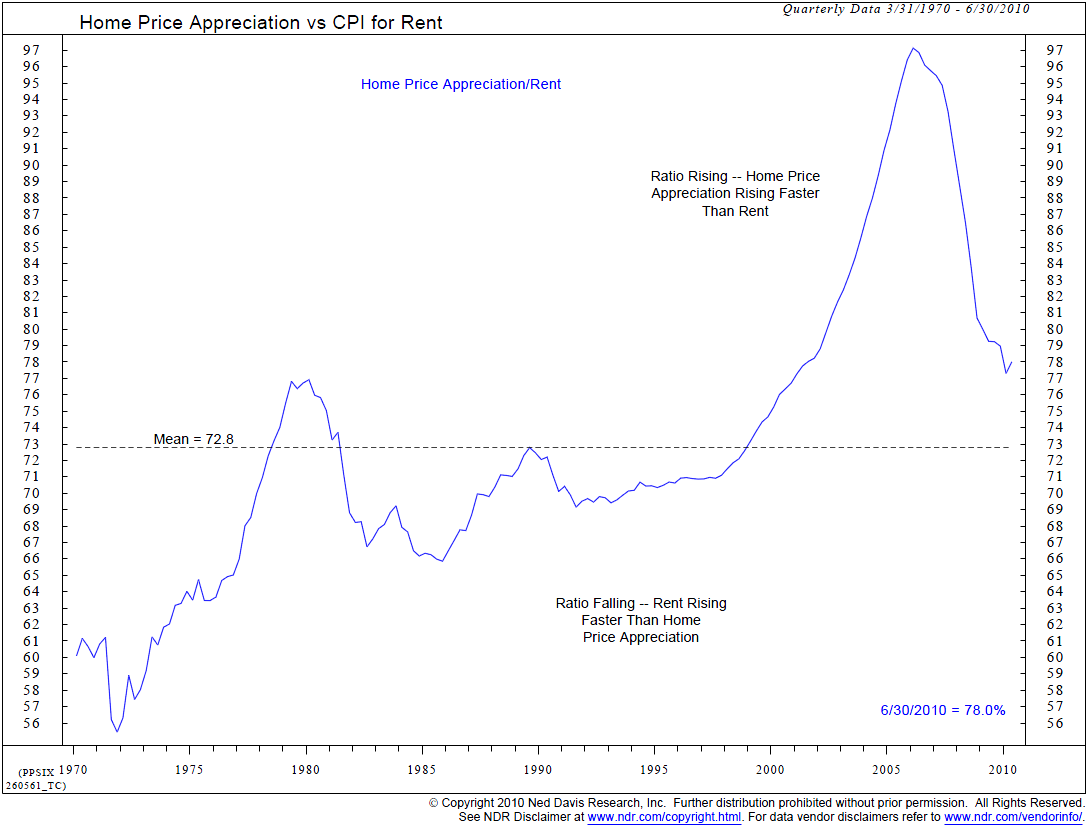
WHAT PASSES FOR RESEARCH THESE DAYS
Somebody sent us a piece of research late last week that apparently calls into question everything from the deleveraging cycle, to the ongoing crisis in real estate, to double dip risks, to deflation. This was yet another in a long list of published reports laying claim that private sector employment is actually running at a faster rate now than it was coming out of the 2001 recession. As if. Pretty heady stuff, nonetheless (we spent at least an hour shaking our heads; that much is for sure).
As Wall Street hangs on the question “Will Greece default?,” the author heads for riot-stricken Athens, and for the mysterious Vatopaidi monastery, which brought down the last government, laying bare the country’s economic insanity. But beyond a $1.2 trillion debt (roughly a quarter-million dollars for each working adult), there is a more frightening deficit. After systematically looting their own treasury, in a breathtaking binge of tax evasion, bribery, and creative accounting spurred on by Goldman Sachs, Greeks are sure of one thing: they can’t trust their fellow Greeks.
After an hour on a plane, two in a taxi, three on a decrepit ferry, and then four more on buses driven madly along the tops of sheer cliffs by Greeks on cell phones, I rolled up to the front door of the vast and remote monastery. The spit of land poking into the Aegean Sea felt like the end of the earth, and just as silent. It was late afternoon, and the monks were either praying or napping, but one remained on duty at the guard booth, to greet visitors. He guided me along with seven Greek pilgrims to an ancient dormitory, beautifully restored, where two more solicitous monks offered ouzo, pastries, and keys to cells. I sensed something missing, and then realized: no one had asked for a credit card. The monastery was not merely efficient but free. One of the monks then said the next event would be the church service: Vespers. The next event, it will emerge, will almost always be a church service. There were 37 different chapels inside the monastery’s walls; finding the service is going to be like finding Waldo, I thought.
“Which church?” I asked the monk.
“Just follow the monks after they rise,” he said. Then he looked me up and down more closely. He wore an impossibly long and wild black beard, long black robes, a monk’s cap, and prayer beads. I wore white running shoes, light khakis, a mauve Brooks Brothers shirt, and carried a plastic laundry bag that said eagles palace hotel in giant letters on the side. “Why have you come?” he asked.
How on earth do monks wind up as Greece’s best shot at a Harvard Business School case study? I work up the nerve to ask.
That was a good question. Not for church; I was there for money. The tsunami of cheap credit that rolled across the planet between 2002 and 2007 has just now created a new opportunity for travel: financial-disaster tourism. The credit wasn’t just money, it was temptation. It offered entire societies the chance to reveal aspects of their characters they could not normally afford to indulge. Entire countries were told, “The lights are out, you can do whatever you want to do and no one will ever know.” What they wanted to do with money in the dark varied. Americans wanted to own homes far larger than they could afford, and to allow the strong to exploit the weak. Icelanders wanted to stop fishing and become investment bankers, and to allow their alpha males to reveal a theretofore suppressed megalomania. The Germans wanted to be even more German; the Irish wanted to stop being Irish. All these different societies were touched by the same event, but each responded to it in its own peculiar way. No response was as peculiar as the Greeks’, however: anyone who had spent even a few days talking to people in charge of the place could see that. But to see just how peculiar it was, you had to come to this monastery
….read more HERE
Winston Churchill once said “that for a nation to tax itself into prosperity is like a man standing in a bucket and trying to lift himself up by the handle.” It could be said with equal certainty that printing and spending money as a path to prosperity falls into the same category.
Unfortunately, it seems the only consistent skill governments and central banks possess is the ability to debauch their currencies. They have an unblemished track record in this regard as evidenced by the uniform collapse in the purchasing power of fiat money since modern central banking came into widespread existence in the early part of the 20th century – witness the greater than 95% decline in purchasing power in both the US and Canada as an example of massive and unrelenting central bank inflation.
Granted, pointing out the role of governments and central banks in inflation is not a novel observation. Many have made this connection before and much more elegantly including Ludwig von Mises who said “Government is the only institution that can take a valuable commodity like paper and make it worthless by applying ink” and Voltaire, a man who lived through a spectacular fiat money collapse, who said that “paper money eventually returns to its intrinsic value – zero.”
So you might reasonably ask what is the point of this note if I’m going to state the obvious?
There is much talk about QE, stimulus, bond yields, risk premiums, volatility, velocity of money, deflating asset prices and so on and so on. My point today is that to focus on what is happening in the immediate term is to miss the forest for the trees. Only by taking a step back is it possible to remember that the developed world is still in the midst of a truly massive and unprecedented experiment in which the Keynesians are still in charge – printing and dispensing money on a vast scale. Some say that it will have no effect because the “velocity of money has collapsed” while others predict hyperinflation.
In the midst of all the seemingly contradictory data and the clearly contradictory predictions I prefer to fall back on a simple economic dictum – if an item can be created for zero cost and is created in increasing quantities its value will trend to zero. Is money subject to different rules than other economic goods?
That leads directly to my next question – will the governments of the west continue to print money? Morgan Stanley thinks yes. In a recently published research piece proclaiming the US “broke” and that no conceivable combination of austerity and/or tax increases will fix the problem, Morgan predicted that some form of default via the printing press is sure to happen. Societe Generale went a step further and conducted a simple calculation of the approximate “net worth” of various western governments. To use SocGen’s circumspect language “the fiscal challenges are unprecedented”. More specifically SocGen concluded that Italy, Germany, France, Portugal, United States, United Kingdom, Spain, Ireland and Greece all have large negative net worths – i.e. they are bankrupt. Canada wasn’t mentioned, not because the government’s finances aren’t in the same dismal condition, but because SocGen didn’t publish the numbers.
It is the unfolding bankruptcy of western governments that will drive inflation as they increasingly rely on the printing presses to fund their deficits. Jordan Roy-Byrne reminds us “Hyperinflation is a fiscal not a monetary phenomenon. The reality is that hyperinflation is first and foremost set in motion and driven by a deteriorating fiscal situation. In fact, significant economic weakness and deflation is a precursor to hyperinflation. Too many analysts believe that there has to be some economic demand or some consumption to stimulate inflation or hyperinflation. Printing money to try and stimulate your economy or excessive credit growth is what leads to inflation. Printing money because you are broke and can’t service your debts is what leads to hyperinflation.”
To follow the logic to it’s conclusion, if the governments of the west are bankrupt isn’t a printing press default plausible? Time will tell, but I feel certain about this – the governments of the world can’t print food and can’t print energy but they can and will continue to print money. Therefore I want to leave you with three simple questions – in the next decade will:
Fiat money be worth more or less
Energy demand be higher or lower
Food demand be higher or lower
If you believe as I do that fiat money will be worth less while food and energy demand will be significantly higher then perhaps you will appreciate the logic of having long term, low cost exposure to the things that the growing economies of the world need (food and energy) but located in politically stable parts of the world like western Canada.
Regards
Stephen Johnston – Partner
Agcapita is a Calgary based, agriculture private equity firm that allows investors to cost effectively allocate a portion of their portfolios to Canadian farmland via its professionally managed Agcapita Farmland Investment Partnership without the need to take on the complex responsibilities of ownership themselves. Agcapita Farmland Investment Partnership is the third in a family of private equity funds which has grown to over $100 million in assets under management.
Our firm is built around the core premise that the world is in a bull market in commodities driven by inflation and a step-change increase in demand and, accordingly, that investments with direct or indirect exposure to commodities in a politically stable environment such as Canada will provide above average returns.
-
I know Mike is a very solid investor and respect his opinions very much. So if he says pay attention to this or that - I will.
~ Dale G.
-
I've started managing my own investments so view Michael's site as a one-stop shop from which to get information and perspectives.
~ Dave E.
-
Michael offers easy reading, honest, common sense information that anyone can use in a practical manner.
~ der_al.
-
A sane voice in a scrambled investment world.
~ Ed R.
Inside Edge Pro Contributors

Greg Weldon

Josef Schachter

Tyler Bollhorn

Ryan Irvine

Paul Beattie

Martin Straith

Patrick Ceresna

Mark Leibovit

James Thorne

Victor Adair