
Daily Updates
Make no mistake about it. The developments over the last three weeks affecting the U.S. dollar — which continues to sink in value — are the most critical financial developments of your lifetime.
The U.S. dollar has now entered the final days of its reign as the world’s reserve currency.
I’ve been warning you about it. And the events are unfolding precisely as I predicted …
1. Behind closed doors, the G-20 countries have now taken control of the world’s economic caretaking. It is no longer the G-3 nations that are in charge … or even the G-7 nations. The G-20 is in charge.
Put another way, the U.S. is now being forced to placate our largest creditors in an international forum, where it is now just one of 20 countries in charge of the world’s economic affairs. And it is the largest debtor of the group, by far.
2. Behind closed doors, the Arab Gulf States have also been meeting with Russia, Japan and China to replace the dollar for pricing oil. Make no mistake about this: The world as you know it is changing.
3. And yet, in the open, in public, Washington isn’t making one single comment about these developments. Not one peep. Not even trying to jawbone the dollar higher.
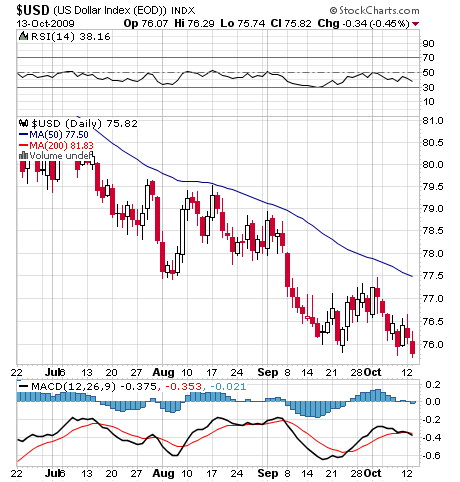
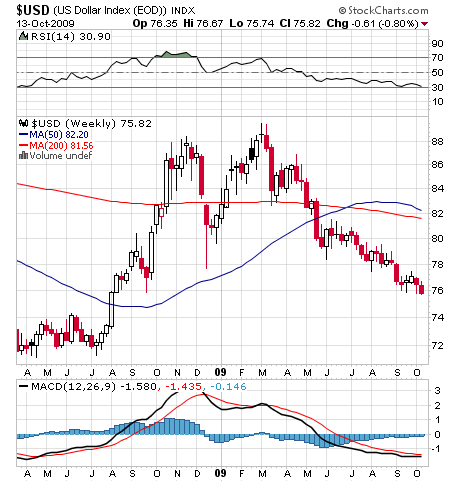 Why? Because, whether our leaders admit to it or not, their top priority is clearly to let the U.S. dollar fall in value, even if it ultimately means that it will be replaced by a new world reserve currency.
Even if it ultimately means your cost of living is going to skyrocket, and everything you ever knew about the world is turned upside down.
Their hidden rationale: To inflate away the mountains of debts in this country, by artificially raising asset prices via devaluing the currency in which most of the world’s major assets are denominated.
Don’t get me wrong. It is a sad state of affairs the U.S. finds itself in: The massive financial crisis, Washington’s gargantuan $125 trillion in debt, the real estate crisis, and ultimately, the end of the dollar as the world’s reserve currency.
But there’s nothing you or I can do about it, except protect our wealth and seek out the profits we can reap as well.
That’s why, back in April of this year in a Money and Markets column I wrote, I said unequivocally that real money — gold — was the only win-win investment I knew of.
Now, is it any surprise then that gold has busted through to new record highs?
Is it any surprise that gold mining shares are taking off to the upside, soaring as much as 8 percent in a single day last week?
Is it any surprise that other tangible asset markets are also starting to rally sharply again — oil, copper, platinum, palladium, and silver?
Or that even agricultural commodities look like they are bottoming and appear poised for significant rallies?
I don’t think so. It’s hardly surprising at all. For when paper currencies are devalued, savvy investors turn to natural resources and tangible assets to protect their money.
My view: If you’re not seeking out shelter from the falling dollar by investing in gold and other natural resources, your wealth is going to be confiscated from you on the sly by Washington.
That means it’s mandatory that now, more than ever before, you take the following steps …
First, with the next phase down in the dollar starting, continue to steer clear of all U.S. Treasury notes and bonds. Not only is the yield still meager, but with the dollar set to lose much more purchasing power in the months and years ahead, Treasury notes and bonds are a losing proposition. Period.
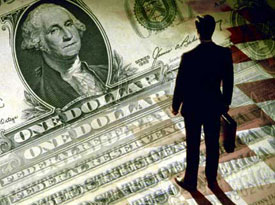
Whether our leaders admit it or not, their top priority is to let the value of the U.S. dollar fall.
Also continue to steer clear of foreign sovereign notes and bonds. They too, while maybe more attractive in yield, will likely suffer as the world goes through a massive change in the currency markets, the result of the dollar’s eventual replacement as the world’s reserve currency.
Second, and very importantly: GOLD. Depending upon how long you’ve been with me and how aggressive you’ve been with my recommendations, you have up to 25 percent of your investment portfolio in a series of my gold recommendations ranging from physical gold and gold ETFs to mutual funds and gold mining shares.
Hold that gold. And stay tuned to my columns and my Real Wealth Report for updates.
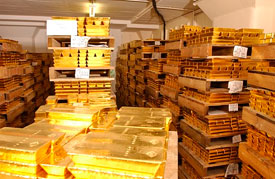
Natural resources, including gold, are starting to rally sharply again.
Third, with any speculative funds you have available, consider getting more aggressive with natural resources. Not just gold or oil, but also copper, platinum, palladium, silver, agricultural commodities like soybeans, wheat and corn … and even staple commodities like coffee, cocoa, and sugar.
Nearly all natural resources are now entering renewed bull markets to reprice themselves higher in anticipation of a much weaker dollar that will eventually be replaced, and all the uncertainty surrounding the future of a new world monetary system.
Best wishes,
Larry
Larry Edelson
Financial Analyst
Ed Note: Sign up for FREE Uncommon Wisdom Updates HERE ( top left hand corner)
Larry Edelson, a financial analyst specializing in international macro-economics, and the precious metals and natural resources markets, is the editor of Weiss Research’s Resource Options Alert, Energy Windfall Trader, and the monthly newsletter Real Wealth Report.
Mr. Edelson is a co-editor of The Foundation Alliance as well as managing editor and a regular contributor to Weiss Research’s daily investment e-newsletter, Uncommon Wisdom.
Mr. Edelson also serves as an Executive Director of the prestigious Foundation for the Study of Cycles — a non-profit organization established 78 years ago at the behest of President Herbert Hoover and Edward R. Dewey, Hoover’s Chief Economic Analyst, to conduct ongoing research into the science of cycles, with an emphasis on economic cycles and the financial markets.

Click HERE to watch 2:17 video or read more below.
The US economist widely credited with having predicted the financial crisis has warned we are already “planting the seeds of the next crisis”.
Nouriel Roubini told the BBC that he is concerned about the growing gap between the “bubbly and frothy” stock markets and the real economy.
Over the last six months, the Dow Jones Industrial Average has risen about 45%.
But Mr Roubini says he sees an economy where consumers are “shopped out” and “debt burdened”.
‘Crisis not over’
Based on the run up in share prices in recent months, investors appear to be betting that good times are around the corner. A view not shared by Mr Roubini.
“The crisis is not yet over,” the New York University professor said.
“I see an economy where the consumers are shopped out, debt burdened, they have to cut back consumption and save more.
“The financial system is damaged… and for the corporate sector I don’t see a lot of capital spending because there is a glut of capacity.”
Mr Roubini believes US house prices have further to fall, straining America’s fragile recovery.
‘Frothy markets’
Property prices have already declined sharply. According to the National Association of Realtors, the national median has dropped almost 13% from a year ago to $177,700 (£110,100).
Many believe the crises in the residential market could spread to the commercial real estate market causing more headaches for the banks.
So where does the “froth” in the markets come from?
Mr Roubini – like many other economists – believes it is engineered by the Federal Reserve and the government which has been pumping cash into the economy to dampen the pain of the recession.
“There is a wall of liquidity chasing assets,” he said. “But I think that there is a growing gap between what is the asset prices and the real economy.”
Although he thinks there will be a correction, he believes some of the mistakes of the past can be avoided if reforms are implemented .
Nouriel Roubini writes for the RGE Monitor – The economic and financial intelligence that matters.
RGE Monitor delivers ahead-of-the-curve global economic insights that financial professionals need to know. Their analysts define the key economic and geostrategic debates and continuously distill the best thinking on all sides. This intelligence, along with exclusive analysis from internationally-known experts, is accessed through a powerful Web interface that provides both focused snapshots and deeper perspectives. Whether you are establishing direction, executing transactions, influencing decisions or performing in-depth research, RGE Monitor is your essential resource. Go HERE
for their list of services.
The Biggest Bust Will Follow the Biggest Bubble
Our ‘Crash Alert’ flag goes back up the pole…
October is almost half over. Will we get through the month without a major sell-off?
Dear reader, if you think we know the answer to that you’ve got us mixed up with someone else. Someone who is crazy.
10/13/09 London, England
No one with his wits about him thinks he knows what the stock market is going to do.
Still, here at The Daily Reckoning, we have our hunches. We think it’s time for a major pull back. Frankly, we’ll be disappointed if we don’t get one soon. Because, once again stocks are too expensive.
Too expensive for what? Too expensive for the circumstances.
The Dow rose another 20 points yesterday to a new bounce record. Oil rose to over $73. Gold didn’t budge.
Of course, everyone now knows that the recession is over. NABE interviewed 44 economic forecasters. Four-fifths of them said the recession was over.
But we don’t care what they said. These are the same seers who missed the biggest single event in financial history. There are many banking crises, recessions, panics and defaults in the record books. But none were as great as the one that hit September a year ago. Most economists didn’t see it coming; why should we trust them to tell us when it is going?
Besides they’ve got the whole thing wrong…..
….read more HERE.
- Dollar suffers another major blow: Global central banks give greenback cold shoulder
- Is gold really at record highs? Some surprising perspective, below
- The single best investment of all time — 258,449% returns in one election cycle
- Chris Mayer with another investment mega-trend: A “second Industrial Revolution” you don’t want to miss
- “Business Bay” — Addison checks in from Abu Dhabi
 Man, the dollar just can’t catch a break!
Just a few days after the story/rumor that a consortium of nations wanted to remove the dollar from the oil trade, we hear this: Global central banks are ditching the dollar at a historic rate.
Central banks increased foreign exchange holdings by $413 billion in the second quarter (the most since 2003), say Bloomberg data. But of those new holdings, only 37% were greenbacks. Over the last 10 years, the average dollar share of new reserves has been 63%. Has the credit crisis christened a new era for FX reserves?
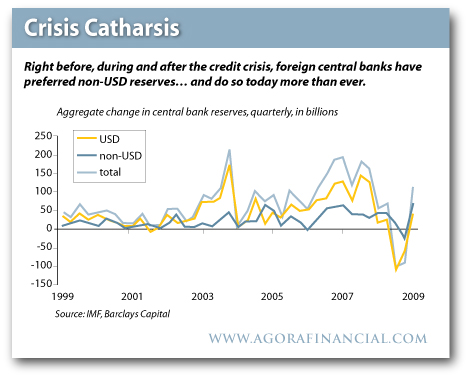
“Central banks are doing more than talking about reducing the concentration of USD in their reserve portfolios,” said Barclay’s Steven Englander, who wrangled this data. “They are actually acting on their statements.”
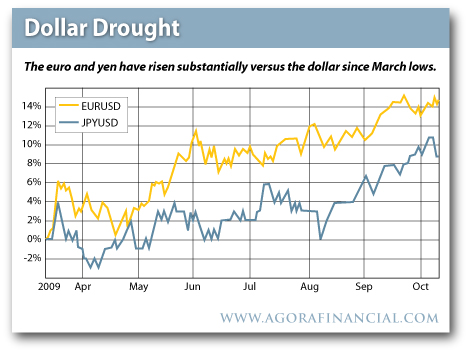
Interestingly, global central banks chose the euro and yen to replace the dollar in the second quarter. The two monies accounted for all but a smidge of the remaining 63% share of new FX reserves. The euro garnered 50% of new reserves, the first time it’s ever achieved such investment.
We could think of more attractive monies… perhaps ones that aren’t part of a bitterly divided union of nations or a country that’s been in recession for most of this decade. But hey, with performances versus the dollar like this over the last six months, can you blame them?
…read more HERE.
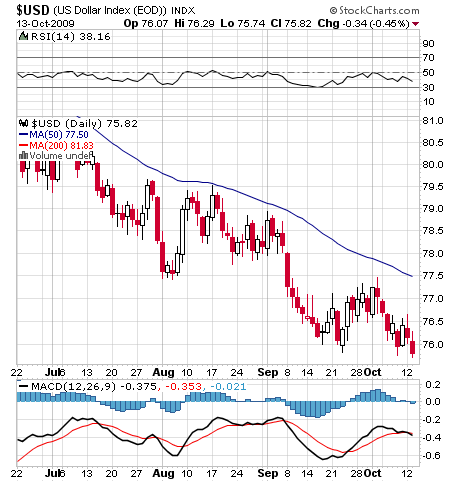
The Federal Reserve Bank finds itself in a position it clearly wishes it were not in, for those in positions of authority there know that they cannot stand by and allow the dollar’s demise on their watch. However, they are powerless to stop the tide flowing against the dollar for according to law it is Treasury’s duty to act for or against the dollar, with the Fed merely there to take orders from Treasury and to put those orders into effect. The Fed can only raise or lower interest rates at the short end of the curve, and it knows that raising short term rates could help stem the dollar’s demise but no one at the Fed can or will move to raise the o/n fed funds rate for the “mere” reason of defending the dollar… not so long as unemployment continues to rise, and…. it shall continue to do that for several more months yet into the future, thus all but prohibiting the Fed from acting. Thus, will Treasury act to defend the dollar? The answer is “No, it will not.”
Treasury, under Mr. Geithner, has other things to concern itself with, including its myriad programs such TARP and PIPP and the like. Treasury actually believes that the weak dollar has its blessings for the economy, and it has chosen thus far to allow or hope for those supposed benefits to make their way through the economy. Treasury actually believes that a weak… but not too weak… dollar shall give way to greater export trade and lesser imports. That is all well and good but it is wrong. Lacking the “gravitas “necessary to stand up and say to the world that the US will not brook further attacks upon the currency and that policies shall soon be announced that will defend the dollar, Mr. Geithner is reduced to the all-too-familiar platitude that the US’s best interest is served by a “strong dollar,” when no one anywhere believes that anymore. So we shake our head and watch as the dollar falls relative and relentlessly to the EUR; falls relative and relentlessly to the Russian Ruble; falls relative and relentlessly to the non-US dollars; falls relative and relentlessly to gold… and this morning is even falling relative (but not so relentlessly) to the British Pound Sterling. It has come to this and it is sad indeed.
Ed Note: Dennis Gartman will be speaking at the:
The Money Talks All Star Trading Super Summit
Saturday, October 24, 2009 -The Sheraton Vancouver Wall Centre
Click HERE for the Speaker Lineup and to REGISTER if you want to take advantage of this Event.
This brief comment from the Legendary Trader Dennis Gartman. For subscription information for the 5 page plus Daily Gartman Letter L.C. contact – Tel: 757 238 9346 Fax: 757 238 9546 or E-mail:dennis@thegartmanletter.com HERE to subscribe at his website.
Mr. Gartman has been in the markets since August of 1974, upon finishing his graduate work from the North Carolina State University. He was an economist for Cotton, Inc. in the early 1970’s analyzing cotton supply/demand in the US textile industry. From there he went to NCNB in Charlotte, N. Carolina where he traded foreign exchange and money market instruments. In 1977, Mr. Gartman became the Chief Financial Futures Analyst for A.G. Becker & Company in Chicago, Illinois. Mr. Gartman was an independent member of the Chicago Board of Trade until 1985, trading in treasury bond, treasury note and GNMA futures contracts. In 1985, Mr. Gartman moved to Virginia to run the futures brokerage operation for the Virginia National Bank, and in 1987 Mr. Gartman began producing The Gartman Letter on a full time basis and continues to do so to this day.
Mr. Gartman has lectured on capital market creation to central banks and finance ministries around the world, and has taught classes for the Federal Reserve Bank’s School for Bank Examiners on derivatives since the early 1990’s. Mr. Gartman makes speeches on global economic and political concerns around the world.
-
I know Mike is a very solid investor and respect his opinions very much. So if he says pay attention to this or that - I will.
~ Dale G.
-
I've started managing my own investments so view Michael's site as a one-stop shop from which to get information and perspectives.
~ Dave E.
-
Michael offers easy reading, honest, common sense information that anyone can use in a practical manner.
~ der_al.
-
A sane voice in a scrambled investment world.
~ Ed R.
Inside Edge Pro Contributors

Greg Weldon

Josef Schachter

Tyler Bollhorn

Ryan Irvine

Paul Beattie

Martin Straith

Patrick Ceresna

Mark Leibovit

James Thorne

Victor Adair