
Daily Updates
Sectors and equity markets, that benefit from seasonal influences during the February to May period, have recorded exceptional returns since early February including investments in platinum, silver, mines & metals, energy, oil services, consumer discretionary, industrials and materials. Opportunities to enter or to add to these sectors and markets have passed. On the other hand, they continue to have time to move higher during their current period of seasonal strength. Preferred strategy is to hold for now and to watch for technical signs for an exit.
Crude oil gained $4.87 U.S. per barrel (6.09%) last week. On Friday Crude broke above resistance at $83.87 to reach an 18 month high. Short term momentum indicators are overbought, but have resumed an uptrend.
The TSX Energy Index gained 7.02% last week. Nice breakout on Thursday above resistance at 292.79! Nice bounce from its 200 day moving average! Next resistance is at 308.99. ‘Tis the season for the sector to move higher!
The TSX Composite Index gained 193.69 points (1.62%) last week. The Index closed at an 18 month high on Friday. Intermediate trend remains up. Short term momentum indicators are overbought, but not showing signs of rolling over yet. Seasonal influences are positive. Strength relative to the S&P 500 Index has been mixed recently, but showed signs last week of turning positive.

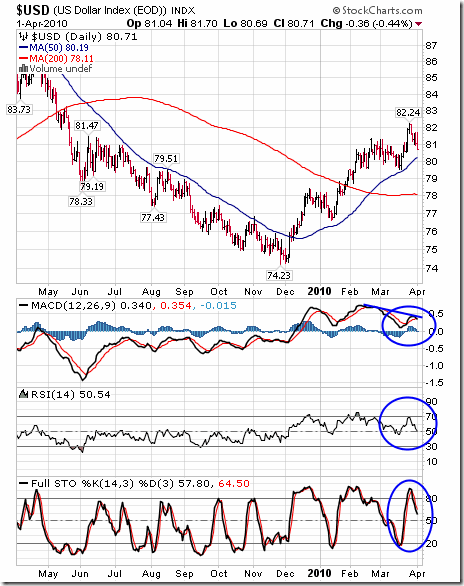
The U.S. Dollar Index fell 0.89 last week. Short term momentum indicators rolled over from overbought levels. MACD also established an intermediate downtrend. A test of its recent low at 79.51 is likely.
The Canadian Dollar gained 1.77 cents U.S. last week and tested its recent high at 99.37. Short term momentum indicators are moving higher. Intermediate upside potential is to 103.75.

…..for the rest of Don’s exhaustive review of 48 market charts go HERE
…..Don’s article in the Saturday National Post – Charts, fundamentals show solid prospects for Bombardier
IN THIS ISSUE OF BREAKFAST WITH DAVE
• While you were sleeping — many global equity markets are closed today, but the ones that are open are up; the U.S. Treasury market is flat, but was hammered on Friday after the U.S. employment report
• Stylized facts — in the U.S., things are not really as they appear to be
• S&P 500 earnings update — the earnings outlook is bright for 2010
• Our take on Friday’s U.S. nonfarm payroll report — employment came in roughly as expected, but beneath the headline was a mixed bag of news with a few surprises
• The article The 2010 Recovery in this weekend’s WSJ really hits the mark
• More of a discriminating U.S. market
…..read summary HERE (4 pages)
….read full article HERE (11 pages)
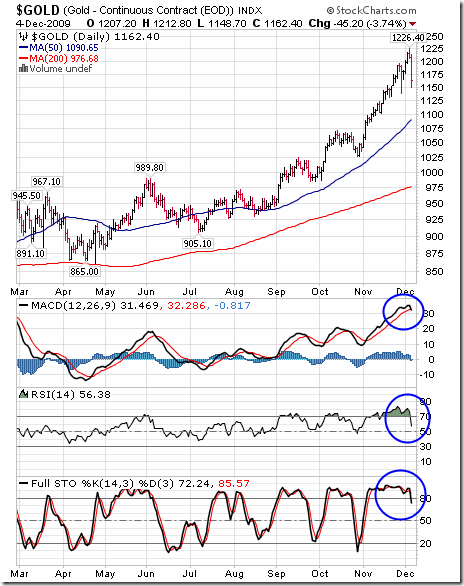
We may have passed the tipping point. Most commentators take this statement to mean that the economy has reached its tipping point. We agree with that sentiment. However I am more inclined to believe that the dollar has met its tipping point. One look at gold and silver and you might believe the same. You see as Dennis Gartman and I have been saying for some time they have become the Anti-currency. Anti-currency? Yes, gold in US dollars has powered higher – seems to want to stay above $1100 and make a base. Silver doesn’t venture too much below $$16.80. We have seen now 6 months of very strong pricing in these metals. These precious metals are anathema to the fiat currencies and hence they compose the Anti-currency. No matter how much people seek a new a stable fiat currency regime it is probably not possible.
……read more HERE
This brief comment below from the Legendary Trader Dennis Gartman. For subscription information for the 5 page plus Daily Gartman Letter L.C. contact – Tel: 757 238 9346 Fax: 757 238 9546 or E-mail: dennis@thegartmanletter.com or HERE to subscribe at his website
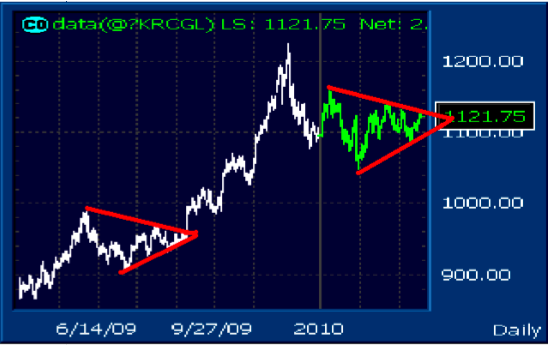
SPOT GOLD IN US$ TERMS: Things Are Coming To A Point, Aren’t They?:
“Triangle” consolidations almost always end with the market moving in the direction that prevailed prior to the formation… in this instance higher!
We are most impressed with the fact that gold is trading firmer despite… or perhaps interestingly because of… the stronger US dollar. Gold is firm, and quite so, in terms of the EUR, the Yen, Sterling et al, and we accept that as a condition of the world’s central bankers at the margin quietly moving away from the EUR as a reservable asset and moving to gold instead.
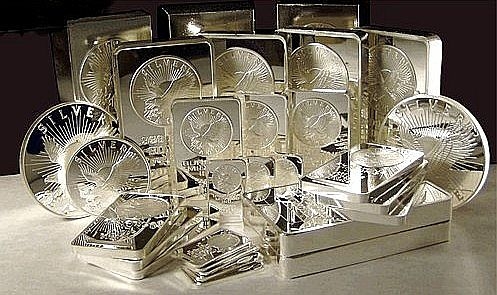
Silver Short Squeeze Could Be Imminent – HERE
Original article below:
“because silver kills the bacteria that causes body odor, “the use of silver in sportswear has exploded into one of the largest single applications of silver. This one usage already consumes more than 1,200 TONS of silver per year.” – Jeff Nielson – James Cook Market Update newsletter
Because silver is more than 17 times as plentiful as gold in the earth’s crust, its use as money – both in coin and as a measure of value – is far more common in the historical archives as well. Whereas today, it holds much the same basic appeal as gold, but with four crucial twists:
#1. Gold/Silver Ratio
Historically (meaning from the dawn of recorded time to around 1900), one ounce of gold typically bought 15 or 16 ounces of silver, and pretty much everywhere in the world too. Today, that ratio stands at 65 times in the wholesale Spot Gold and silver bullion markets. (It’s very much worse again if you’re trading small bars and coins, thanks to dealer mark-ups and margins.) Many analysts and investors now expect the ratio to fall back towards its long-term mean, if not quite reach it. Even the 20th century average would see silver doubling in value against gold – which itself, of course, plenty of people now see going higher against the Dollar, Euro and Pound Sterling anyway.
#2. Consumption
Whereas pretty much all the gold ever mined in history is still available – closely guarded but ready-at-hand as jewelry, bars and coins – silver is somewhat closer to commodities like crude oil, soybeans or orange, in that it often vanishes in its use. Consumption rarely affects gold, but silver’s lower value means recycling and recovering it isn’t always economical. And because it tends to be a by-product of other mining operations (mostly gold or copper), rather than dug up for its own sake, analysts don’t see silver’s primary supply as responsive as gold or base metals to changes in price.
#3. Industrial Demand
Unlike gold, silver is predominantly used by industry today. So rather than offering deflation protection (as gold most recently did after the collapse of Lehman Bros.), silver is strictly inflation-friendly, with a number of fast-growing uses in both developed and emerging economies making it look very growth-friendly, too. Excluding silver investing demand, London’s VM Group analysts now forecast an additional 350 million ounces of annual silver demand by 2020 thanks to:
- RFID tags for stock control and ID cards are “taking over from bar codes”;
- Solar panels – forecast to grow by 20-40 times in 10 years;
- Wood preservatives to replace arsenic;
- Wound care & other medical use, food hygiene, and anti-odor textiles – because silver, a biocide, inhibits bacteria.
All this growth might soon eat itself, of course, if industrial demand forces silver prices sharply higher. But VM’s forecast compares with total industrial demand of 450 million ounces in 2008, according to the mining-backed Silver Institute. Meaning the case for silver doesn’t rest solely on monetary chaos.
#4. Volatility
On average, and across the last 42 years, a 1% move in gold is matched by a 1.75% move in silver, both up and down. Anyone expecting strong gains in gold, in other words, should expect exaggerated gains in silver, but with greater risk. Just check the spike of January 1980 for proof. Gold prices tripled in the last 6 months of the preceding year, but Silver Prices rose 5.7 times over, peaking at $50 an ounce. The subsequent drop was just as severe, and much longer-lived.
What makes silver prices more volatile than gold? As US oil tycoons the Hunt brothers found when they very nearly cornered the world’s near-term silver supplies and forced that $50 peak 30 years ago, silver is a very much smaller market by value. The wholesale bullion market in London – heart of the world’s gold and silver trading – turns over 18 times as much money in gold as it does in silver each day. Physical demand each year, though nearly 8 times larger than gold by weight, is estimated to be worth barely 11% of global gold demand at $15.2 billion.
Moreover, within those annual figures, gold’s use as a store-of-value (meaning investment bars and coins, plus jewelry) accounts for 87% of annual demand according to the GFMS consultancy. In the silver market, only 35% of annual off-take goes to storing wealth (investment, jewelry, silverware). That makes silver much more dependent on industrial demand, and explains why – very occasionally – it more closely tracks movements in the price of copper than gold.
Still, investors aren’t (or shouldn’t be) looking for “diversification” when they add silver to their gold holdings. Not in the sense of diversification that your financial advisor would use, just before you remind how much you’re losing in the bank and how much you stand to lose on bonds should inflation take hold. The average daily correlation between gold and silver, right back to March 1968, has been +0.62 (rolling one-month basis). It would be +1.0 if they moved precisely in lock-step, and –1.0 if they moved precisely opposite. Gold’s correlation with US stocks over both the last 40 and 10 years, for comparison, is almost exactly zero. Gold’s famous correlation with the Euro has been +0.51 since the start of 2000. Whereas, during the bull market of the last 10 years, the statistical link between gold and silver has risen to average +0.68, and it’s stronger again at +0.77 for the last 5 years.
Silver, in short, tends to follow gold very closely – more closely than pretty much any pair of assets you can name over the long term – but with bells on. Risk-free it ain’t, but neither is cash-in-the-bank. The appeal of Buying Silver to profit from inflation looks set to gain ground.
You can start with a free ounce of silver HERE.
-
I know Mike is a very solid investor and respect his opinions very much. So if he says pay attention to this or that - I will.
~ Dale G.
-
I've started managing my own investments so view Michael's site as a one-stop shop from which to get information and perspectives.
~ Dave E.
-
Michael offers easy reading, honest, common sense information that anyone can use in a practical manner.
~ der_al.
-
A sane voice in a scrambled investment world.
~ Ed R.
Inside Edge Pro Contributors

Greg Weldon

Josef Schachter

Tyler Bollhorn

Ryan Irvine

Paul Beattie

Martin Straith

Patrick Ceresna

Mark Leibovit

James Thorne

Victor Adair